
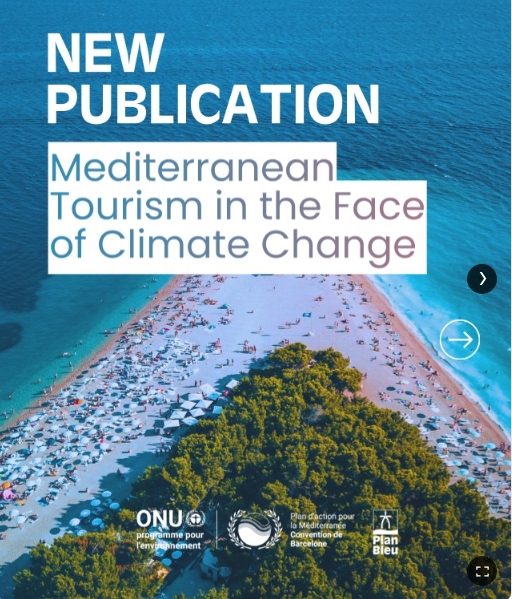
The Mediterranean, which welcomes nearly 400 million tourists a year, is warming 20% faster than the global average, exposing the sector to a double vulnerability: it is both a major victim and a key contributor to climate change .
To address these systemic challenges, the Blue Plan Tourism Note explores the future of the sector to 2050 through three contrasting trajectories, ranging from maintaining a business-as-usual model to an ambitious spatio-temporal adaptation based on sustainability and cooperation . This document highlights concrete levers for action to successfully achieve this transition, such as the development of eco-mobility, energy efficiency inspired by vernacular Mediterranean architecture, and the deployment of Nature-based Solutions (NBS) like the restoration of Posidonia seagrass meadows .
The note finally highlights the need to anticipate the decline in summer attractiveness by structuring a diversified offer off-season and in the hinterland, in order to relieve anthropogenic pressure on the coastline and to guarantee the economic and ecological resilience of Mediterranean territories .
Source : Blue Plan