
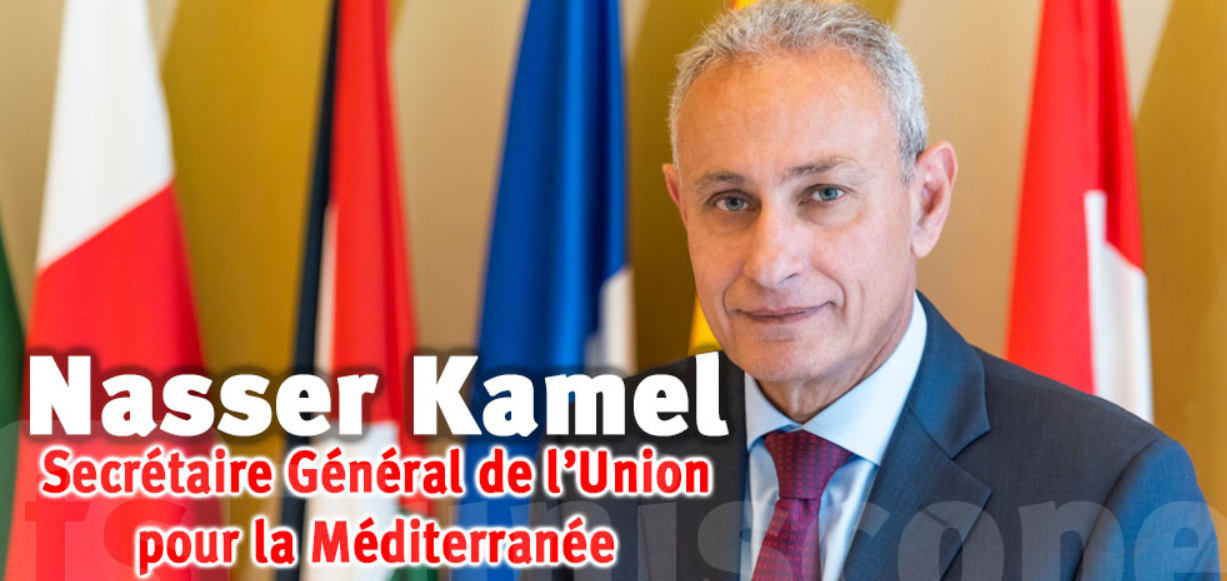
I have spent the last eight years at the head of the Union for the Mediterranean, and several decades in diplomacy. All this time, I sat in front of ministers whose countries were experiencing active conflict, not just threats.
I listened to climatologists warn that the Mediterranean basin is warming 20% faster than the world average. I met displaced families not by choice, but by the multiplicity of conflicts, environmental pressures and economic crises.
Different conversations, different emergencies, but always the same conclusion: no country can face these challenges alone.
However, this is precisely the moment when international cooperation is being put to the test. Multilateral institutions are often criticized as slow, disconnected or ineffective. This criticism is partly well-founded.
Sometimes the process takes the lead over the results, the commitments do not result in concrete changes.
But the answer to imperfect multilateralism is not to turn away from it. It’s to make it work better.
Nowhere is this more obvious than in the Mediterranean. Water scarcity and extreme heat already affect food systems.
Youth unemployment in some parts of the region remains stubbornly high. Migration, energy security and the consequences of conflicts continue to weigh on regional stability.
Geography leaves little room for isolation. What is happening in a part of the Mediterranean affects all its shores.
The international context makes things even more difficult, and we have to be honest about the reasons. We are going through a period of deliberate dismantling of multilateral commitments, development financing, trade frameworks that have taken generations to build.
The great powers are not content to renegotiate the terms of their participation in international institutions; in some cases, they withdraw from it outright, and present this withdrawal as a force.
The fallacious argument that nations are stronger by acting alone is not only gaining ground: it is actively promoted by governments that have the most to lose in a world without rules.
Ten years ago, it would have seemed marginal. Today, this shapes budgets, breaks alliances and leaves regions like the Mediterranean to bear the consequences.
Let’s be clear about what this represents: a profound abdication of responsibility, precisely at a time when the scale of common challenges requires more cooperation, no less.
It is not a temporary turbulence that multilateral institutions would only have to go through. It is a structural attack on the very idea that states have obligations to each other.
The Mediterranean, where no government can protect its citizens from what is happening on the other side of its many banks, has a particular interest in resisting it.
It is in this context, and precisely because of him, that the work of the Union for the Mediterranean is more important than ever.
It brings together 43 countries from Europe, North Africa and the Middle East around a common commitment formulated for the first time in the Barcelona Declaration of 1995.
The postulate was simple, and it remains valid today: stability and development are interdependent, and progress requires structured, sustained and concrete cooperation.
This cooperation is not abstract. Within the Union for the Mediterranean, it takes the form of joint initiatives, ranging from political agreement to concrete implementation on the ground. Through regional programs, tens of thousands of young people and women have had access to employment, training and support for entrepreneurship.
Through networks such as MedECC, scientific data on climate change are translated into political responses shared throughout the region.
Through platforms such as the Mediterranean Partnership for the Blue Economy, public and private actors are brought together to finance projects that respond to the most urgent environmental pressures. These are not declarations of intent.
These are concrete results, which show that regional cooperation can keep its promises.
In November 2025, the Member States of the UpM reunited in Barcelona, thirty years after the original Declaration, and adopted a new strategic orientation.
The priorities are clear: invest more in youth and mobility, strengthen cooperation on climate, water and energy, and strengthen the economic links that underlie long-term stability.
These priorities reflect the realities facing the region today, and the conviction that shared challenges call for common responses.
In times of geopolitical tensions and uncertainty, preserving such cooperation is not obvious.
This requires political will and sustained commitment. The fact that 43 countries continue to work together in this framework is, in itself, significant. This reflects the belief that dialogue and partnership remain more effective than fragmentation.
The role of the Union for the Mediterranean is to support this effort: to bring together, to put expertise at the service of public policies and to ensure that cooperation produces tangible results. The multilateralism that the region needs is pragmatic and responsible.
It recognizes itself in projects that bring water, energy, jobs and knowledge across borders. It is measured not in declarations, but in impact.
The Mediterranean has always been a space for exchange and connection. This reality has not changed. What must continue to evolve is the way countries choose to act.
In a complex and interdependent region, cooperation is not an ideal. It’s a necessity.
Nasser Kamel
Secretary-General of the Union for the Mediterranean