
At the same time, nearly 200 countries meet in Armenia to discuss biodiversity protection at COP17.
On the screen of Juan Mayorga’s computer, a beautiful pastenague ray swims gracefully at the bottom of the sea of the Desert Islands, in the Portuguese archipelago of Madeira: « It’s a good day when you see animals like that? « , smiles the Colombian scientist.
« It’s environmental protection at work, right before our eyes, » rejoices this engineer working for the National Geographic Society’s « Pristine Seas » program. « As we protect a place, year after year, the fish get bigger and bigger, they produce more and more babies. «

Like about 200 other scientists, Juan Mayorga participated throughout the month of October in a vast expedition to better understand the Madeira archipelago, located off the coast of Morocco, where marine conservation efforts date back to the early 1970s.

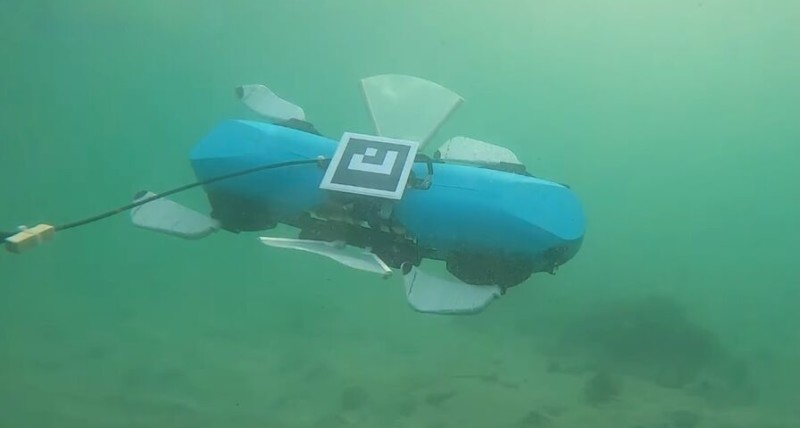
He must collect and analyze video images shot at sea level, between 40 and 50 meters deep, by cameras mounted on metal structures where baits have been placed to attract fish.
« Frontline »
What interests him in particular is to compare the data collected in the southern part of the Desert Islands, an area of total marine protection, with those collected in the northern part, where a certain type of fishing is still authorized.
The Environment Mail
From environmental issues to the beauty of nature, every Tuesday in your email box. See more newsletters.Sign upI agree to receive email communications from Le Devoir. You can unsubscribe at any time by clicking on the unsubscribe link at the bottom of one of our emails. Privacy Policy.

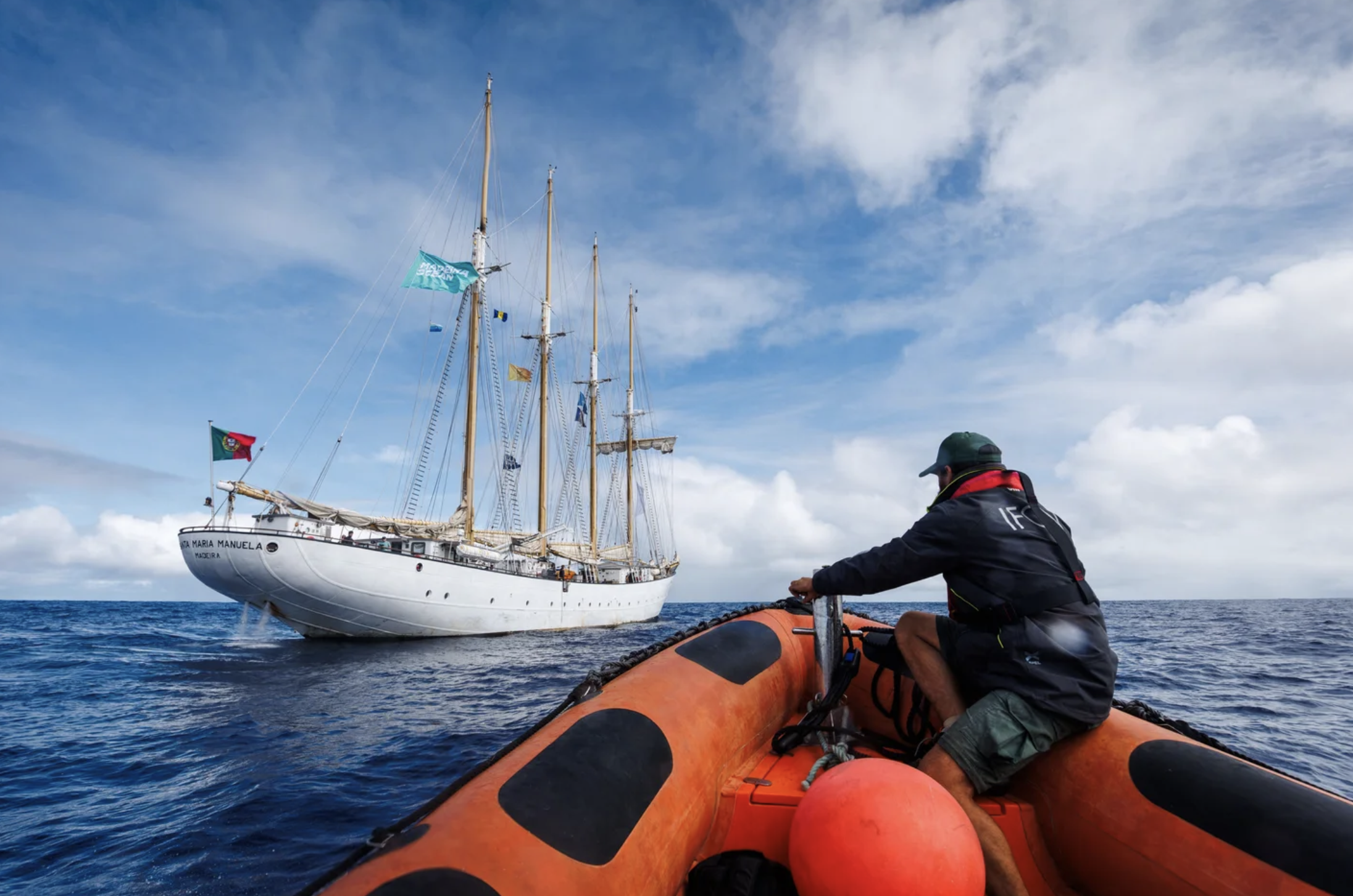
First stage of the Santa Maria Manuela, the 70-meter-long four-mast that acts as the flagship of the expedition with a total of about fifteen vessels, the Desert Islands are three uninhabited islets, about forty kilometers from the island of Madeira.
On the largest, a rocky massif with very little vegetation that extends for almost 12 km long and culminates at 480 m altitude, Rui Seabra, a researcher at the University of Porto, fixes temperature sensors on the rocks that emerge at low tide along a small cove.
Its objective: to understand how species of crustaceans and sponges are in sunny or shaded areas. « This is important in the context of climate change because we need to know how biodiversity will adapt » to changing temperatures, he explains.


About twenty meters from the shore, on an inflatable boat, a marine biologist collects environmental DNA samples to detect fish species, which are present in the waters but evade the lens of the cameras.
« We are here on the front line of real combat to try to find the solutions that allow us to solve problems on the ground, » summarizes Emanuel Gonçalves, the head of the expedition, scientific director of the Oceano Azul Foundation, funded by the Lisbon Oceanarium.
« The best weapon »
While nearly 200 countries meet from Monday in Armenia to discuss the protection of global biodiversity at COP17, this biologist recognizes that major international conferences are « very important » to mark the political agenda.
But « the urgency to act does not allow us to wait for decisions that sometimes take decades, » he told AFP.

In addition to the island that gives its name to the entire archipelago, Madeira is composed of the island of Porto Santo, known for its beaches and hotels, the Deserts and also the Savages, two islands some 280 kilometers further south, in the direction of the Spanish archipelago of the Canary Islands.
A pioneering region in the protection of the marine environment, Madeira created the Wild Islands Reserve in 1971 to protect the habitat of a bird, the ashy puffin. Extended in 2022, this reserve is now, with an area of 2,600 km2, the largest total protection zone in the North Atlantic.
It was to save a colony of Mediterranean monk seals that the regional authorities, in the early 1990s, created another reserve, around the Desert Islands: the population, then reduced to eight individuals, now has 31.
Coordinator of the « Madeira Ocean » program launched in May, and executive of the Institute of Forests and Nature Conservation of Madeira for more than thirty years, Paulo Oliveira is pleased. « An ocean in a good state of conservation is the best weapon we have against climate change, » he says.