

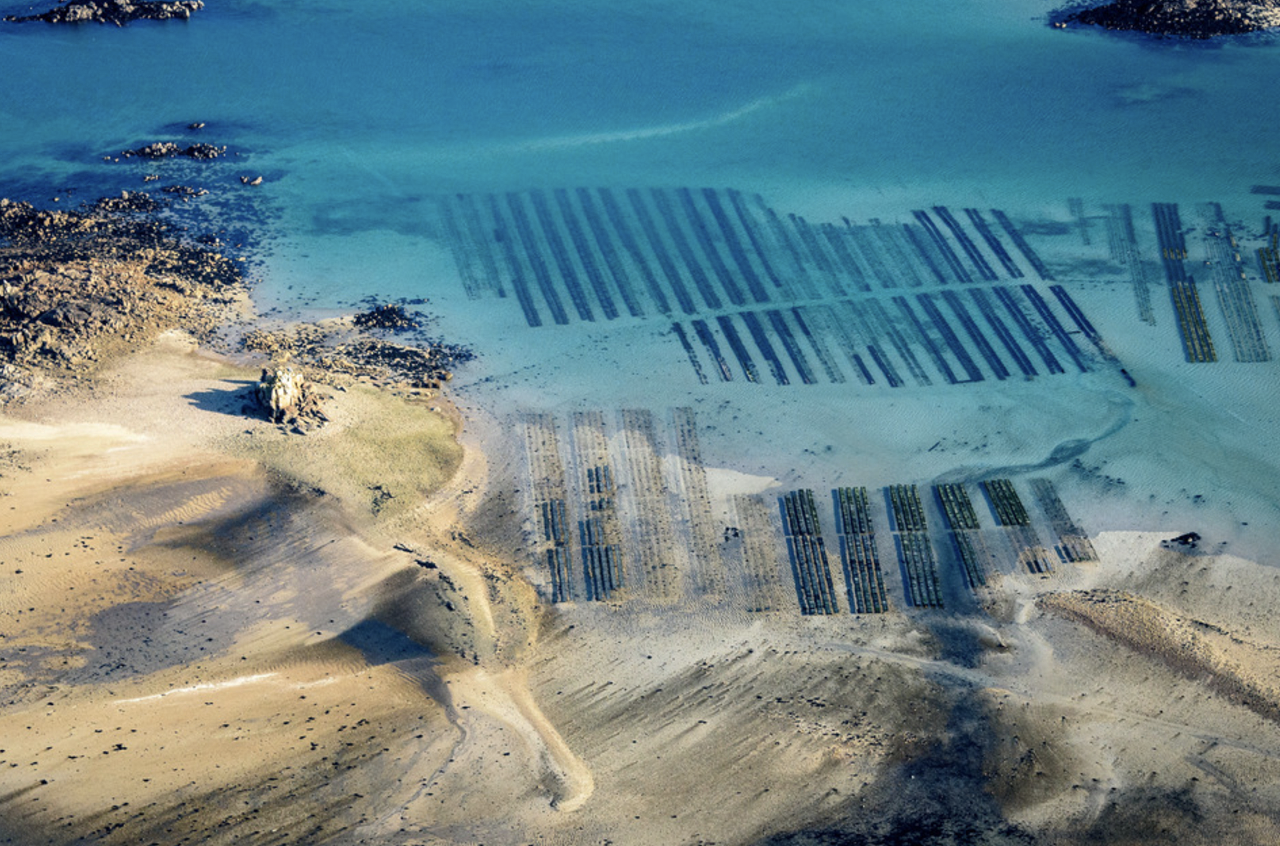
Often associated with gastronomy or oyster farming, oysters nevertheless play a much broader role on the coast. As a witness to the quality of coastal waters, it is also capable, when it forms banks or reefs, of modifying the circulation of water, retaining sediments and attenuating the impact of waves. At a time when many shores are eroding, this discreet shell reappears as a leading ecological ally.
A shell much more important than it seems
On the coasts, the oyster not only occupies a place in the marine landscape. She helps to shape it. By attaching themselves to each other, oysters build compact sets that create relief on the sland or in shallow waters. This living architecture transforms the environment, provides shelter to many species and acts on the physical functioning of coastal areas. This is why it is described as an « engineer » species, capable of rendering several ecosystem services at the same time.
This role has long remained in the shadows, while it directly touches on very concrete issues. Behind the image of the filter shell, there is also an organism that participates in the stability of a coastal environment, local biodiversity and, in some cases, the resistance of the shore to marine energy.
Reefs that break the energy of the waves
This is one of the most interesting aspects of the subject. When oysters form reefs, they create an irregular, rough surface, far from a smooth bottom. This structure slows down the water and dissipates some of the energy from the waves before it shifts entirely to the shore. NOAA rightly points out that oyster reefs are part of the natural solutions used in certain coastal protection projects, especially in the so-called living shoreline approaches. The idea is not to present the oyster as a miracle bulwark. It alone will not replace all coastal protections, especially in highly exposed areas. On the other hand, where conditions lend themselves to it, these reefs can act as a shock absorber. They reduce the strength of the swell, limit the mixing of water in the immediate vicinity of the edge and help to make the coastal system a little less vulnerable.
Retain sediments, stabilize the shore
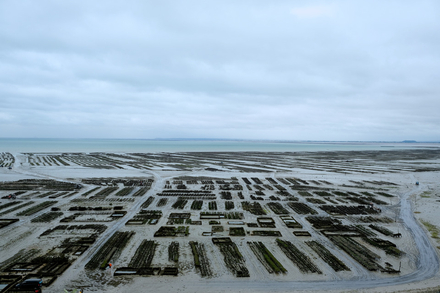
The action of oysters against erosion is not limited to a simple barrier effect. By locally slowing down flows, reefs also promote the deposition of suspended particles. In other words, they can help certain sectors retain more sediment, instead of constantly moving again. It is this mechanism that is of interest to researchers and coastal managers. In estuarian, lagoon or on some estrans, this phenomenon can contribute to better stability of the bottoms and coastal margins. Again, this is not a universal solution, but a natural lever that can accompany the resilience of the coastline. The more alive and structured the environment remains, the more it retains a share of its ability to cushion physical imbalances.
© AdobeStock
A sentinel of the coastal state
If the oyster arouses so much interest, it is also because it informs about the state of the environment. A filtering organism, permanently exposed to its environment, it accumulates and reflects part of what circulates in the water. The article in the Encyclopédie de l’environnement insists on this sentinel function: the oyster makes it possible to follow the degradation or, on the contrary, the good health of a coastal ecosystem. Chemical pollution, eflorescence of toxic microalgae, microplastics or other contaminants end up being read, in one way or another, in its biological state. It is this double status that makes her so precious. The oyster is both a victim of the pressures on the coast and an indicator of these pressures. When she suffers, it says something about the coastal environment. When it disappears, it is not only a species that is lost, but also an ecological function and a warning signal.
Preserving oysters is not just protecting a species
The subject goes far beyond the oyster farming question alone. Preserving oysters also means preserving habitats, natural filtration mechanisms, refuge areas for other species and, in some contexts, a form of gentle protection against erosion. National Geographic also recalls that oysters, like corals, build real reefs capable of creating marine habitats useful to other fish and invertebrates. In a context of retreat of the coastline and strong pressure on coastal environments, this reality takes on a new dimension. We are no longer just talking about an emblematic shell, but about an organization that participates in maintaining a coastal balance. This profoundly changes the way you look at him. The issue is no longer just economic or patrimonial. It also becomes ecological, and even territorial.
The living as an ally of the shore
For a long time, the protection of the coast was mainly based on harsh responses: dikes, rocks, fixed structures. Without disappearing, this logic now coexists with another approach, which consists of restoring its place to the living in the defense of the coasts. Oyster reefs are fully in line with this reflection. They are not intended to settle everything, but they show that a coastline in good ecological condition can also be a more resistant coastline. The oyster therefore says something essential on our shores. She alerts when the environment deteriorates. It supports biodiversity when conditions remain favorable. And, when it can form durable reefs, it also helps to slow down certain erosion dynamics. Under its apparent discretion, it recalls an increasingly central evidence in coastal policies: protecting the coastline also requires the protection of the species that help it to hold.
source : Figaro Nautisme