As the sea once again becomes a global strategic issue, Senegal is undertaking a profound transformation of its maritime territory. The country is building the foundations of a new economy, with the ambition of making it the pillar of its future growth.
Senegal aims to make the blue economy a new engine of growth, focusing on a range of activities linked to the sea: port infrastructure, logistics, shipbuilding and repair, aquaculture, and maritime training. This strategy is based on a largely untapped potential.
With nearly 750 km of Atlantic coastline, an exclusive economic zone of approximately 198,000 km² and the port of Dakar — one of the main maritime hubs in West Africa — the country has assets that justify the growing importance given to the blue economy in the Senegal 2050 Vision.
Strengthening logistics positioning through ports
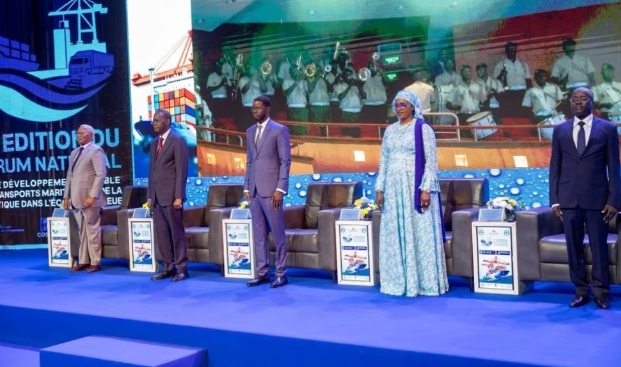
During the International Forum on Sustainable Development of Maritime Transport and Logistics, on July 13 in Dakar, President Bassirou Diomaye Faye recalled that the Autonomous Port of Dakar had generated approximately 1 billion euros (700 billion FCFA) of wealth between 2022 and 2024, while supporting nearly 170,000 jobs.
The government now wants to scale up its efforts, with its flagship project being the deep-water port of Ndayane, built by DP World, destined to become one of the largest port hubs on Africa’s Atlantic coast, representing an investment of approximately €1 billion. Other projects accompany this, such as the modernization of the Autonomous Port of Dakar (Jaambar program), the mineral and bulk cargo port of Bargny-Sendou, and the rehabilitation of several fishing ports.
The authorities are also seeking to develop logistics corridors linking these infrastructures to inland regions and neighboring landlocked countries, in order to strengthen Senegal as a regional logistics platform.
A fishing sector that is already strategic
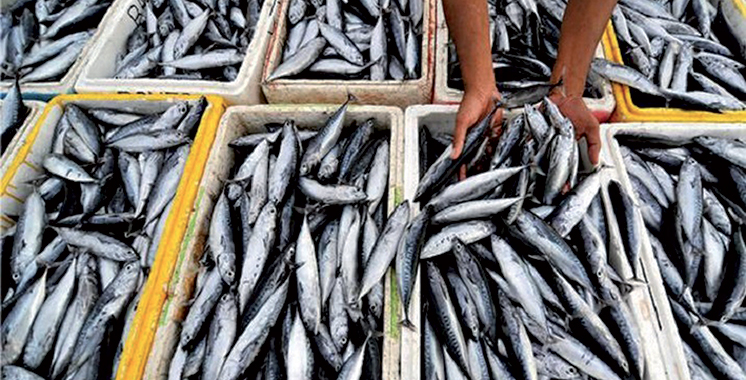
Fishing remains a major economic pillar. According to a Senegalese expert quoted by the International Institute for Sustainable Development (IISD), this sector supports several hundred thousand people (more than 600,000 jobs according to some estimates), generates foreign exchange and represents more than 3% of GDP.
Annual catches are around 500,000 tonnes, 80% of which come from artisanal fishing, and fish exports reach around 457 million euros (or 300 billion FCFA), or nearly 10% of total exports — a finding shared by the Food and Agriculture Organization of the United Nations (FAO) when including related activities.
However, the sector is showing signs of slowing down: in the first quarter of 2026, its added value fell by 6.9% compared to the previous quarter, slowing primary sector growth to 0.3%. Authorities believe the potential remains largely untapped, particularly in aquaculture, which accounted for only about 3,000 tons of national fish production in 2025, with industrial processing remaining limited. In short, this represents a niche rich in business opportunities for both local and foreign private investors.
Diversify the drivers of growth
The third focus is on training. President Faye announced the creation of a major maritime training school, slated to become a specialized university, to train professionals in the port, maritime, naval, fishing, and logistics sectors. The authorities also aim to increase women’s participation in the blue economy’s value chains.
Beyond fishing, the ambition is to foster a diversified maritime economy built on several strengths, including port services, transportation, aquaculture, shipbuilding, coastal tourism, and marine biotechnology. This strategic direction comes as the Senegalese economy gains a new source of wealth: oil. The government, however, aims to develop sectors that create more jobs and added value in the long term.
In a context of budgetary constraints, the government is also considering innovative financing, such as blue bonds, to support this strategy.