According to a team of researchers from National Geographic Pristine Seas, seabed trawling, a widely used fishing mode in European waters, would be harmful to marine ecosystems. In addition, this fishing method would cost European society 16.15 billion euros per year, in particular because of its consequences on the planet.
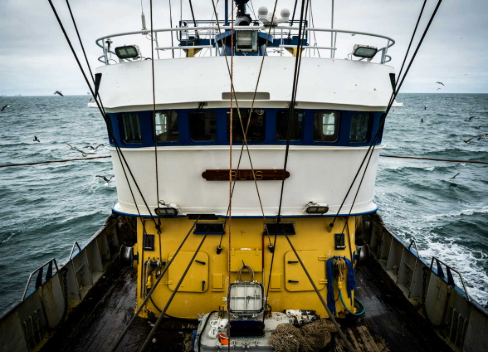
A common but devastating fishing practice. Deep-sea trawling is a fishing method of towing a weaded net, called trawl, on the seabed. The latter is the subject of much criticism because of the damage caused to marine habitats and its carbon impact.
It is in this sense that the National Geographic Pristine Seas (a project that aims to protect at least 30% of the ocean by 2030 through the creation of new Marine Protected Areas), conducted a study to calculate the impact of bottom trawling in Europe. Published on April 28, in Ocean & Coastal Management, this work estimates that « this practice imposes on the company a net cost of up to 16 billion euros per year ». At the same time, the industry’s profits are estimated at 180 million euros. We explain to you.
Seabed trawl: what are the consequences for the economy?
The study highlights that bottom trawling is a « heavy economic burden » for the community. By analyzing data from 4,900 vessels between 2016 and 2021, the researchers conclude that the costs borne by the company far exceed the gains made by the fishing industry.
While the sector generates about 180 million euros in annual profits, its net cost for the European company is estimated between 2.25 and 16.15 billion euros per year, « the range reflecting the different estimates of the social cost of a ton of CO2 emitted into the air ». In other words, « the net costs of bottom trawling for the company are 90 times higher than the €180 million in profits made by the fishing industry each year ».
According to the researchers, the main expenditure item comes from carbon dioxide emissions related to the disturbance of marine sediments. By scraping the ocean floor, trawls put carbon back into suspension, sometimes stored for centuries. The latter ends up partly in the atmosphere.
Added to this are other costs, among which the authors record the €1.17 billion in public subsidies each year, a food waste valued at €220 million, as well as a strong dependence on fossil fuels, whose volatility further weakens the profitability of the sector. « Our study clearly shows that bottom trawling in European waters is not only an environmental disaster, it is an economic failure, » summarizes Enric Sala, explorer at National Geographic Society in the press release.
Deep-sea trawl and marine life: what are the consequences?
The authors note that in Europe (in fishing hours) 23% of the trawling effort takes place in protected marine areas. According to previous research, this « compromises the role that these marine reserves play in the repopulation of fish populations outside their borders ». In total, more than 3,000 species of fish have been caught in bottom trawls worldwide, « including endangered animals ». If the impact of this phenomenon on ecosystems « is not yet fully understood, it is likely to be extremely negative ».
Deep-stowing: what situation for France?
The situation is particularly marked in France. With an average of 549 active bottom trawlers each year, France has one of the largest fleets in Europe, according to the authors. These vessels alone accumulate 771,502 hours of fishing per year, or nearly 14% of the total effort observed in the study area.
According to the researchers, the net cost of bottom trawling for French society is between 580 million and 2.15 billion euros per year. In particular, carbon emissions are at issue, because the French fleet would release 12.9 million tons of CO2 each year by disrupting marine sediments.
France is also one of the countries where this activity remains particularly present in marine protected areas. Nearly 225,000 hours of trawling are recorded each year. In total, more than a quarter of the French trawling effort is carried out in areas that are supposed to preserve habitats and marine biodiversity.
What tracks to get out of the bottom trawl?
Faced with this observation, the researchers put forward several avenues. The first is to ban bottom trawling in all European marine protected areas. This would make it possible, in particular, to restore ecosystems and quickly reduce carbon emissions.
The study also estimates that a reduction of more than half the trawling effort in Europe would improve the overall economic balance of the sector. In this case, the authors believe that public subsidies could then be redirected towards support for fishermen, in particular to promote the transition to less destructive techniques, such as artisanal fishing or fixed craft.
« Ending bottom trawling in Europe’s marine protected areas is essential to save billions of public costs, » Enric Sala said in the press release. A transition that, according to the authors, would benefit both the climate, biodiversity, public finances and, in the long run, the entire sector.