
In Senegal, as in most African coastal countries, the supply of fish is mainly based on sea or continental fishing. The authorities are stepping up their efforts to develop aquaculture, which is seen as a more sustainable alternative for supply.
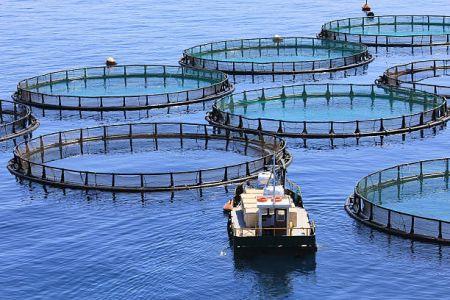
Senegal is experimenting with aquaculture at sea for the first time. In a press release published on July 27 on its website, the National Aquaculture Agency (ANA) announced the installation of the country’s first floating cages in the maritime waters of Diakhanor, in the municipality of Palmarin.
Carried out in partnership with Atlantic Mariculture, a Senegalese company committed to the development of aquaculture, the project is intended to allow, in a pilot phase, to acquire national expertise on this new segment, while evaluating the technical and economic conditions necessary for its deployment on a larger scale.
The project had been in preparation for several months. Already in April 2026, the general manager of ANA, Samba Ka, announced the arrival of the equipment necessary for the experiment. The pilot farm was then to consist of two floating cages 25 meters in diameter, for an estimated investment of more than 350 million FCFA ($607,000).
According to the information relayed by the Senegalese Press Agency (APS), the local authorities also accompanied the implementation of the initiative. The municipality of Palmarin has allocated an area of 300 hectares to facilitate the development of the project. According to ANA, this marine farm could generate about 400 direct jobs and up to 1,000 indirect jobs if the entire value chain is developed.
A turning point for the development of aquaculture in Senegal?
The installation of these floating cages in the marine environment marks an important development for Senegalese aquaculture, until then mainly oriented towards continental systems. For several years, public programs have mainly supported the breeding of fish in basins, ponds or floating cages on the rivers that cross the country.
With this new approach, the country can now further exploit its maritime potential and diversify its methods of aquaculture production. It offers new prospects for commercial production.
According to the FAO, marine aquaculture in floating cages offers high productivity potential thanks to the continuous renewal of water provided by tides and coastal currents, provided that breeding conditions, including feeding and technical management, are controlled.
They also pave the way for the production of marine species with higher commercial value such as salmon, sea bream or sea bass, thus making it possible to diversify the supply of fish beyond tilapia and catfish, which are privileged in continental aquaculture. In addition, farmed marine species are in high demand on international and regional markets, which can increase exports and therefore revenues.
A lever to accelerate the rise of the sector
This first marine aquaculture experiment is part of a broader strategy to change the scale of the Senegalese aquaculture sector. As part of the new Strategic Plan for the Development of Aquaculture 2026‐2030, validated in May 2026, ANA aims to increase national aquaculture production by more than six, to bring it to 20,000 tonnes in 2030, compared to 3,049 tonnes in 2025.
To achieve this target, the public body is betting in particular on increased private sector participation, in order to mobilize 36.51 billion FCFA ($64.9 million) of investments in the value chain. The agency also plans to ensure the availability of 52 million fale per year and to promote the emergence of a local fish feed manufacturing industry in order to reduce dependence on imports.
With the first marine farm located in Palmarin, the challenge will now be to transform this experiment into a sustainable and competitive activity, capable of complementing the production capacities of traditional aquaculture.
In the meantime, the supply of fish from aquaculture still remains marginal to meet the needs of the domestic market. In the country, fishing supplies nearly 500,000 tons of fish per year according to FAO data.