
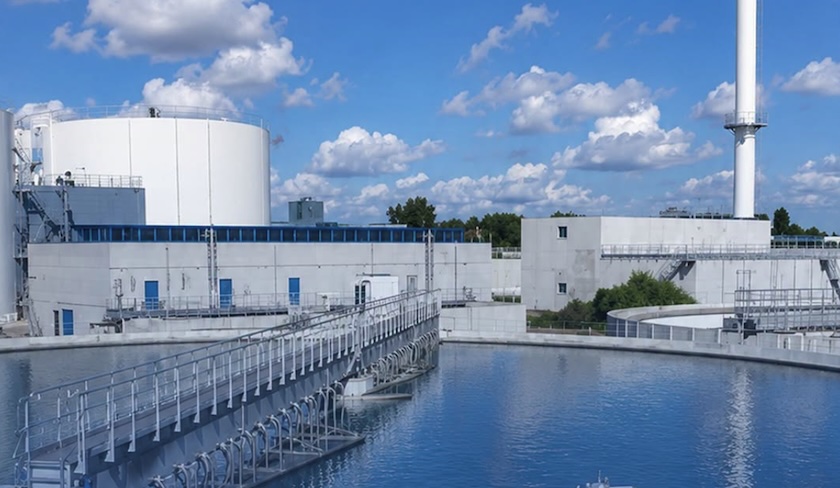
Launched in 2018 to strengthen water security in the Sahel, the Sidi Abdelhamid seawater desalination plant, in Sousse, finally went into operation on September 28, 2026, it was announced on Tuesday, October 6, 2026. Its commissioning comes after several postponements, deadlines successively announced and then exceeded and several questions about the technical difficulties encountered during the tests.
With an estimated cost of 132 million dinars, the project was initially to be carried out in seven years, i.e. a commissioning around 2025. But in recent months, several deadlines had been brought forward without the station actually starting to produce water for the network.
In April 2026, the CEO of the Société nationale d’exploitation et de distribution des eaux (Sonede) indicated in particular that the work was to be completed by the beginning of the summer. He also announced that the station should start producing before the end of the year. These deadlines were finally exceeded.
On August 7, the project director, Moncef Amara, returned to the reasons for this delay, explaining, then, that the different components of the project were completed and that the station was in a test phase. The main difficulties concerned the pretreatment of seawater, an essential step before its passage through reverse osmosis membranes.
The process is based on several stages. Seawater must first be treated to meet precise parameters before being routed to reverse osmosis membranes, which ensure the separation of dissolved salts.
According to Moncef Amara, the tests had shown that some pretreatment parameters did not yet meet the requirements necessary for the proper functioning of the rest of the process. The teams worked in particular on the adjustment of the injection of the chemicals used at this stage.
The manager then indicated that the teams were working 24 hours a day and that the operations had entered their final phase, while refusing to set a new firm date for commissioning.
These explanations came when questions had emerged on social networks about the exact nature of the difficulties encountered.
On August 2, the former elected representative of Attayar in Sousse, Mejdi Ben Ghezala, mentioned in particular a possible incompatibility between the characteristics of the seawater captured in Sidi Abdelhamid and the filtration system installed in the station.
According to the information he said he had from some sources, this situation could have led to premature clogging of the filters and, in the long run, damage the reverse osmosis membranes. The tests would have been interrupted in order to avoid damaging particularly expensive equipment.
However, this hypothesis had not been officially confirmed. Sonede and other project stakeholders had not communicated on the existence of an incompatibility between the water captured and the equipment installed.
For its part, Moncef Amara had confirmed that the difficulties were indeed at the level of pretreatment, but without confirming the existence of a technical incompatibility or that of a membrane clogging phenomenon.
The project manager had also firmly denied the information that the station had already produced water unfit for consumption. He had assured that the facility had never been put into operation and that no drop of water produced by the station had yet been injected into the network.
The delay of the project was not just about the difficulties encountered during the final tests. Moncef Amara also mentioned the disruptions caused by the Covid-19 pandemic, as well as the use of international arbitration during the project.
Designed on behalf of Sonede by the consortium formed by the Spanish group Abengoa and the Tunisian company Engineering Procurement & Project Management (EPPM), the station now has a production capacity of 50,000 cubic meters of drinking water per day. An extension is planned to bring this capacity to 100,000 cubic meters per day.
Seawater is captured at the cooling channel of the Sidi Abdelhamid power plant, operated by the Tunisian Electricity and Gas Company (Steg). It then goes through a pre-treatment system before being routed to the reverse osmosis units.
The project also includes several ancillary infrastructures, including pipelines intended to ensure the intake of water, the evacuation of the brine and the integration of the new resource into the distribution network.
The station is part of a broader strategy to develop unconventional water resources, while Tunisia faces increasing pressure on its conventional resources.
According to data previously communicated by Sonede, the new facility should in particular contribute to strengthening the drinking water supply of the Sahel and to gradually reducing dependence on certain resources from the North Water system and groundwater.
Since September 28, 2026, the station has officially entered into effective operation. Desalinated water is now sent to the networks serving Sousse, Monastir and Mahdia, thus strengthening the capacities available for drinking water supply in the Sahel.