
With a coastline that extends over nearly 2,290 km, including 575 km of sandy beaches, Tunisia has an exceptional maritime capital. But the challenge today is no longer only to enhance the sea as a tourist setting. It is a matter of protecting it, understanding it, governing it differently and making it a real lever for value creation, blue jobs and territorial development.
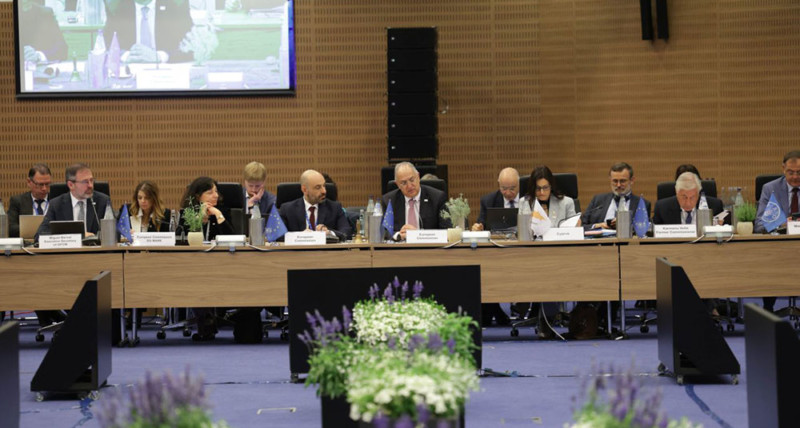
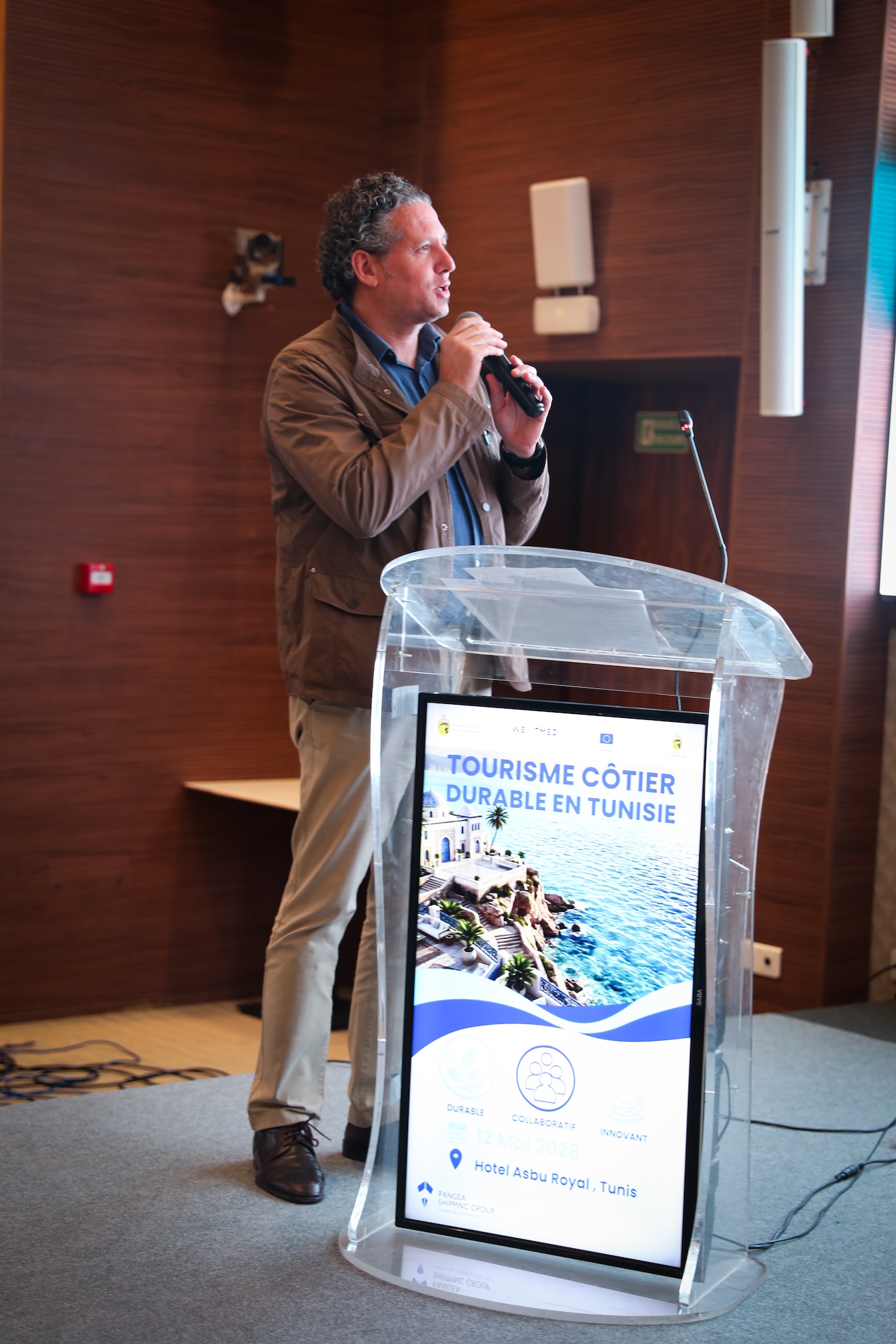
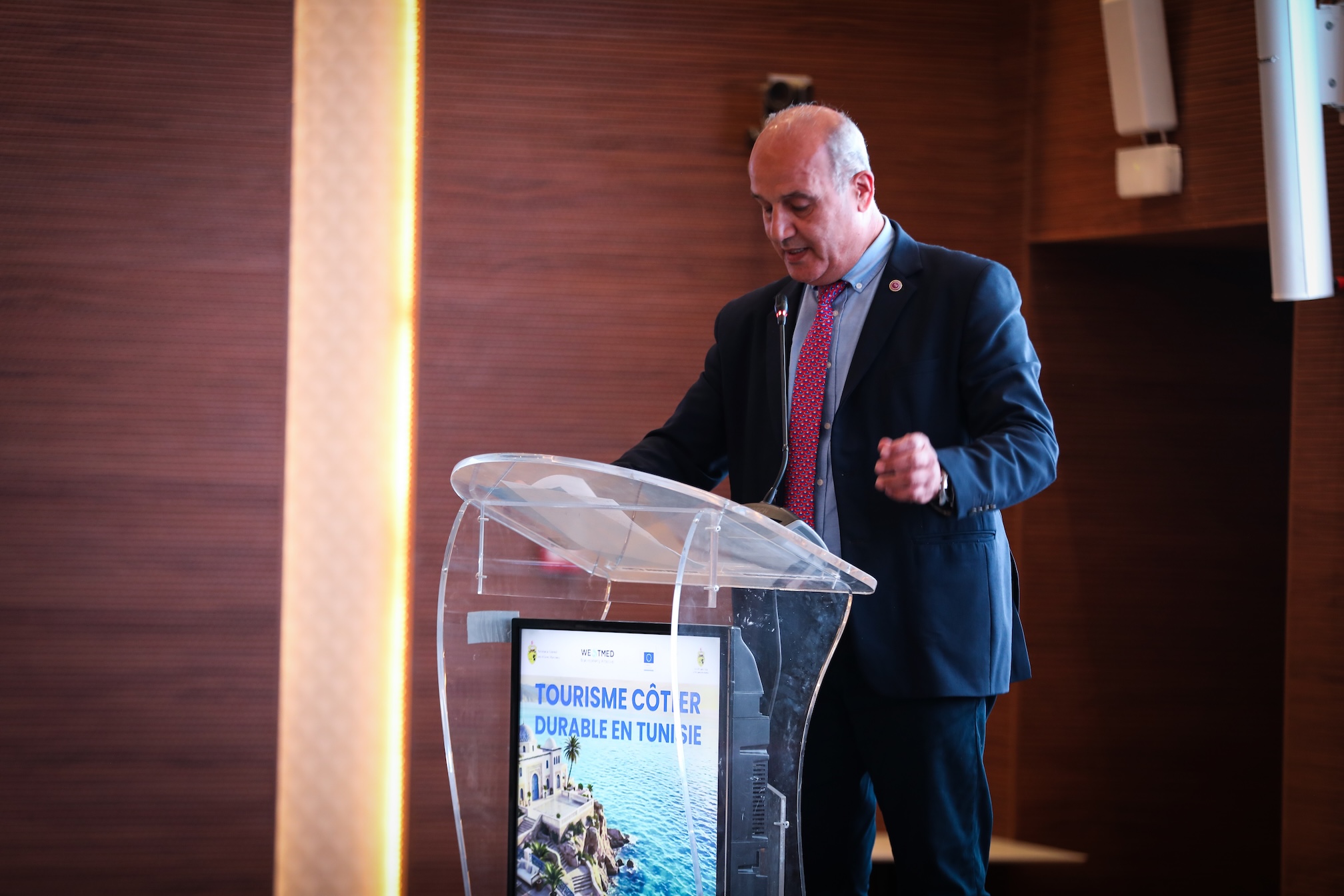
It is in this spirit that the national seminar on « Sustainable coastal tourism in Tunisia: from coastal protection to the creation of value and blue jobs » was held on May 12, 2026 at the ASBU Royal Hotel in Tunis, organized as part of the WestMED Initiative.
Placed under the chairmanship of the Minister of Tourism, Mr. Sofiane Tekaya, this meeting was organized by the Tunisia National Hub of the WestMED Initiative, in coordination with the National Focal Points, the Ministry of Foreign Affairs, Migration and Tunisians Abroad, as well as the General Secretariat of Maritime Affairs.
The presence of the Minister of Tourism at the official opening gave this meeting a strong institutional reach, confirming Tunisia’s interest in a more sustainable, more resilient and better connected coastal tourism tourism priorities in the Western Mediterranean.
The Ministry of Foreign Affairs was represented by Mr. Zyed Bouzouita, Ambassador and National Coordinator of the WestMED Initiative, who recalled the importance of Tunisia’s Mediterranean anchorage and its commitment to the promotion of a sustainable blue economy. He also mentioned the projects carried out by Tunisia as part of its co-chair of the WestMED Initiative for 2025-2026, including the dynamics engaged around blue skills and the Regional Observatory of Sea Trades in Tunis project.
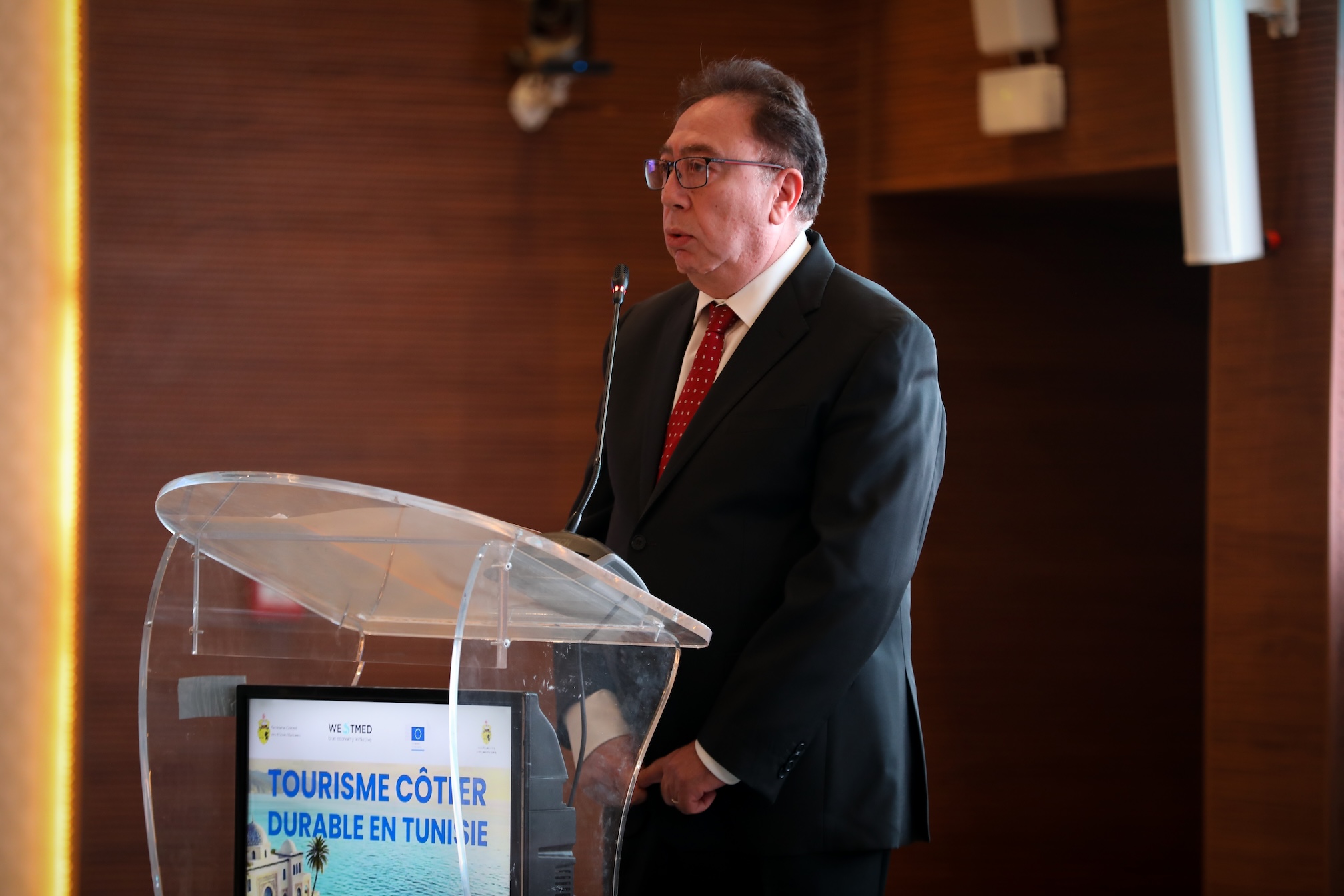
The seminar brought together a wide range of institutional, economic, academic, financial and territorial actors around the same question: how to transform the blue economy into concrete action?
The work addressed the major issues of sustainable coastal tourism: ecotourism, boating, marinas, ecological transition, hospitality, skills, financing, governance and enhancement of maritime heritage. The program included panels on the 2030 coastal tourism model, blue skills, the ecological transition of tourist ports and infrastructure, and the financing and governance of blue tourism.
One of the highlights was the panel dedicated to the ecological transition of coastal tourism, moderated around a central question: how to engage operators in a responsible, measurable and fundable transition?
Around this problem, several speakers brought complementary views: Colonel Zied Mandhour, representative of the Tunisian Coast Guard, Mrs. Narjes Bousaker, representative of the Tunisian Hospitality Federation as well as the officials of the municipalities of Kerkennah and Midoun. The dialogue made it possible to clearly set out the conditions for the transition to action: standards, measurement, financing, local governance, operator responsibility and increased skills.
In this perspective, hotels appear as a strategic lever.

As Mrs. Narjes Bousaker pointed out, hotel establishments can become real drivers of transition, provided they are accompanied, equipped and integrated into a territorial vision. Energy efficiency, water management, waste reduction, local purchases, team building, landscape integration, connection with ports, marinas, maritime excursions and ecotourism experiences: the coastal hotel can no longer be thought of as a simple accommodation structure. It must become a valuable platform, a starting point for the territory, its know-how, its maritime heritage and its local communities.
The issue of capacity building was also at the heart of the exchanges. Because the transition cannot be limited to infrastructure or standards. It involves putting the human being back at the center: training, qualifying, supporting operators, young people, communities and emerging professions in blue tourism. This orientation is in line with the objectives of the seminar, which aimed in particular to strengthen the integration between marinas, hotel infrastructure, nautical activities and the enhancement of maritime heritage, while identifying territorialized value chains promoting local employment.
Another striking sequence: Mr. Darghouth’s intervention on maritime archaeology. His formula summarized one of the most profound issues of the debate:
We cannot protect the maritime ecosystem without understanding the people who inhabited and used it.
This reflection puts heritage at the heart of sustainability. Protecting the sea does not just mean preserving ecosystems. It also means understanding the uses, memories, know-how, human traces and coastal cultures that have shaped the relationship between Tunisian communities and the Mediterranean.
In this logic, the protection of maritime heritage fully meets the requirements of SDG 14, devoted to aquatic life, but also the issues of transmission, education, territorial identity and quality tourism.
Ms. Zarrouk, representative of the ONTT, recalled that sustainability encourages the diversification of the Tunisian tourism product beyond the summer seasons. An essential approach to get out of a seaside model that is too concentrated in time and pave the way for richer tourist experiences: maritime heritage, ecotourism, islands, artisanal fishing, coastal gastronomy, gentle nautical circuits, responsible thalassotherapy and immersion in ancestral know-how.

Financing and governance have also been identified as two major levers for moving from vision to action. The intervention of Mr. Ben Mimoun, representative of the Interreg NEXT MED program, as well as that of Ms. Malika Belhassen for the MERS program, highlighted the importance of cooperation mechanisms, calls for projects, green and blue funding, but also the structuring of credible, measurable and anchored projects in the territories.
Because the blue economy can only become a real model if it is based on clear governance, financing capacity, bankable projects and effective coordination between institutions, communities, professionals, ports, hotels, nautical operators, universities and civil society.
The seminar was also marked by the intervention of Mr. Imed Zammit, National Focal Point of the WestMED Initiative in Tunisia, who recalled the importance of moving from a sectoral vision to an integrated approach to sustainable coastal tourism, articulating blue skills, governance, financing and enhancement of coastal territories.
This day also highlighted several structuring advances made as part of the WestMED Initiative. Among them, the establishment of the WestMED Technical Group on Blue Skills, whose first start-up meeting was held on April 27, 2026, with the ambition of contributing to the creation of a regional Observatory of Blue Skills in Tunisia.
Participants also highlighted the strengthening of synergies between the WestMED Initiative and the Interreg NEXT MED program, as well as the upcoming organization of a national capacity building workshop for the blue economy community in Tunisia. The announcement of an additional envelope of 8.25 million euros as part of the next Interreg NEXT MED call for projects dedicated to sustainable coastal tourism confirms the importance of financing as a lever for action.
In this same dynamic, Mrs. Dalenda Mekki, representative of the CCITunis, presented the SMAC project, a Mediterranean initiative dedicated to supporting small accommodation structures in their ecological transition. Through the Simplified Sustainability Model for Accommodation – SSMA, the project proposes a simplified and operational model to help accommodations gradually integrate sustainable practices, thus confirming the role of Mediterranean cooperation in the concrete transformation of coastal tourism.

At the end of the work, the participants adopted a 2026–30 roadmap for the development of sustainable coastal tourism in Tunisia. This is structured around four priorities: the development of skills and blue professions, support for sustainable investment and innovation, the enhancement of maritime heritage and ecotourism, as well as the strengthening of governance and public-private partnerships.
At the end of the exchanges, a conviction was imposed: Tunisian sustainable coastal tourism cannot be reduced to a logic of protection on the one hand and tourism promotion on the other. It must find a balance between preserving maritime heritage, economic enhancement, inclusion of local communities, sustainable financing and shared governance.
Tunisia has the assets. It must now transform this wealth into a territorial brand, integrate its ancestral know-how into value chains, go beyond seasonality and make its coastal areas living poles of sustainable tourism.
The real challenge is now to transform the Tunisian coast into a living ecosystem: ports that are no longer just boat parking, hotels that are no longer simple accommodation structures, cultures and heritage that are no longer reduced to beautiful memories, but integrated as engines of value, experience and quality.
It is on this condition that Tunisian coastal tourism will be able to go beyond seasonality and establish itself as a credible pillar of the sustainable blue economy, by connecting the sea, men, professions, territories and value.
source : tourismag