

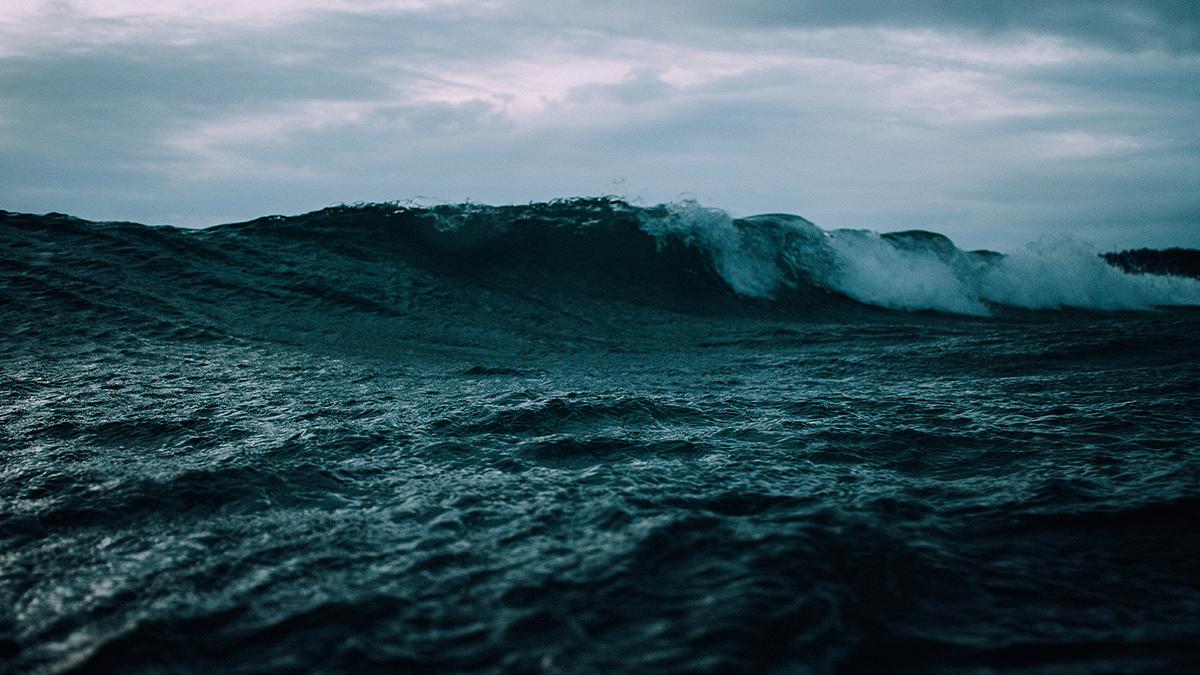
Several marine areas have allowed the sunlight to filter less in recent years. This could trigger a vicious cycle of global warming.
Every night, discreetly, the largest migration of the planet takes place in the oceans. Billions of tiny creatures ranging from zooplankton to fish to krills rise together from the depths to the layers closest to the surface. The comings and goings of the Sun and the Moon, or at least the little light they can perceive at the bottom of the water, dictate their behavior. Except that in recent years, large areas on the surface of the oceans have mysteriously darkened. The Atlantic, the Pacific side of South America and the Antarctic coast would be the most affected.
« We have known for some time that coastal waters are darkening, » explains Tim Smyth to New Scientist. What is new is that we also observe this trend in the open sea. » With his colleagues, this scientist from the Marine Laboratory in Plymouth (United Kingdom) discovered in 2024 that the pelagic zone of the oceans, the column of water above the bottom, also allows light to filter less than before. The analysis of twenty years of satellite photos shows that one fifth of the world’s oceans have darkened, a phenomenon probably linked to the proliferation of phytoplankton, itself due to global warming.Explanation.
Over the years, temperatures rise, marine heat waves become more frequent, and salinity is disturbed in some regions. These changes are influencing global ocean circulation. « My hypothesis is that we have before our eyes a complex interaction between a change in this circulation on a global scale and some more localized weather changes, such as stronger sunshine and more stable surface water here and there, » says Tim Smyth. All this promotes the growth of phytoplankton and therefore the darkening of the oceans. »
In concrete terms, this means that in darker regions, the habitable areas that form in the different layers of the ocean narrow vertically by several tens of meters. Imagine the population of Paris piled up in the Buttes-Chaumont Park. « If you compress the ability of organisms to grow, move, hunt, communicate, reproduce and photosynthesis in a smaller space, competition for resources will increase, » says the oceanologist.
The ocean remains extremely resilient
Take the zooplankton. Where phytoplankton is at the bottom of the food chain, zooplankton is just above. Some are the basis of the fish diet. Every day, they migrate vertically by changing layers of the ocean. They descend hundreds of meters from the water column to flee predators who see them in the light of day. Then, at night, they go back to the surface to feed. It is the largest biomass migration in the world. Several gigatons of zooplankton, or 10 quintillion individuals, make the journey every day.
This migration, and therefore marine ecosystems, will change drastically if light no longer crosses the oceans so deeply. Zooplankton will descend less far since light will become rarer faster. « In the short term, some predators will be able to hunt more easily, by spending less energy to track down their prey, » imagines Tim Smyth. All this will have cascading effects, both for the marine food chain and for human fishing, which are difficult to envisage today.
The phenomenon is not irreversible, especially near the coasts. The waters are particularly sensitive to coastal development, especially agriculture.Fertilizers, earth and organic matter, taken from fields to rivers by runoff water, end up in the oceans, where they increase the rate of light-absorbing matter in the water. In an open ocean, on the other hand, it is much more difficult to play on the parameters that darken the water. Even if human pollution fell to zero tomorrow, the oceans would take decades, if not centuries, to purify.
However, the oceans have a remarkable ability to self-heal. « Experience shows that it is enough to leave a marine ecosystem in peace for it to regenerate at a sometimes surprising speed, » notes Tim Smyth. This is good news for everyone. The oceans cover 70% of the earth’s surface, regulate the climate and absorb huge amounts of carbon and heat. This is why the scientific community is pushing massively to expand protected maritime areas. Saving wildlife is not the only issue; the oceans are our life insurance.
source : Slate