
To mark World Oceans Day on June 8, the United Nations published a scientific report on the state of the oceans. Its findings are unequivocal: the situation is worsening. However, it welcomes the entry into force of the international treaty for the protection of the high seas.
Some 550 scientists from 86 countries worked for five years, from 2021 to 2025, to establish the health of the oceans on behalf of the United Nations . Published on June 8, World Oceans Day, this third “Global Assessment of the Oceans”, spanning 1,600 pages, reports increasing pressures.
In addition to global demographics (the population has increased from 7.7 billion individuals in 2017 to 8.2 billion at the end of 2024), the document cites the intensification of activities at sea (wind farms, deep-sea oil infrastructure, deployment of submarine cables and pipelines) but also climate change and pollution.
On the positive side, “significant progress has been made in ocean protection, notably thanks to the landmark High Seas Treaty,” explains The Guardian. Entering into force this year, this treaty establishes protection rules for international waters, located beyond the jurisdiction of any country, which represent two-thirds of the oceans.
The British daily highlighted alarming points related to ocean warming in this report: the rate of sea level rise has doubled, from a maximum of 1.9 millimeters per year before 2015 to 4.3 millimeters per year in 2023, and 16% of the total increase in ocean temperature recorded since 1955 has occurred after 2018. In the Arctic , temperatures are rising four times faster than the global average.
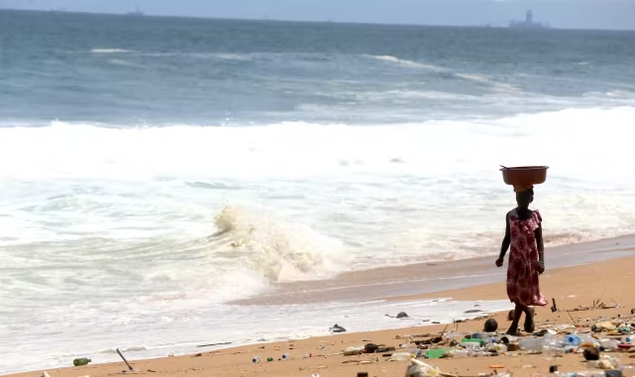
On the pollution side, 52.1 million tonnes of plastic end up in the ocean every year, the report estimates, “which contributes to the 24.4 billion microplastic particles that affect more than 4,000 marine species”, notes the Guardian.
source : courrier international