
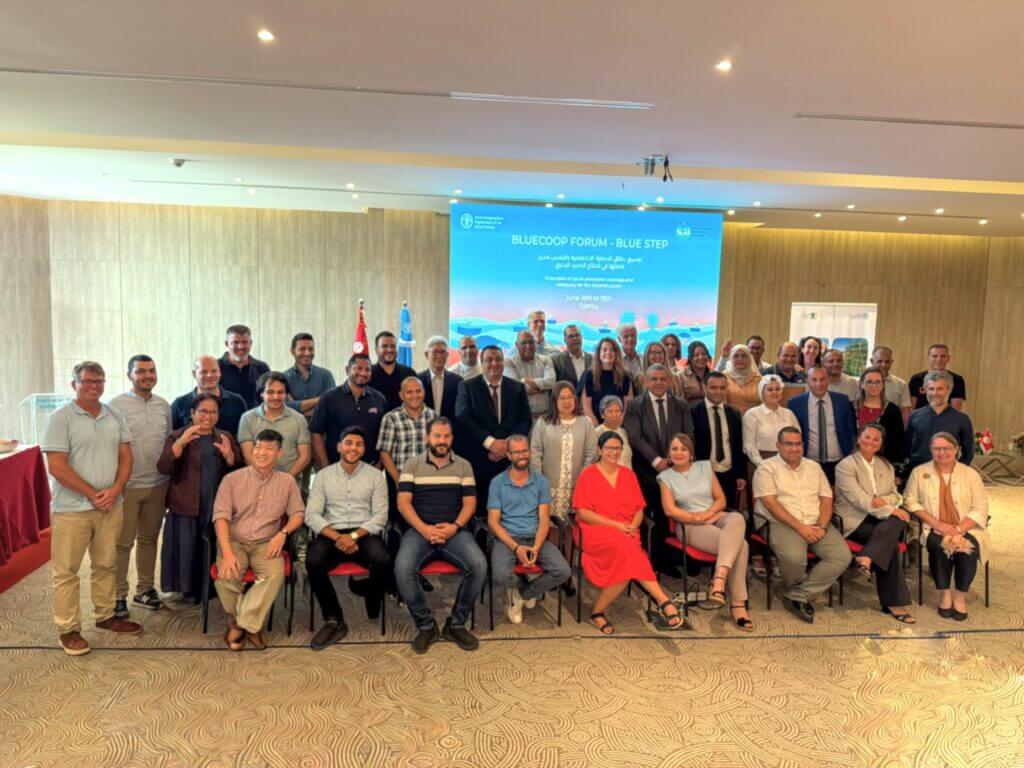
Faced with the challenges of marine resource sustainability and the social inclusion of coastal communities, Tunisia is taking a new step in developing the blue crab sector with the launch of the BLUE STEP project and the organization of the BLUECOOP Forum which starts today with the support of the NGO Monterey Bay Aquarium, financial, technical and implementation partner.
In less than a decade, Tunisia has succeeded in transforming the blue crab, once considered an invasive species, into a valuable fisheries resource that generates economic activity and jobs. This success is based on exemplary collaboration between public institutions, scientific research, fishermen, processors, and the private sector, making the country a regional leader in the collaborative management of this resource.
The BLUECOOP Forum is a strategic platform for dialogue bringing together public decision-makers, researchers, professional organizations, international partners and field actors in order to strengthen cooperation, share international experiences and identify innovative solutions for a more resilient and competitive sector.
At the heart of this dynamic, the BLUE STEP project aims to promote sustainable and inclusive management of the blue crab value chain. Beyond economic development, it places the social dimension at the center of its action by improving the living and working conditions of communities that depend on this activity, including fishermen, women involved in making crab traps, processing plant workers, and other stakeholders in the value chain.
The project will also contribute to strengthening the understanding of international market requirements in terms of quality, traceability and certification, while promoting the exchange of good practices, the development of commercial partnerships and the search for solutions adapted to the environmental and socio-economic challenges of the sector.
In his address, Mr. Nabil Assaf, FAO Representative in Tunisia, stated that » the FAO supports this new stage by backing an integrated approach that acts across the entire value chain, from sea to plate, in order to strengthen the sustainability of the sector, improve its competitiveness in international markets and guarantee coastal communities, particularly women and fishermen, better working conditions, enhanced social protection and greater resilience to the challenges of tomorrow. »
By promoting international partnerships, the sharing of experiences – particularly with the Philippines on governance and social protection issues – as well as dialogue between institutions, the private sector and local communities, BLUE STEP illustrates the commitment of FAO and its partners to support the transition to a more sustainable, inclusive blue economy that offers opportunities for future generations.
source : realites