
In accordance with Resolution No. 36 of the Party’s Central Committee on the strategy for the sustainable development of the maritime economy by 2030, with a vision until 2045, Vietnam aims to become a strong and prosperous maritime nation by fully exploiting its maritime potential and assets.
Recent developments in the main economic hubs show that integrated connectivity between ports, logistics infrastructure, industrial areas and businesses is an essential driver of regional development and strengthening national competitiveness.
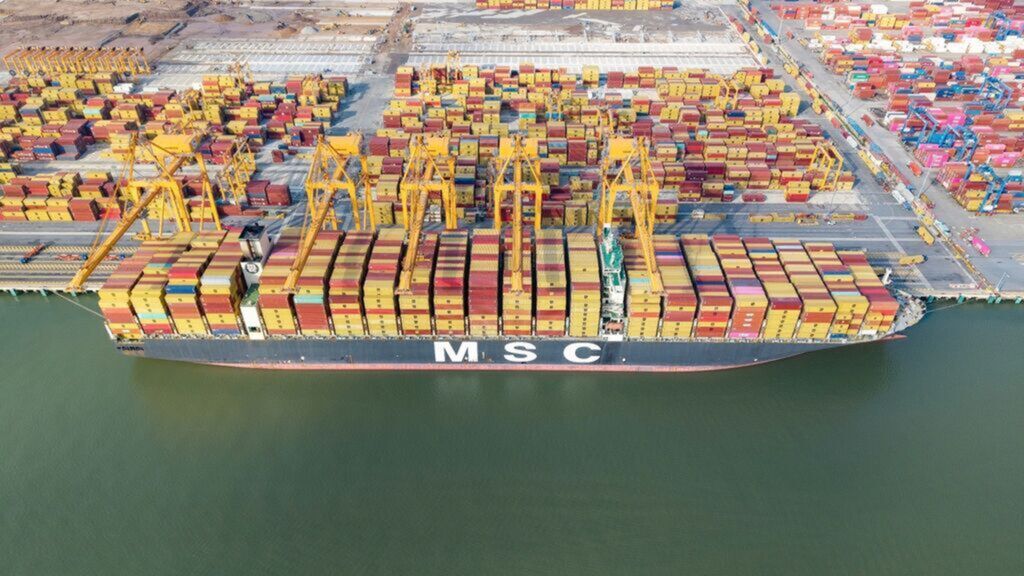
This dynamic is also reflected in international rankings. The 2025 Container Port Performance Index (CPPI) report, published by the World Bank and S&P Global Market Intelligence, ranks the ports of Cai Mep and Hai Phong among the twenty best performing container terminals in the world. Ranked 11th and 13th respectively worldwide, they are now ahead of many port hubs in the region thanks to their operational efficiency.
The city of Hai Phong illustrates this rise in power by asserting itself as a true multimodal platform where highways converge, railway network under development, international airport and deep-sea ports capable of receiving ships of more than 200,000 tons and providing direct maritime connections with the major ports of Europe and America.
The year 2025 marked an important milestone with the commissioning, by the Hateco group, of the international terminal Hateco Haiphong International Container Terminal (HHIT), the first port terminal of this size fully financed by private capital. At the same time, the Hai Phong Port Corporation inaugurated docks No. 3 and 4 of the Lach Huyên Port, significantly strengthening the operating capacity of this strategic port area.
Thanks to these investments, the port area of Lach Huyên is taking a new stage in its development and is gradually asserting itself as a strategic link in the international maritime network.
According to Lê Dô Muoi, Director of the Maritime and Waterway Administration of Vietnam, the increased openness to private investment has allowed the Vietnamese port system to make a real qualitative leap. In the first half of 2025, the volume of goods handled in the country’s ports reached about 687.5 million tons, an increase of 18% over a year. Container traffic was 18 million EVP, up 12%.
In order to support this dynamic, the port development master plan by 2050 provides for investment needs estimated at more than 359.00 billion dongs ($13.6 billion), most of which will be devoted to the development of modern commercial terminals.
Deputy Minister of Construction, Nguyên Xuân Sang, stresses that the growing attractiveness of the Vietnamese port sector is reflected in the presence of major international operators such as APM Terminals (APMT), PSA International and SSA Marine, as well as leading shipowners such as MOL and NYK, who have invested in several large-scale port projects to develop infrastructures that meet international standards.
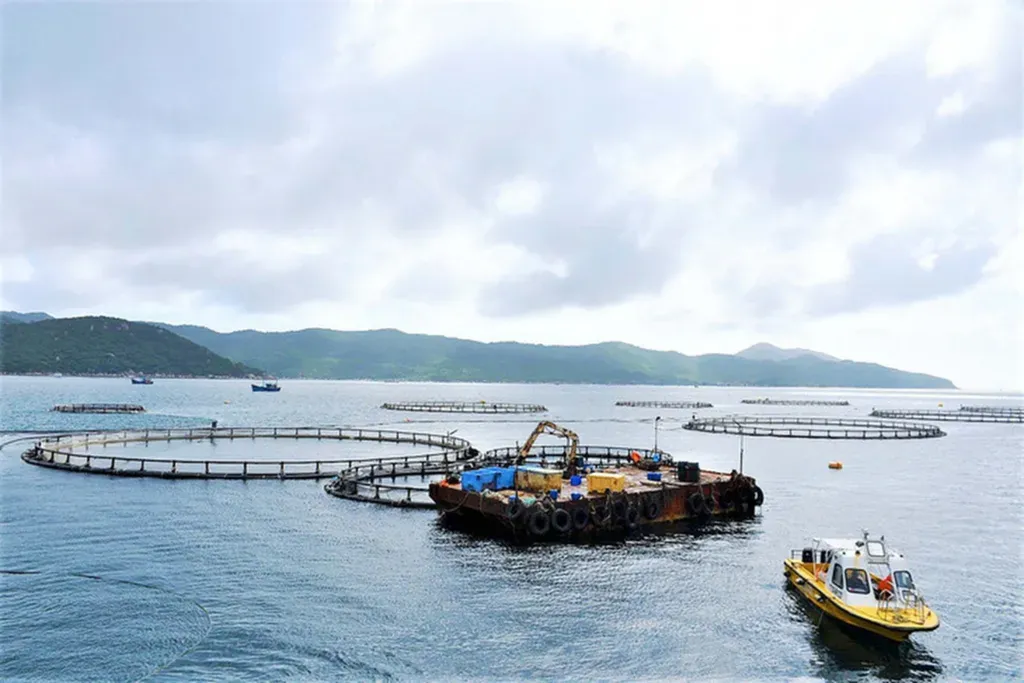 |
| Marine aquaculture in Khanh Hòa Province. |
| Photo: VNA/CVN |
According to him, seaports must become the heart of the national logistics network. The establishment of a national logistics database, combined with the acceleration of the digital transition and the green transition, is one of the essential levers for developing an efficient, modern and sustainable multimodal transport system.
It also indicates that the Ministry of Construction is currently finalizing the specialized master plan covering the five modes of transport, in order to create an integrated transport network and to contribute to the achievement of the double-digit GDP growth objective.
With 34 seaports and 320 terminals in operation, Vietnam is among the countries with the highest port growth rates in the region. In 2025, the total volume of goods handled in the country’s ports exceeded 960 million tonnes.
Despite these encouraging results, the development of port and logistics infrastructure remains faced with several constraints. In many localities, maritime infrastructure remains insufficient, in particular due to the limited depth of certain channels, the lack of specialized and modern equipment, still insufficient multimodal connectivity and limited links between seaports and other modes of transport.
To meet these challenges, the maritime sector has set itself three main strategic directions: making seaports the nerve centers of the national transport network, strengthening multimodal connectivity to reduce logistics costs and modernizing port governance through data integration and the development of supply chains.
Companies in the sector also consider it necessary to modernize inland waterway infrastructure to promote container transport, while accelerating the planning and development of a dry port network (DCI).
They also underline the importance of setting up a national logistics data platform and strengthening the interconnection and sharing of data between logistics companies, major seaports, shipping companies, customs services and competent public bodies.
According to professionals, these measures will form the foundation for a more efficient, more integrated and sustainable multimodal transport system, helping to strengthen the competitiveness of the Vietnamese port system and making the maritime sector one of the main drivers of national economic growth.
source : le courrier