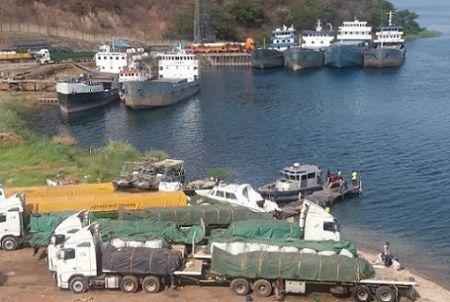
Faced with rising logistics costs, Africa’s landlocked countries are looking for alternatives to traditional corridors. Inland port infrastructures are gradually becoming more than levers for diversifying trade routes.
Zambia plans to modernize the port of Mpulungu, located on Lake Tanganyika, in order to bring it to regional standards and strengthen its integration into the transport corridors of southern and eastern Africa. The project was recently presented by officials from the Ministry of Transport, during the regional validation workshop of the final report of the feasibility study devoted to the harmonization of legislation on transport, port procedures and operations on Lake Tanganyika.
The main Zambian port on the lake, Mplungu offers the country direct access to trade with Burundi, the Democratic Republic of Congo and Tanzania. Its modernization should, according to the authorities, strengthen its role in regional logistics, stimulate intra-continental trade and facilitate cross-border movements of goods.
The project also provides for the construction of a rail link between the main line of the Tanzania-Zambia railway (TAZARA) and the port of Mpulungu. If it materializes, this connection would improve the intermodality between rail transport, lake transport and port operations, while strengthening the logistical competitiveness of the Lake Tanganyika basin.
A landlocked country, Zambia depends largely on the corridors connecting the ports of Walvis Bay in Namibia, Dar es Salaam in Tanzania, Lobito in Angola, or Nacala in Mozambique. The distance of the seafronts sometimes requires journeys of nearly 2,000 kilometers to reach the nearest platform, according to the Trade Law Centre (Tralac). This situation leads to an increase in logistics costs and lengthens the delivery times for imports and exports.
In this context, the modernization of the port of Mpulungu would bring additional logistical capacity, likely to streamline access routes to regional trade. It would complement a transport network that is now largely structured around road and rail, facing aging problems, and requiring significant investments to meet the growing demands of intra-African trade.
source : agence ecofin