
The development of an El Niño episode is « incore and more likely » from mid-2026, with impacts on global temperatures and precipitation, the World Meteorological Organization (WMO) announced on Friday. On the Fakarava Atoll, is the large-scale bleaching of the coral reef already a sign of this announced change?
According to the WMO, a UN agency, a « clear change in the Equatorial Pacific » is underway, with surface temperatures rising rapidly. Wilfran Moufouma Okia, head of the WMO Climate Forecasting Section, believes that an El Niño episode could begin from May to July 2026, with a risk of « high intensity ». This prospect is worrying when the episodes of 2023 and 2024 had already made these years the hottest ever recorded.
Money laundering, a brutal reality
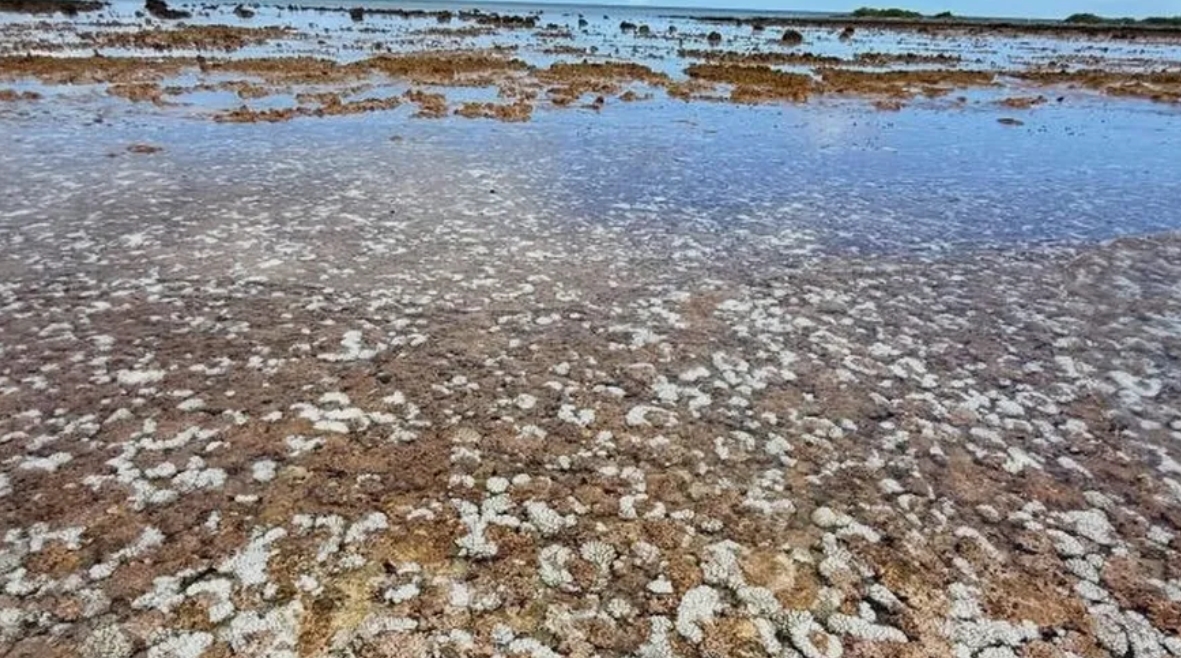
Should we already see a link, but in Fakarava, Raimiti has just posted on his social network some photos of the reef describing a critical situation: « The coral whitens as far as the eye can see. In places, he is already dying… and the smell is there, heavy, almost unreal… We often see images, we hear about climate change on the news. But being there, living it, feeling it… it’s something else entirely. It’s an entire ecosystem that suffers, before our eyes. »
/outremer%2F2026%2F04%2F26%2F69ed3d85c0efe720635468.jpg)
After such an alarming observation, Dan Granier explains this phenomenon by the prolonged temperature rise: under the effect of water exceeding 30/31°C, the corals « turn fluorescent then white then [it’s] death ».
Cry of alarm
The dismay is growing among the inhabitants of the affected areas who are helplessly witnessing what Miri Tahiti describes as an « ecological disaster for our atolls and our populations ». For Teïki Anaka Vj, « the temperature of the Pacific waters will be rising accelerating coral mortality… it’s really sad to see this ». Coati Cris also testifies to a rapid degradation in a few years, describing lagoons « full of algae, empty of fish », a situation considered « to cry ».
Impact of human activity
Although the WMO states that it is not proven that climate change increases the frequency of El Niño, these cycles are part of a global context of anthropogenic warming. What Poe Tahiti suggests, for whom this observation is the result of « human actions uncontrolled since the industrial revolution », calling for an urgent reduction in carbon emissions in the face of this « alarming, atrocious » spectacle.