
Brent crude closed at $79.55 a barrel on Thursday and WTI at $76.02, after a period in which oil reached more than $126 amid the conflict.
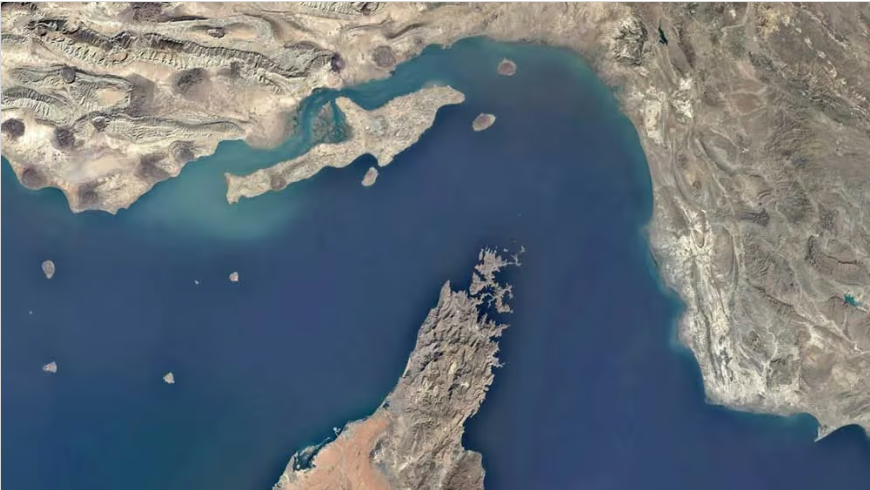
The Strait of Hormuz, a strategic waterway through which nearly 20% of the world’s oil passed before the Middle East conflict, is likely to reopen this Friday after a 110-day closure that strained the global energy market. Throughout this period, the price of Brent crude, the European benchmark and a key indicator of inflation, rose by approximately 10% compared to pre-war levels.
Over the past few days, prices have moderated their trajectory. Trading extended its declines following the signing of the peace agreement, and on Thursday, Brent crude closed at $79.55 a barrel, while West Texas Intermediate (WTI) settled at $76.02, according to data compiled by the World Trade Organization and the United Nations. The previous Friday, Brent had already fallen below $90 following the announcement of the possibility of the agreement.
The conflict has triggered significant price movements since its outbreak. On the first day of trading after the Hormuz blockade, Brent crude rebounded by more than 7%, rising from $72.48 to $77.74. During the first week, it increased by nearly 28%, surpassing $90, and during the first month, the increase approached 55%, reaching $112.57. Brent reached its peak on March 31, above $118, during a session in which it even exceeded $126 a barrel. For its part, WTI reached its highest point on April 7, nearing $113, with one session in which it surpassed $117.
Despite these increases, Nicolás López, head of equity analysis at Singular Bank, believes the price « never entered a panic phase, » given that the market maintained hope for an agreement between the United States and Iran. After the initial spikes, the price ceased its sharp rises and stabilized in a range of $90 to $110 thanks to a series of compensatory measures: the release of strategic reserves by several countries, the search for alternative routes such as the Red Sea, increased production in the United States, Kazakhstan, and Brazil, and reduced demand from China. López nevertheless cautions that « the Hormuz will remain relevant, » especially since some of these measures, such as the reduction in Chinese purchases, are not sustainable in the long term.
The enclave’s relevance to maritime trade transcends crude oil. A week before the conflict, according to data published by the WTO and the United Nations, crude oil accounted for 38% of the maritime volume crossing the strait, followed by liquefied petroleum gas (LPG) at 29%, liquefied natural gas (LNG) and refined products at 19% each, chemicals at 13%, containers at 3% and dry grains at 2%.
The most visible economic impact of the shutdown was the rise in energy costs. Brent crude saw a price increase of over 74% during the period of greatest tension, while gas prices exceeded 100%, putting upward pressure on inflation. In the eurozone, the CPI stood at 3.2% in May, above the European Central Bank’s 2% target, leading the institution to raise interest rates to 2.25% at its June meeting. In the United States, inflation reached 4.2% in May.
“A potential tightening of monetary policy to address inflation is the most significant risk factor that markets could face,” emphasizes López, who draws attention to the uncertainty surrounding so-called second-round effects—that is, whether the rise in energy costs will ultimately be passed on to consumers. Juan Carlos Martínez Lázaro, professor of economics at IE University, also points out that food prices have increased, not only due to higher transportation costs but also because of the fertilizer crisis, which “could have a delayed impact on some prices.” Martínez Lázaro further notes that oil prices have performed “below what one might have expected, given the scale, duration, and location of the conflict.”
With the anticipated reopening of the strait, analysts agree that the normalization of energy flows will not imply an immediate return to previous conditions. Inflation will take longer than expected to return to pre-conflict levels, even with the easing of the hydrocarbon market and the gradual resumption of maritime traffic through the Strait of Hormuz.
source : ElestrechoDigital