
Piracy has decreased in the Gulf of Guinea region, but it still remains a major focus of illegal, unreported and unregulated (IUU) fishing worldwide. Trafficking, smuggling, oil theft and other organized criminal groups continue to operate there. The new Joint Maritime Operations Force aims to respond to these threats.
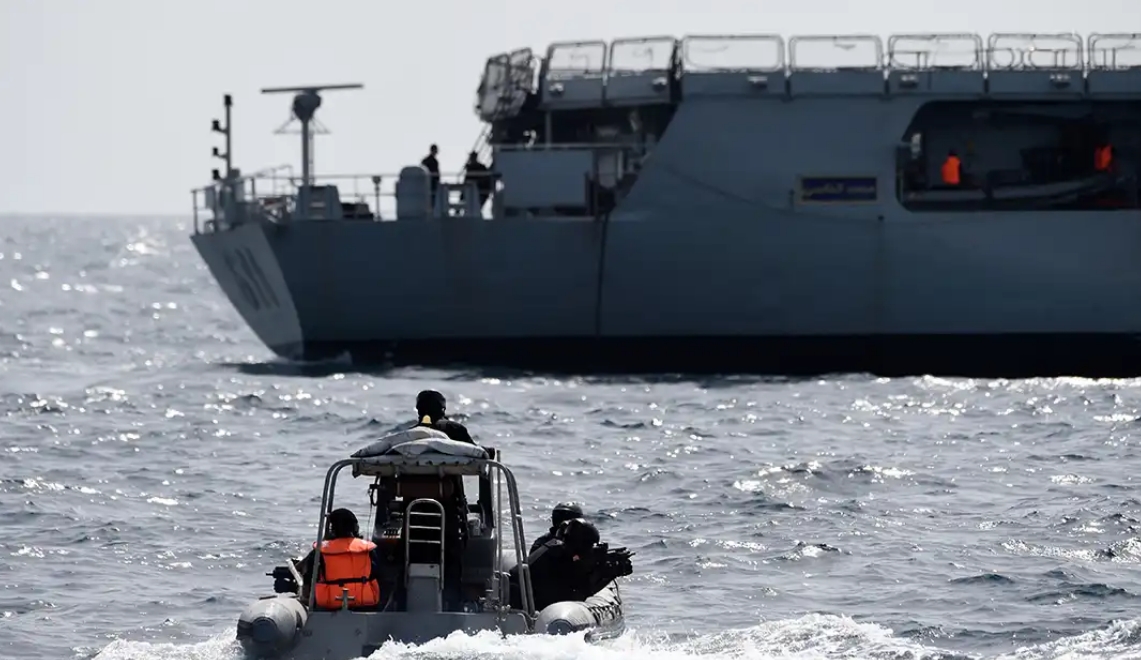
Côte d’Ivoire, Gambia, Ghana, Liberia, Nigeria and Sierra Leone created this force on June 1. This is the first common African maritime security initiative integrating a rapid response capacity. Other countries should join this initiative. The force’s mission will be to secure nearly 6,000 kilometers of coastline, extending from Angola to Senegal. Based in Lagos, it is expected to provide intelligence gathering, interception, maritime patrol, surveillance, search and rescue, as well as other operations related to maritime safety.
Commodor Mohamed Chetima told the Institute for Security Studies (ISS) magazine ISS Today:
“The Operational Force aims to strengthen [Yaoundé]’s architecture and fill a significant gap by providing fast, mobile and permanently available monitoring capabilities. «
The Yaoundé Code of Conduct, adopted in 2013, provides a framework for naval forces in West and Central Africa to improve their knowledge of the maritime situation and to combat crime at sea in the Gulf of Guinea.
Eventually, the Operational Force should have 1,500 members and have air, ground and electronic maritime surveillance capabilities. According to the ISS, Nigeria is so far the only country to have provided operational resources, including a helicopter, two minibuses, two small trucks, three ships and three military vehicles. The force will collaborate with the West Africa Regional Maritime Safety Centre and the Central Africa Regional Maritime Safety Centre.
Researchers Martin Ewi and Timothy Walker of the Institute for Security Studies point out that Nigeria’s initial contribution is an encouraging sign, but that more efforts are needed. According to them, the Operational Force will have to demonstrate its effectiveness quickly in order to maintain momentum and increase regional participation.
This initiative is the result of five years of discussions between the African Union, the Economic Community of West African States (ECOWAS), the Economic Community of Central African States (EAEC) and the Gulf of Guinea Commission. The Institute of Security Studies, as a neutral partner, facilitated these exchanges by ensuring dialogue between the various stakeholders.
According to Martin Ewi:
“Many regional initiatives exist, but gaps persist in law enforcement and operations coordination to respond to complex maritime threats in the Gulf of Guinea. The Operational Force represents a commitment of the States of the region to assume responsibility for their maritime environment and their safety. «
The researchers recall, however, that the implementation of the Yaoundé Code has also been slowed down by a lack of political will and by the non-compliance with the commitments made by some Member States. These factors could limit the effectiveness of the new force if no improvement is made. In particular, they recommend seeking support from the African Union and the United Nations.
They specify that, during the phase of setting up the political, legal and operational bases of the Force, international partners can continue to provide support in terms of training, financing and technical expertise. However, the long-term objective must remain a takeover by the African states themselves, so that Africa retains the leadership of this initiative.
The researchers cite as examples of successful cooperation in the Indian Ocean the Combined Operational Force 151 (CTF 151), under the aegis of the Combined Maritime Forces, as well as the European Union’s Operation Atalanta. These initiatives have helped to strengthen trust, information sharing and common operational practices.
The CTF 151, created in January 2009 by an international coalition, conducts anti-piracy operations in the Gulf of Aden and off the coast of Somali. It brings together naval resources from 30 countries and covers a maritime area of 2.85 million km².
Operation Atalanta, launched in December 2008, fights against piracy in the Horn of Africa and the western Indian Ocean, covering in particular the Seychelles, Mauritius and the Comoros, over an area of 8.7 million km². Both of these operations have largely contributed to reducing piracy off the coast of Somalia.
According to Martin Ewi and Timothy Walker, the creation of this Joint Maritime Operational Force shows that the Gulf of Guinea states are ready to be inspired by the principles of these international initiatives and to adapt them as part of an approach led by Africa.
They also emphasize that external partners can continue to play an important role through training, technology transfer, legal reforms and the provision of specialized capabilities, such as satellite surveillance. However, this support should complement, not replace, regional responsibility.
Finally, they emphasize the importance of lasting political support from the United Nations, the African Union and other international, continental and regional institutions to ensure the success of this new Maritime Operational Force.