
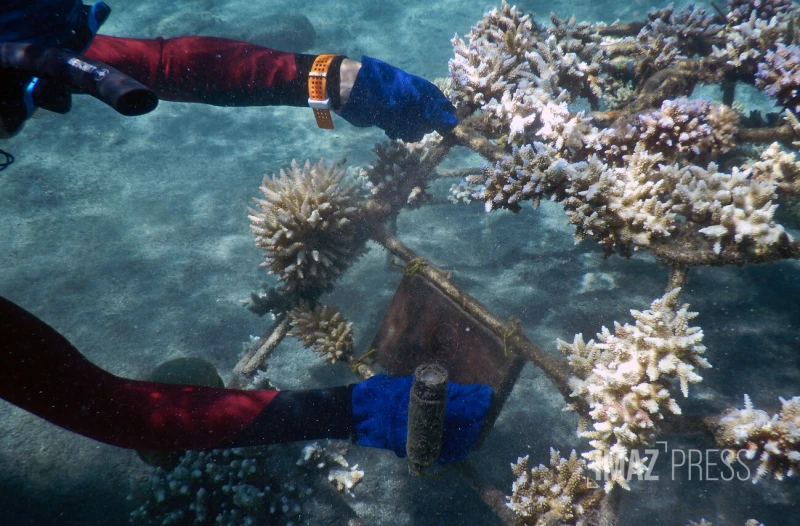
On the night of October 29 to 30, 2026, the sand of the western lagoon of Reunion Island was garned with pink. The reason, a massive laying of branchy, cabular or acropora corals. A real sign of a renaissance for the island’s coral reef, this does not prevent the Reunion Island Marine Reserve from warning about the importance of not walking or sailing on coral. Otherwise, any chance of recolonization would be in vain. If bathers are not more careful, the coral reef of Reunion Island could be doomed to disappear (Photo Stephan Laï-Yu/www.imazpress.com)
According to the Marine Reserve of Reunion Island, branch corals, cabular or acropora – species that reside in our lagoon – reproduce massively during the transition between winter and austral summer and during the full moon.
« They emit male and female gametes and at the same time in the water. Then, the eggs laid by corals – which look like many small marbles – rise to the surface where they are fertilized. That’s when they will become small larvae, » explains Bruce Cauvin, Head of the Animation, Education, Training and Geomatics Division, which monitors the health of coral reefs at the Marine Reserve.
– The laying of corals, a hope for the Reunion lagoon –
The small larvae « will drift according to the currents ». Some will fall on the sand and will be condemned, others will be eaten by fish and marine organisms. Fortunately, a small fraction will succeed in fixing at the bottom and clinging to a living or dead coral, « making a calcareous skeleton and becoming polyps (living base of corals), » says the scientist.
Little by little, these polyps will divide to give life to a coral colony.
A slight hope for the Marine Reserve, while in 2025, corals covered only 10 to 15% of the bottom of the Reunion Island lagoon, compared to 40% twenty years ago.
– To give larvae a chance, do not step on corals –
« Young larvae often settle between existing coral colonies, » warns the Marine Nature Reserve. Reason why you should avoid walking between corals or crush them.
Moreover, walking on coral, as well as navigating on it, is strictly prohibited, whether it is alive or dead.
An alert that makes sense when the heat returns to Reunion Island and many people go swimming in the lagoon.
The Marine Reserve also challenges the fishermen, many of whom ventured on the dead coral, thinking that their gesture would have no impact. « Often at night we have people who come to poach, it’s a massacre » Bruce Cauvin.
The Marine Reserve reminds bathers to stay only on sandy areas.
– Reunion coral threatened by El Niño –
If the hope of seeing coral reborn is immense, the fear of El Niño is strong, with a higher than normal ocean temperature during the rainy season.
Thermal stress related to climate change is the most constant threat to the decline of coral reefs worldwide.
Ocean warming and marine heat waves cause episodes of massive bleaching that lead to widespread coral mortality with increasing frequency. In 2025, the recorded money laundering was the largest ever documented in Reunion Island.
It affected more than 60% of the coral reefs of Reunion Island.
To this have been added several phenomena disturbing the tranquility of the coral reef where nearly 3,000 animal species live.
« Garance delivered the coup de grace. Mudslides resulted in significant mortality. Almost 30 hectares of the coral plateau was dug by mud. In Saint-Leu, between the two rescue stations, 10 hectares of coral plateau were totally destroyed, » laments Bruce Cauvin
In addition, in July 2025, an exceptional low tide laid bare many corals.
« 2025 was a dark year for the coral reefs of Reunion Island, » summarizes the scientist.
– The coral reef of Reunion Island in danger of extinction –
If bathers are not more careful, Reunion Island’s coral reef could be doomed to disappear. The ecosystem is also part of the IUCN’s red list of ecosystems.
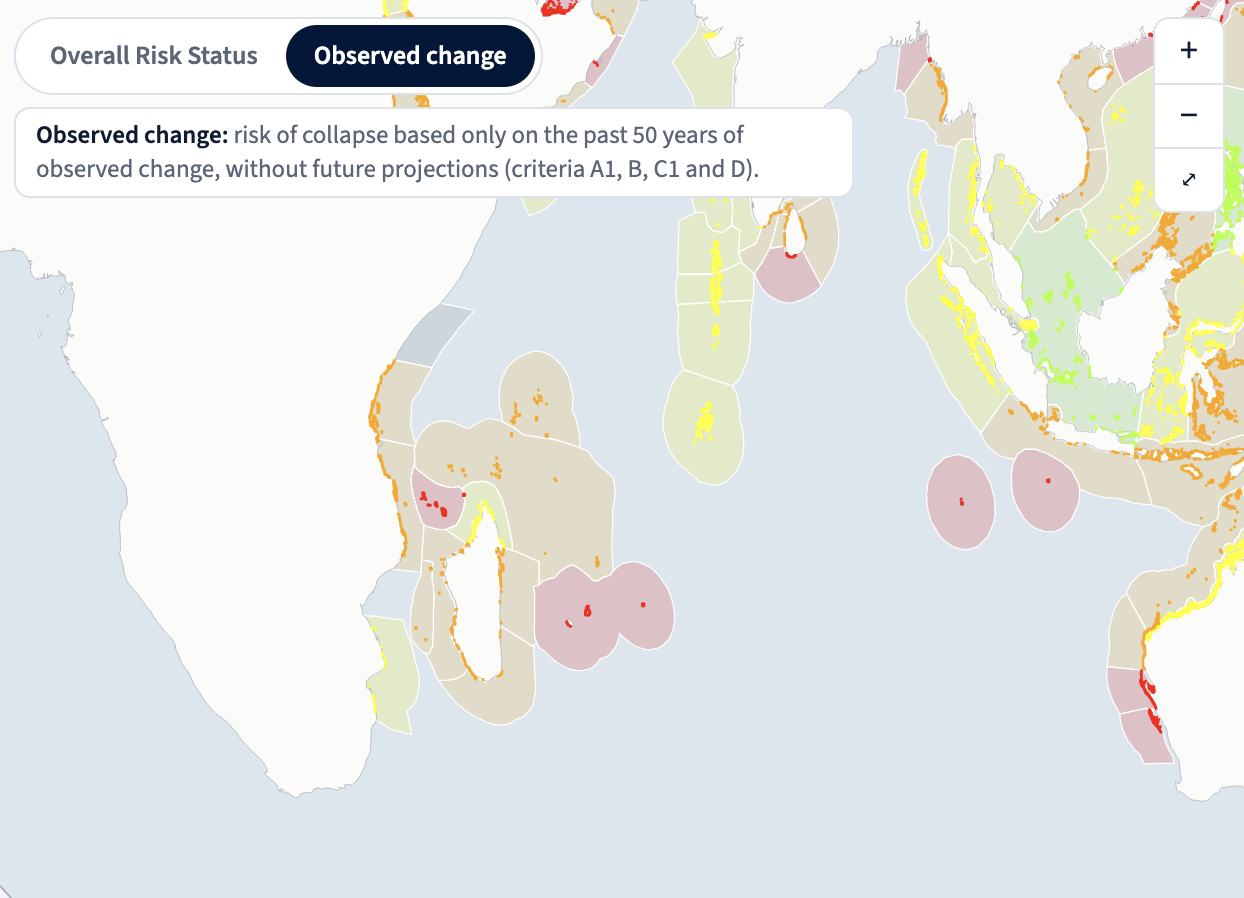
In 50 years’ time, if this does not change, his critical condition could increase according to the IUCN. « The coral reef is the first to react to climate change, » says Bruce Cauvin of the Reunion Marine Reserve.
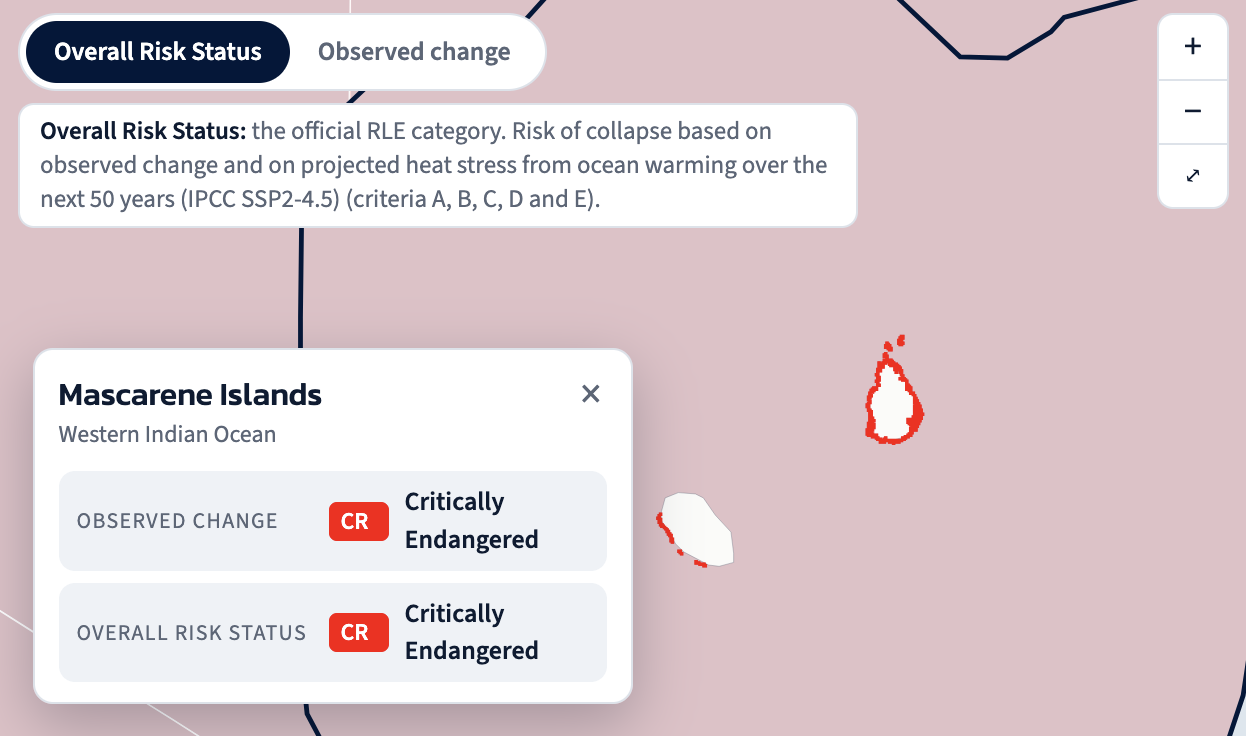
« The protection of reefs and the services they provide is essential for people and biodiversity, as the radical change in global coral systems will have an impact on millions of people who depend directly or indirectly on coral reefs, » said Professor Emily Nicholson, Head of the IUCN Ecosystem Red List Thematic Group on the IUCN Ecosystem Management Commission (CGE).
Classified as a marine nature reserve since 2007, the Reunion lagoon is subject to strict regulations, enshrined in the decree creating the marine protected area and several prefectural decrees.
These texts aim to preserve the 3,500 hectares of biodiversity, a unique ecosystem, very popular but particularly vulnerable, and to sustainably protect coral reefs.