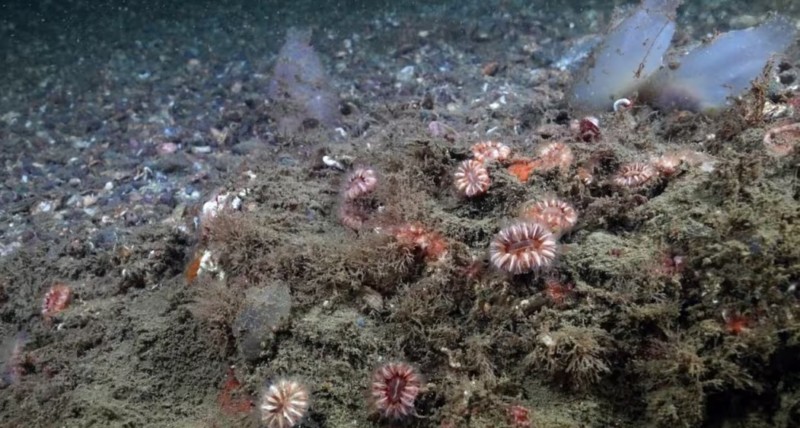

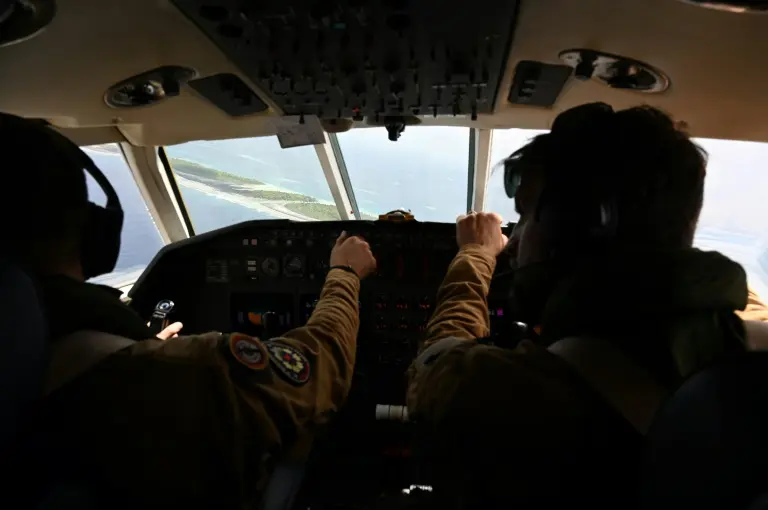
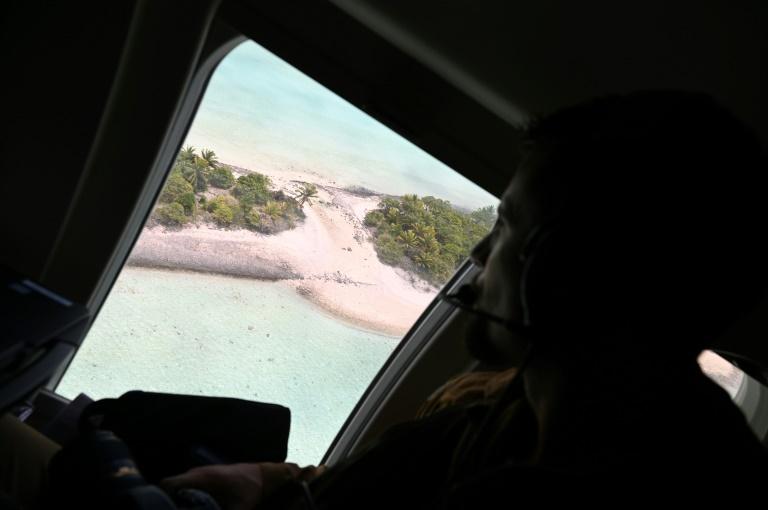
Above the turquoise lagoon of Fakarava, renowned for the abundance of its underwater fauna, Lieutenant Edward scrutinizes the ocean aboard a National Navy Falcon 50. With the mission to protect the marine environment and combat illegal fishing.
Left half an hour earlier from Papeete, capital of French Polynesia, 450 km away, he commands four soldiers in charge of monitoring from the sky the largest Marine Protected Area in the world (MPA).
Under the wings of their aircraft, this atoll, classified as a biosphere reserve, is isolated more than 6,000 kilometers from any continent. In the Pacific, the five Polynesian archipelagos and Clipperton Island cover 5.5 million km2, of which nearly 5 million form this sanctuary called Tainui Atea (« immensity of the ocean », in Tahitian).
Modified several times since 2022, this protected area has had its strict protection extended this year by Polynesian President Moetai Brotherson, despite the now appeased discontent among fishermen.
Fishing is banned around the isolated atolls of Mopelia, Scilly and Bellinghausen, reserved around some islands for small coastal boats up to 12, 15 or 30 nautical miles, and generally allowed on the high seas only to local ships.
There are 82 in 2025 according to the Marine Resources Directorate (DRM) of the territory, these Polynesian longliners, boats that fish on a line, have little impact: they take in one year « the equivalent of a fishing campaign » from a senneur, a net factory ship, estimates Moetai Brotherson. Banned in the exclusive economic zone, foreign ships are concentrated in the north according to satellites, and none has been surprised there since 2007.
With about 5,000 km of autonomy per flight, the Falcon 50 ensures this « fishing police, even in neighboring countries that have fewer means, » explains Lieutenant Édouard to AFP.
– « Maritime Patrol » –
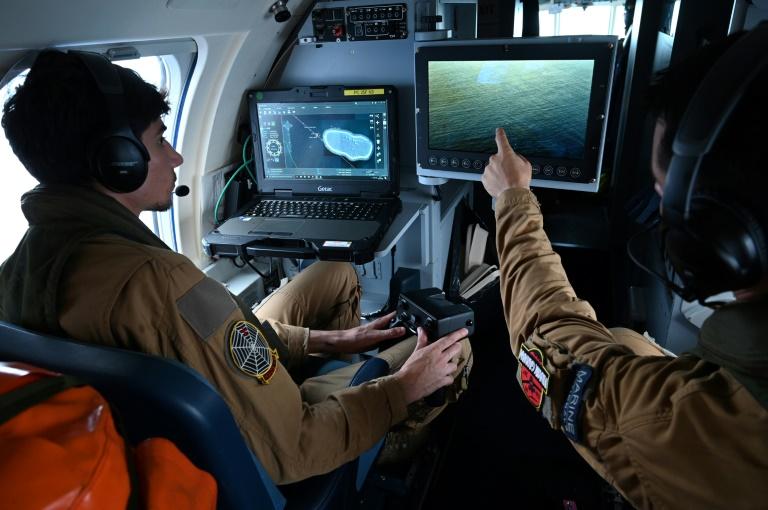
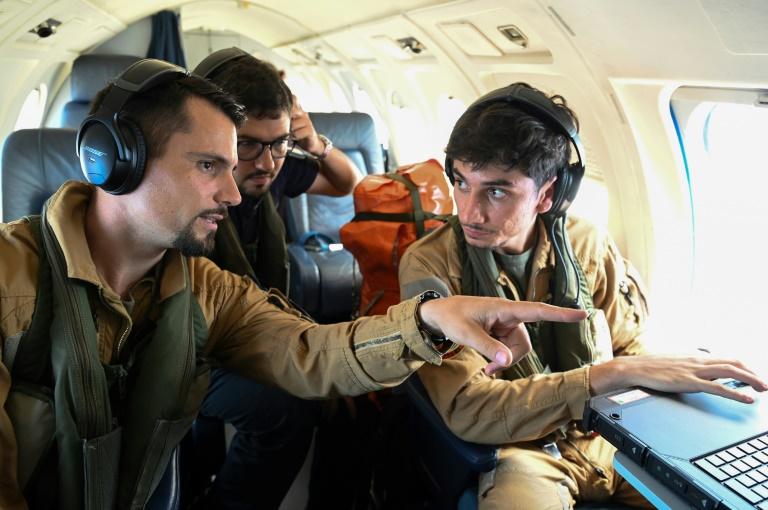
On board the aircraft, the radarist, the first master Henri, alerts the crew: he has just spotted a poti marara, a small Polynesian fishing boat piloted at the front, near a Fish Concentration Device (DCP), a floating equipment deployed by fishermen to attract wildlife.
« I guide the pilot and the operator » who follows the area on his screens, « so that he can find the DCPs and the ships with his camera, because the ships must not fish within 100 meters of a DCP, » he describes.
At the operator’s position, Master Baptiste orients by remote control the camera placed under the aircraft and films the DCP, then the boat: the fisherman respects the authorized distance and will not be verbalized. However, the soldier photographed the facility to check its condition, while remaining ready to change missions at any time.
« Even if we are on the Fakarava biosphere, we remain on maritime patrol: we can find traces of pollution, but we can also report a man at sea, » explains Master Baptiste. Behind his seat are two inflatable life rafts, which the crew can drop through a hatch on the floor of the aircraft. This hatch is also used, during certain elections, to parachute ballots on islands or atolls without landing strips.
– « Not enough » –
For Chief Commissioner Alban, head of the State Action Office at Sea in French Polynesia that targets the areas to be monitored, this « multi-mission » aircraft protects the marine environment and fights both illegal fishing and drug trafficking. At the beginning of 2026, nearly 12 tons of cocaine destined for Australia were seized.
To cover this immense space as well as the neighboring Cook and Kiribati Islands, Moetai Brotherson considered in June the state’s resources « not sufficient ». Supported by satellites and ships, the two Falcon 50 have « investigated more than 800,000 km2 since the beginning of the year, » says Chief Commissioner Alban, before a third plane and a second patrol boat expected in 2027.
Beyond fishing, another threat with potential damage not yet assessed lurks Tainui Atea: underwater mining, wanted by the United States in neighboring international waters and by the Cook Islands for their polymetallic nodules, despite the opposition of France, French Polynesia and many island countries.