

The ocean absorbs about 30% of human carbon dioxide (CO2) emissions and 90% of the excess heat trapped by greenhouse gases. But global warming weakens this essential role: its ability to absorb carbon has already decreased by about 6%, according to a new UN report published in the run-up to the United Nations Climate Conference, COP31.
The result of a collaboration between the United Nations Environment Programme (UNEP) and the secretariat of the United Nations Framework Convention on Climate Change (UNFCCC), which co-organizes COP31 in November, the report highlights the risks associated with the weakening of this natural climate regulator.
« The ocean has been doing us a huge service to us in terms of climate for a long time, but this service is under increasing pressure, » Sara Traerup, lead author of the report, told UN Info.
Rising temperatures, combined with changes in chemistry, circulation and marine ecosystems, reduce the ocean’s ability to absorb and store carbon. Result: an increased share of CO2 remains in the atmosphere, further fueling warming.
And this trend « can most certainly accelerate » in the near future, warned Ms. Traerup.
Know the ocean better to better protect it
For the authors of the report, one of the main obstacles to better ocean carbon management remains the lack of reliable data. Gaps are particularly significant in the Southern Ocean, Indian Ocean and Arctic, as well as in many coastal areas.
The report therefore advocates strengthening knowledge on oceanic carbon by mobilizing local science, technology, data and knowledge, in order to better understand how these systems work and preserve their ability to store carbon.
« At the moment, we do not have complete information about the ocean, and what we do not know, we can neither manage nor protect it, » said Ms. Traerup.
From sensors to seagrass
UNEP examines three major categories of ocean climate technologies, which have distinct perspectives and risks.
The first concerns monitoring tools: observation systems, sensors, data infrastructures and models for monitoring the evolution of the ocean and the carbon it absorbs. These technologies are the most advanced and are among the most urgent needs, according to Ms. Traerup.
The second concerns the so-called « blue carbon » ecosystems, including mangroves, seagrass and salt marshes. These environments already capture about 407 million tons of CO2 per year. Their restoration could increase this storage, while protecting the coastlines, promoting biodiversity and supporting the livelihoods of coastal populations.
Finally, the methods of removing carbon dioxide in the marine environment aim to extract CO2 from the atmosphere and store it sustainably. While they offer prospects, they remain surrounded by uncertainties and require more research, monitoring and regulation.
« We must not consider ocean technologies as a shortcut, » warned Ms. Traerup. These solutions must complement the reduction of greenhouse gas emissions and the protection of ecosystems, and not replace them.
Small island states on the front line
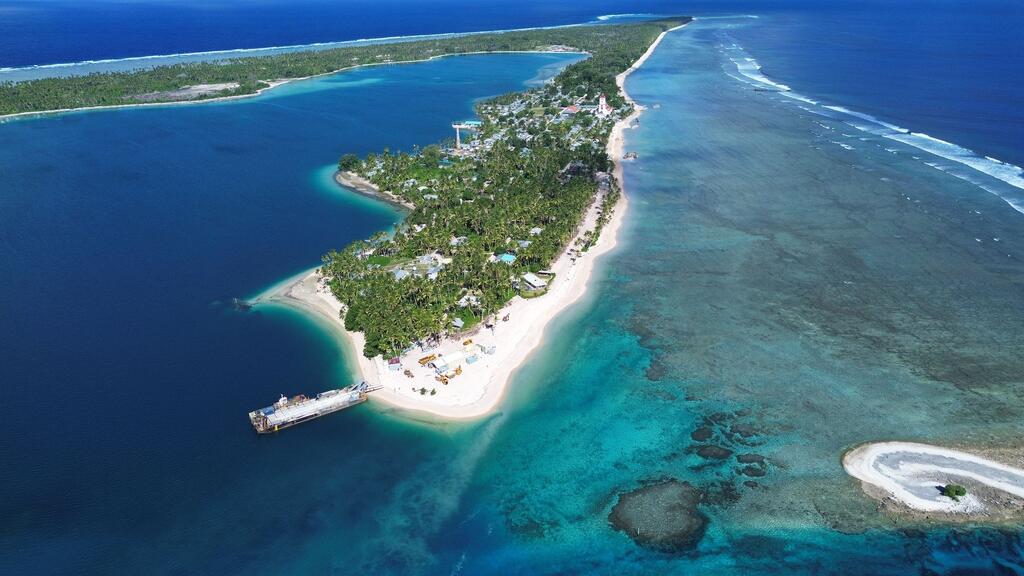
Small island developing states (SDPS) are responsible for less than 1% of global emissions, but are « at the forefront of impacts on the oceans and climate, » said Traerup.
The report calls for them to facilitate access to funding, technology transfers and capacity building, so that they can develop solutions tailored to their realities and priorities.
The Seychelles offer an example of an innovative financing mechanism. In 2015, the archipelago concluded a debt conversion agreement for nature conservation, restructuring part of its external debt in exchange for marine protection commitments. This operation made it possible to set up a trust fund dedicated to ocean conservation, climate resilience and the sustainable development of the blue economy.
In the Pacific, Fiji, Papua New Guinea, the Solomon Islands and Vanuatu have, for their part, benefited from support in mapping their marine herbariums and mangroves and measuring the amounts of carbon they store. More than 100 people were trained in the Blue Carbon Assessment, providing governments with data useful for their national climate plans.
The report also stresses the need to take into account the knowledge of local communities and indigenous peoples.
« Communities have been facing climate change for many years, » recalled Ms. Traerup, highlighting their experience in protecting coasts through natural habitats and in the sustainable management of fisheries and coastal resources.