
The ocean, an ecosystem without borders, invites us to rethink our ways of protecting nature by favoring international governance.
What if the ocean was not only a world to know and protect, but a world capable of teaching us to think differently? This is the question that goes through Agir pour l’océan, the first edition of a festival (of which Libération is a partner) where scientists, artists, writers and thinkers confront their ways of looking at the sea.
The protection of nature was mainly thought of by geographers: preserving landscapes, delimiting areas, establishing maps… However, the ocean lends itself quite badly to these terrestrial exercises. Hence a paradox: the largest ecosystem on the planet is also the least « thought » by the framework of nature protection.
Our environmental categories work for a forest, a marsh or a mountain. Applied to the ocean, they fail silently: we often protect from the sea only what we see of it, in defiance of what is deep, cloudy, obscure or moving. Perhaps this is why the ocean is the least protected ecosystem in the world (barely 3% of its surface), and in a biased way: essentially coasts of clear and shallow water. In the Bay of the Seine, the vacationer is thus bound by strict rules for the collection of shellfish, while in the distance the factory trawlers plow the seabed daily.
The ocean is such a particular environment that it requires thinking differently. Three concepts are major here:
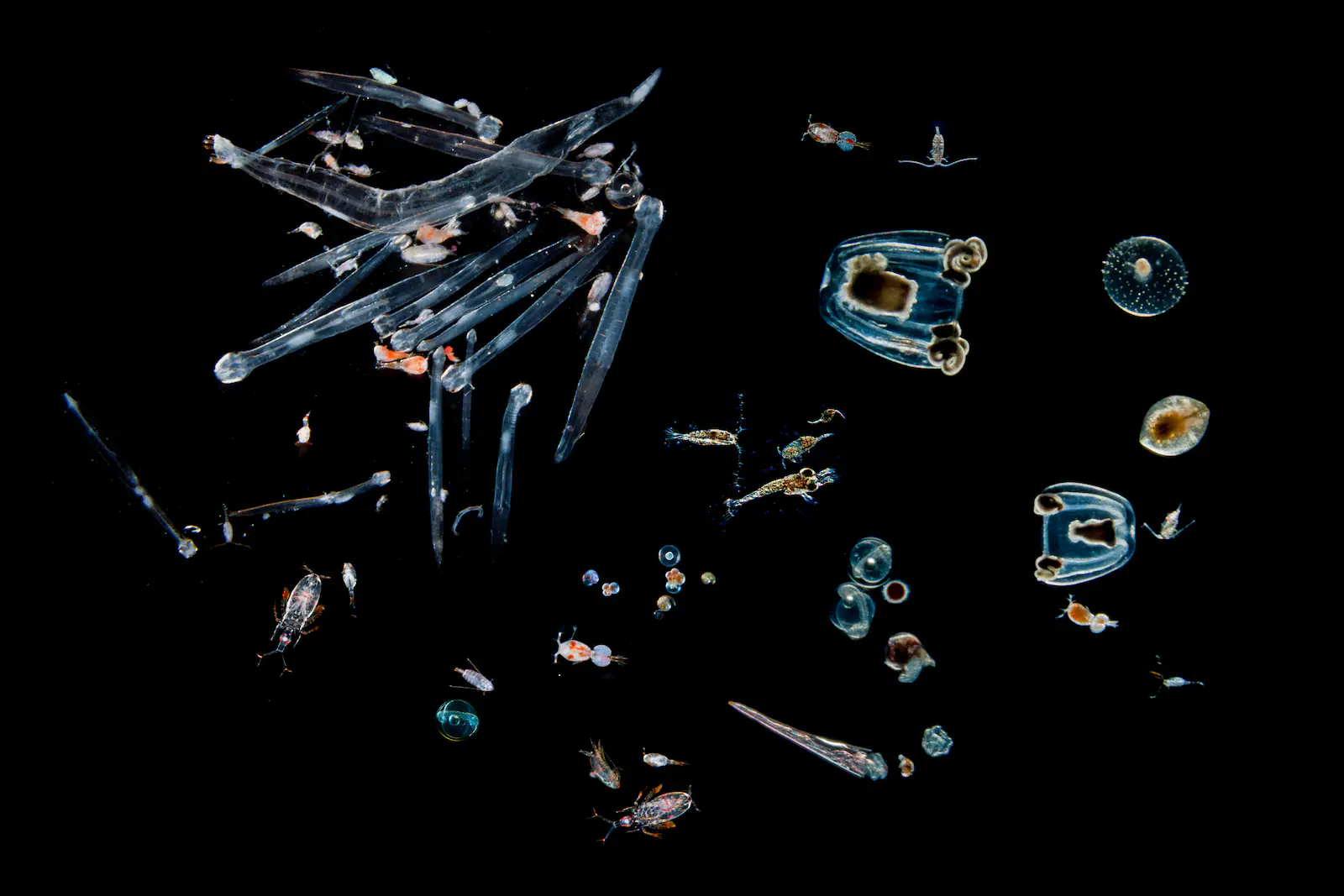
The depth against the surface. While we usually only see the surface, the ocean is a three-dimensional ecosystem, which must be thought of in volume, not in plan. What we do not see is sometimes the most important: plankton, the great depths, the murky waters or the deep sea, where processes that engage the biosphere take place. Humans have a tendency to neglect the invisible: the ocean here reveals a general defect in our gaze.
Fluidity versus property. The ocean obeys fluid mechanics, not spatial planning. We cannot fence a body of water that circulates, nor the fauna that moves there in defiance of borders. These specificities destabilize the very idea of border and possession, two pillars of our political thinking. Each country is « responsible » for its protected areas, but all nations are jointly responsible for the ocean, including their rivers. The idea of national control must then give way to an international approach based on interdependence and common goods.
Continuity against cutting. Water is a solvent: any soluble product that spills into it tends to disperse there, especially since the ocean is animated by planetary currents. The industrial and regulatory choices of each country therefore impact all the others, exactly as for the climate with CO2. The ocean ignores national borders. The treaty that has just entered into force to protect the high seas (« BBNJ ») is thus a legal revolution: we must invent a governance for a space that belongs to no one and concerns everyone.
The advent of underwater image with Commander Cousteau made it possible to give a depth to our gaze that was limited to the surface. But the marine protected areas have remained largely coastal and superficial: they protect more tourist underwater landscapes than strategic environments for the future of life on land. Most of the sea remains subject to an extractivist paradigm, out of sight and out of heart.
Today, other narratives and other devices are needed to give the ocean, in public opinion, its true dimension, and to develop policies to match.
The ocean not only asks us to be protected: it asks us to think differently. But thinking differently, what does that mean? The categories with which we organize the world determine what we consider a resource, a heritage, a territory or a border. The ocean is putting them to the test. It forces us to think beyond what our gaze can see, and against the current of our earthly instincts, in a fluid world without clear borders. It is in this space that Agir pour l’océan wishes to register: make the ocean a place from which we can learn to think differently, try other ways of looking, understanding and inhabiting the world.