Off Cap d’Agde, in the Hérault, a huge artificial reef attracts more and more divers. Installed since 2022, it aims to protect the natural seabed while developing a new ecotourism activity. And success is there.
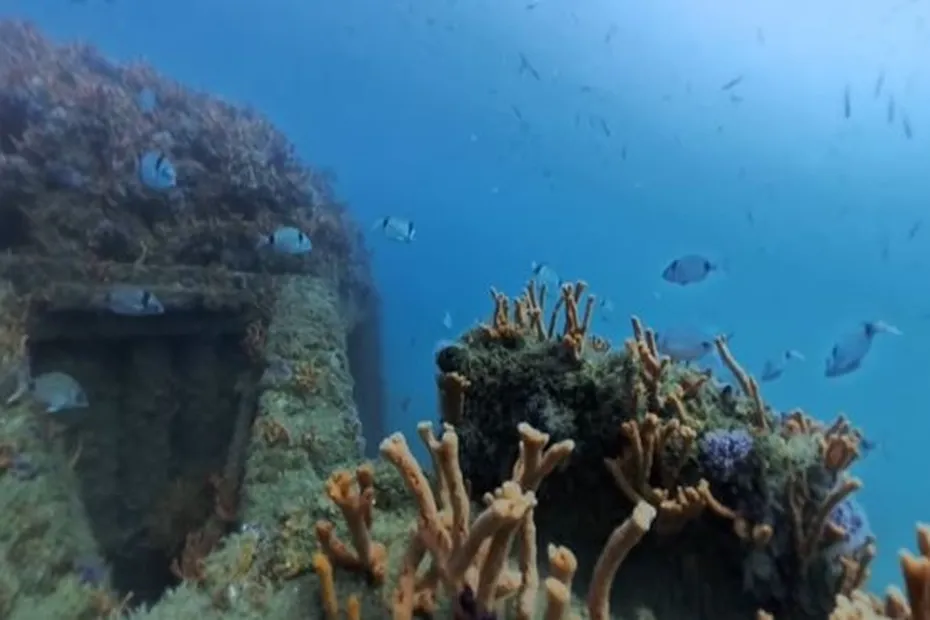
gathoise Marine Protected Area have been causing a sensation. We see schools of fish around a huge submerged structure off the coast of Cap d’Agde (Hérault). This artificial reef now attracts many divers. It was installed in July 2022 near Fort de Brescou.
It is part of the Récif’lab project. The goal was not only to create a new diving spot. Behind this project, there was above all a desire to protect fragile natural areas And the bet seems to be successful.
« The objective was mainly to be able to create a site that serves a little pressure offsetting from an activity such as diving or mooring boats on more sensitive sites, » explains Renaud Dupuy de la Grandrive, director of the Maritime Protected Area of the Côte Agathoise.
A huge artificial reef at the bottom of the water
The main structure impresses with its size. It is seven meters high and almost eight meters wide. It weighs about a hundred tons. Divers already nickname it « the cathedral ». Around this central reef, other small reefs and rock clusters have also been installed. The whole forms a real underwater village on several hundred square meters.
« The large main reef is in the middle of a wider device with small associated reefs and piles of stones.Renaud Dupuy de la Grandrive – director of the Maritime Protected Area of the Côte Agathoise »
The site was designed with local diving clubs. Several meetings were organized for years before the final installation. « This is not at all a project set up alone by the manager. It is something that has been shared with diving clubs, » he says.
A project designed to protect the seabed
This artificial reef is located near a strong protection area off the Fort Brescou. In this natural space, diving, fishing and anchorage are now prohibited, because boat anchors can damage underwater habitats. Only navigation remains authorized. The idea was therefore to offer an alternative to divers to avoid the degradation of the natural seabed.
/regions/2026/05/10/6a00a08154b9f652793601.jpg)
The artificial reef in 2022. • © Seaboost
« With this system, it allows diving clubs to go to new sites while protecting the natural site next door, » explains the director of the marine protected area. The project was also designed with more environmentally friendly materials. Part of the structure was made by 3D printing, with low carbon concrete.
« We save almost 40% of carbon footprint with this type of concrete, » says Renaud Dupuy of the Grandrive. The construction site lasted several years. The structure was built in Frontignan (Hérault) before being transported on a barge to Cap d’Agde.
Fish are now colonizing the site
At first, the reef was completely empty. But over time, marine life has developed around the structure. Today, divers cross sars, wolves, mostelles or lobsters.
« Now, the big difference is that we have a lot of biodiversity around.Renaud Dupuy de la Grandrive – director of the Maritime Protected Area of the Côte Agathoise »
The site has become popular with diving clubs in the region. Professionals organize outings to avoid too much attendance. « We consider it to be a real ecotourism equipment, » says the director of the marine protected area.
The reef is less than two kilometers from the coast. Diving can be done all year round up to twenty meters deep. For those responsible for the project, the bet to protect the natural seabed while creating a new underwater discovery site is successful.
source : france info