
Faced with the growing challenges related to climate change and the preservation of marine resources, Morocco is accelerating the transformation of its fishing sector. Based on a 2025-2027 roadmap focused on sustainability, the Kingdom strengthens scientific research, modernizes control mechanisms and continues its investments to reconcile economic performance, protection of fish stocks and development of sectors.
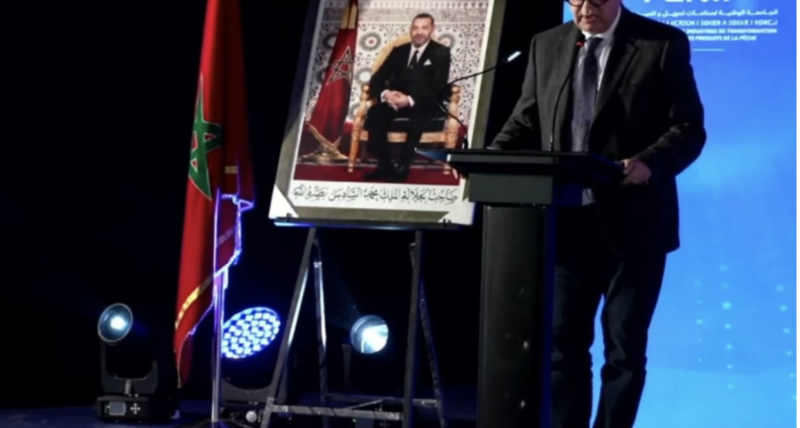
Last year, the Food and Agriculture Organization of the United Nations (FAO) made a worrying observation about the state of global fish resources, recalling that the overexploitation of fish stocks has become a general phenomenon. In many regions, the pressure exerted by fishing now exceeds the natural capacity of species renewal, endangering marine biodiversity and the sustainability of fisheries. « We now have the finest photograph ever taken of the situation of maritime fisheries. There are elements of what works and points to be improved, « said FAO Director General Qu Dongyu, calling on governments to amplify policies that bear fruit and accelerate reforms to ensure that marine resources are beneficial to both populations and ecosystems. An orientation that Morocco claims to have fully integrated. Presenting on Monday the balance sheet of her department before the House of Representatives, the Secretary of State for Maritime Fisheries, Zakia Driouich, highlighted a 2025-2027 roadmap resolutely focused on sustainability. This is based on three pillars: the strengthening of scientific research, the improvement of fisheries management mechanisms and the modernization of control mechanisms, with the objective of ensuring responsible exploitation of marine resources while preserving fish stocks.
In this dynamic, the government official announced an investment of nearly 500 million dirhams dedicated to the modernization of the scientific research fleet, considered a decisive tool for guiding fisheries resource management decisions. This strategy is also accompanied by the continuation of fisheries development plans, the number of which now exceeds thirty, as well as the generalization, this year, of the zoning system to line fishing vessels and trawlers, in order to better regulate the activity of the fleets and to control the fishing effort. At the same time, the ministry continues to modernize its control system through the development of new digital applications and the strengthening of the ship tracking system (VMS). The stated objective is twofold: to improve the monitoring of fishing activities and to consolidate the governance of a sector called to reconcile economic performance and resource preservation.
The economy is going well…
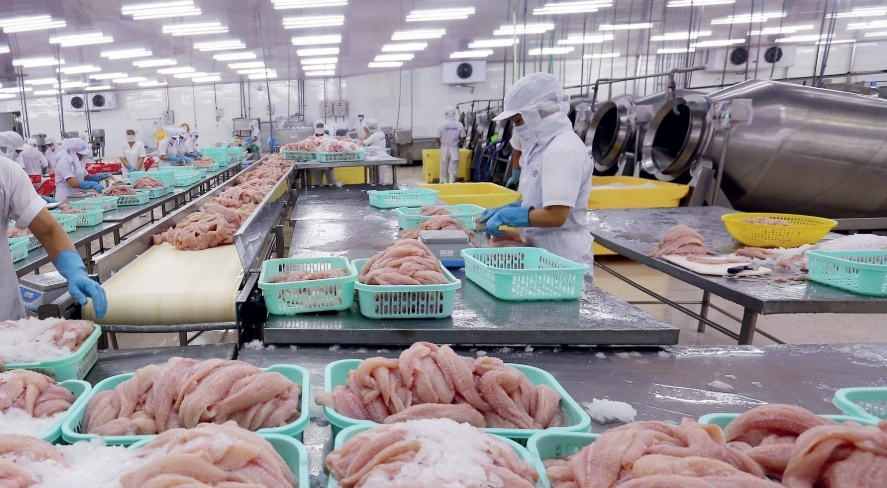
Returning to the performance of the sector, Zakia Driouich revealed that the national production of seafood exceeds 1.2 million tons, for a value of around 15 billion dirhams, an increase of nearly 1.25 billion dirhams compared to 2022. Exports of fishery products generated a turnover of about 27 billion dirhams, while private investments in industries related to sea fishing reached nearly 5 billion dirhams over the period 2021-2025. The sector now provides more than 271,000 direct jobs, making it one of the main drivers of wealth creation and economic and social development.
Responding to the criticism aroused by the decline in the availability of sardines during the first months of the year, the Secretary of State recalled that this species is subject to a seasonal cycle. Thus, the weakness of catches recorded in January, February and March does not reflect, according to her, the real state of stocks.
She added that the current indicators testify to the effectiveness of the management policy implemented. The ports of Laayoune, Tan-Tan and Tarfaya currently record daily landings exceeding 5,000 tons of sardines, a situation that has even led the authorities to temporarily suspend fishing activities at certain times, as port infrastructure is not able to absorb such a volume of landings.
For Driouich, these results are the result of fisheries management measures, including periods of biological rest, the temporary closure of certain fishing areas and the adoption of dynamic management based on daily monitoring of stock changes and adapted to the effects of climate change.
Commitment to fishing and fishermen
Then addressing the situation of professionals in the sector, the Secretary of State insisted that seafarers are at the heart of public policies on sea fishing. She recalled that the sector employs more than 135,000 sailors and that the ministry continues to implement several social and professional programs in their favor.
In this context, she announced the development of a contractual mechanism between shipowners and sailors in the coastal and artisanal fishing sectors, inspired by the model already applied to offshore fishing. This device aims to clarify the rights and obligations of each party while strengthening the legal and social protection of seafarers. Consultations with professionals are already underway and social studies have been carried out in order to achieve this project. Driouich also recalled that the generalization of medical coverage and insurance against accidents at work has been effective since 2022 for the benefit of the various actors in the sector, including shipowners, marshals and operators of aquaculture units.
In terms of safety at sea, the program for the acquisition of life jackets, with an envelope of nearly 90 million dirhams, continues its deployment through the Maritime Fisheries Chambers. The Chamber of Tangier will begin distributing the equipment this month, while those of Agadir and Dakhla have already finalized the tender procedures. On the Casablanca side, the last administrative formalities are still in progress. At the same time, the ministry continues its programs of support for cooperatives, with particular attention paid to women’s structures. Several experiments are now considered conclusive, such as the cooperatives of Sidi Ifni, whose model is called to be consolidated and encouraged. The objective is to make it a real lever for local development, job creation and enhancement of seafood.