As EU countries prepare their national restoration plans, a new report presents 15 recommendations for extending the restoration and financing of Posidonia oceanica across the Mediterranean.
The restoration of Mediterranean grassland grasslands must move from fragmented pilot projects to long-term and large-scale action, supported by coherent governance and sustainable funding, according to the new report published by the Interreg Euro-MED ARTEMIS Project. The report entitled « Accelerating the Restoration and Financing of Marine Grasses » examines the ecological, legal and financial dimensions of the restoration of one of the Mediterranean’s most valuable marine ecosystems, the Posidonia meadows, and proposes 15 recommendations to turn political ambition into action.
The Posidonia oceanica prairies provide essential ecosystem services, including biodiversity support, coastal protection and carbon storage. Yet, despite decades of conservation efforts, they continue to decline due to coastal development, anchorages and climate change.
The report comes at a pivotal moment as Member States are preparing national restoration plans under the European Nature Restoration Regulation, with the first projects having to be submitted to the European Commission by 1 September 2026. As pointed out at ARTEMIS’ recent political round table « From meadows to markets: progressing seagrass restoration and sustainable financing« , the report and its recommendation contribute to the continued implementation of the European Roadmap for Nature Credits (5), a new initiative of the European Commission.
From grasslands to markets: advancing the restoration of seagrass and sustainable financing
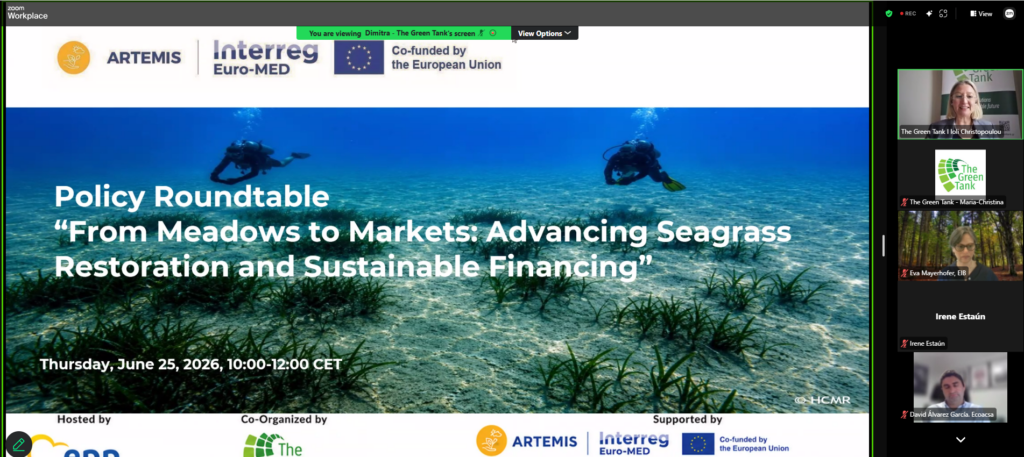
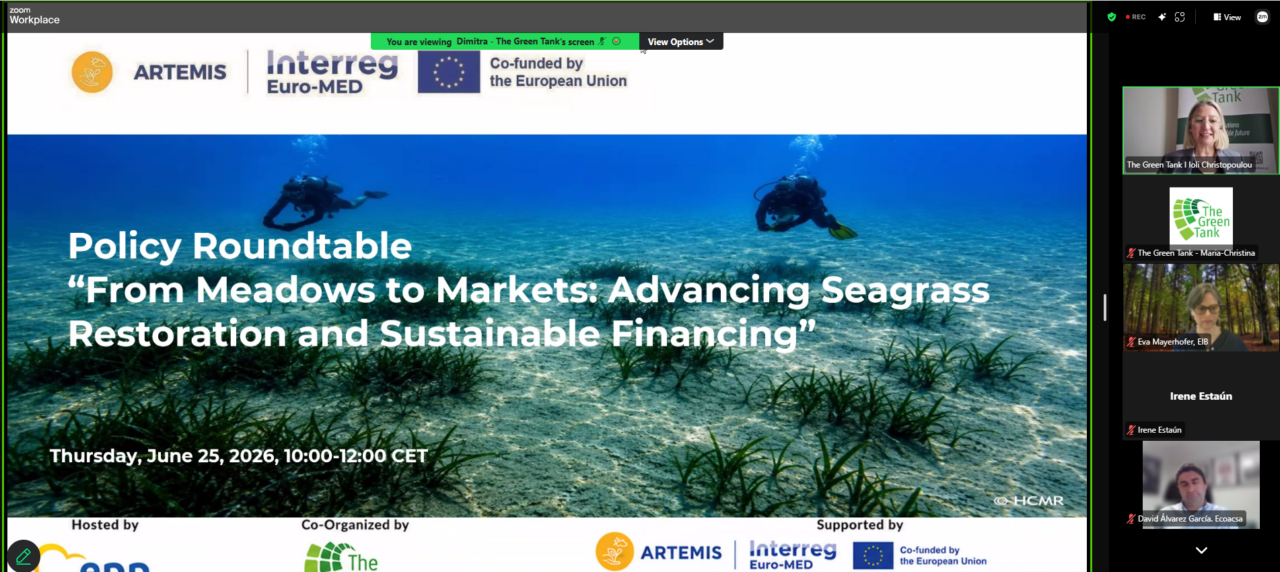
ARTEMIS policy round table « From meadows to markets: advancing the restoration of seagrass and sustainable financing »
How can the EU extend the restoration of Mediterranean grassland? What role can public and private funding play in achieving the ambitious objectives of the Nature Restoration Regulation? And under what conditions could innovative financing mechanisms, such as nature credits, support the restoration of marine ecosystems?
These are the central issues addressed at the online political round table « From meadows to markets: advancing the restoration of seagrass and sustainable financing« , co-organized by MEP Dimitris Tsiodras and organized by The Green Tank as part of the Euro-Med ARTEMIS Interreg project on June 25, 2026.
More than 80 participants joined the political round table, hosted by Ioli Christopoulou, policy director at the Green Tank, bringing together representatives of the European Parliament, the European Investment Bank, the scientific community, financial organizations and civil society to discuss how to accelerate the restoration of Posidonia oceanica, support the implementation of the European Nature Restoration Regulation, and mobilise innovative funding for healthier and more resilient Mediterranean seas.
The event was hosted by MEP Dimitris Tsiodras and included a pre-recorded video message from MEP César Luena, rapporteur for the European Regulation on the restoration of nature.
Following a deep presentation by Eugenia Apostolaki, principal researcher at the Institute of Oceanography of the Hellenic Center for Marine Research (partner of ARTEMIS), an in-depth round table was held with the contributions of Bettina Doeser, Head of the Natural Capital & Health of Ecosystems Unit, DG Environment of the European Commission, Dimitra Syrou, Policy Partner Nature at The Green Tank, David Álvarez-García, CEO, ECOACSA (partner of ARTEMIS), Dominik Maczik, technical analyst, Biodiversity Alliance Credits, Eva Mayerhofer, head of environmental policy and biodiversity at the European Investment Bank, and Constantin Tsakas, chief economist of the Blue Plan / Regional Activities Centre of the PNU (COordinator of the ARTEMIS project).
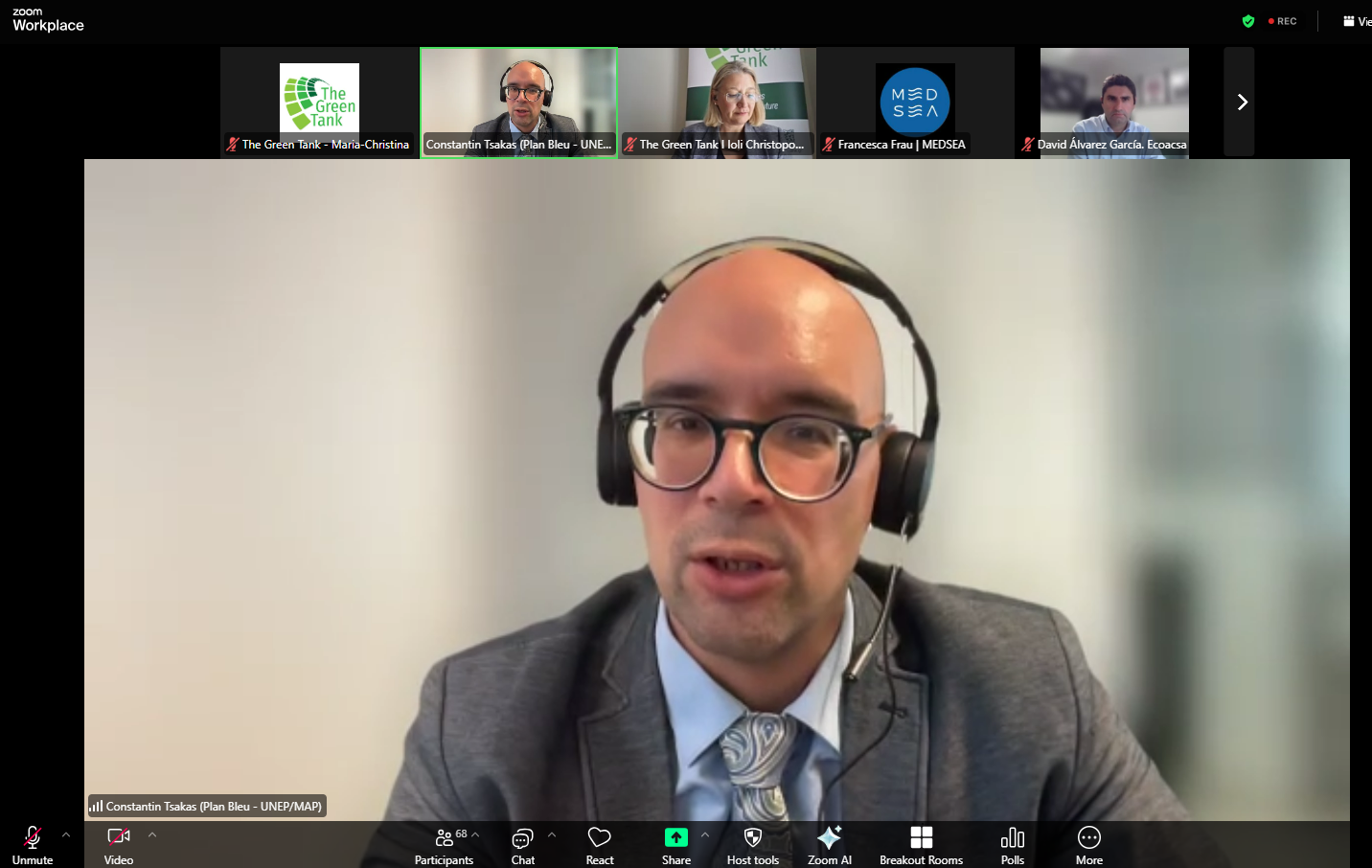
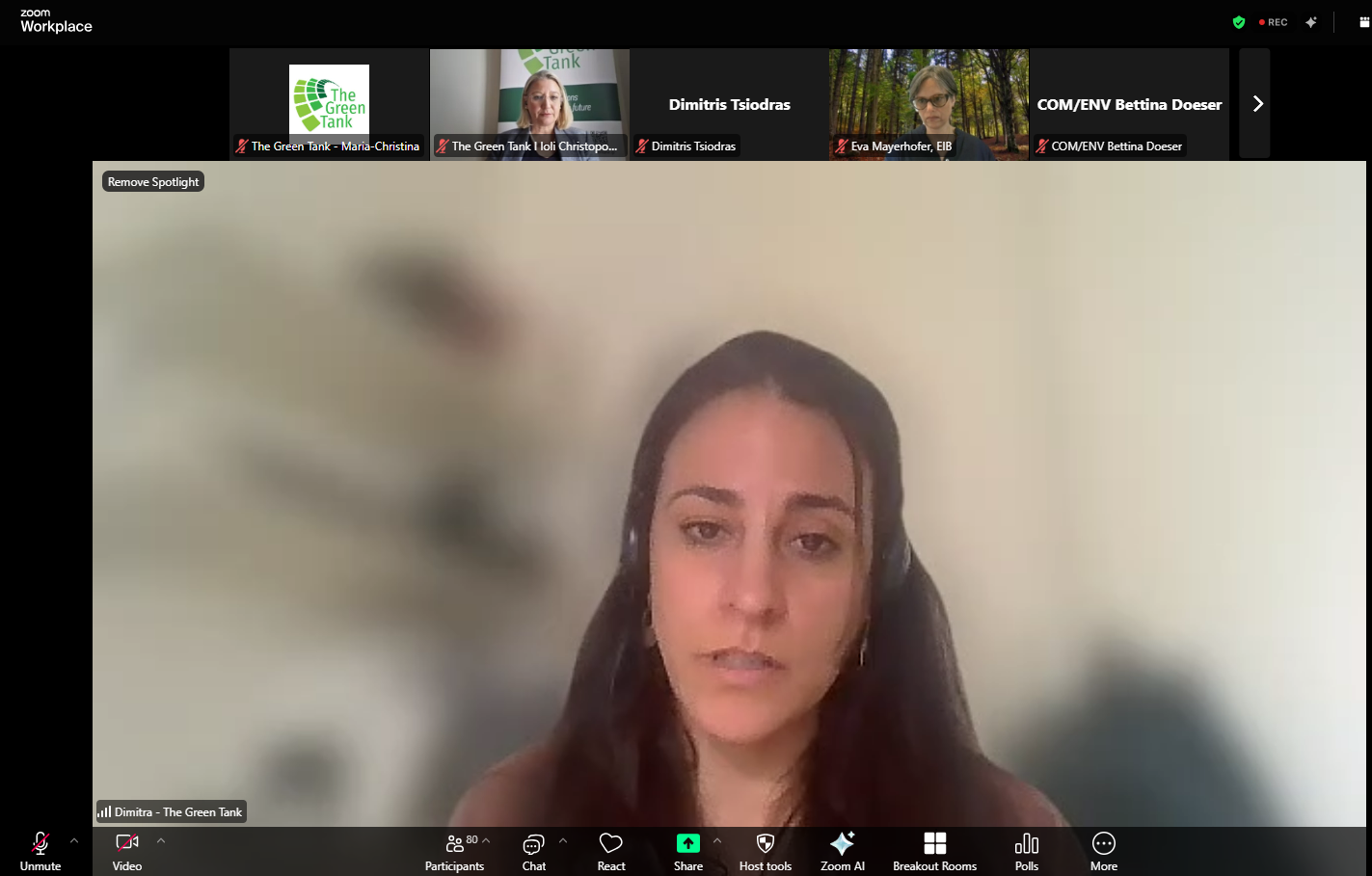
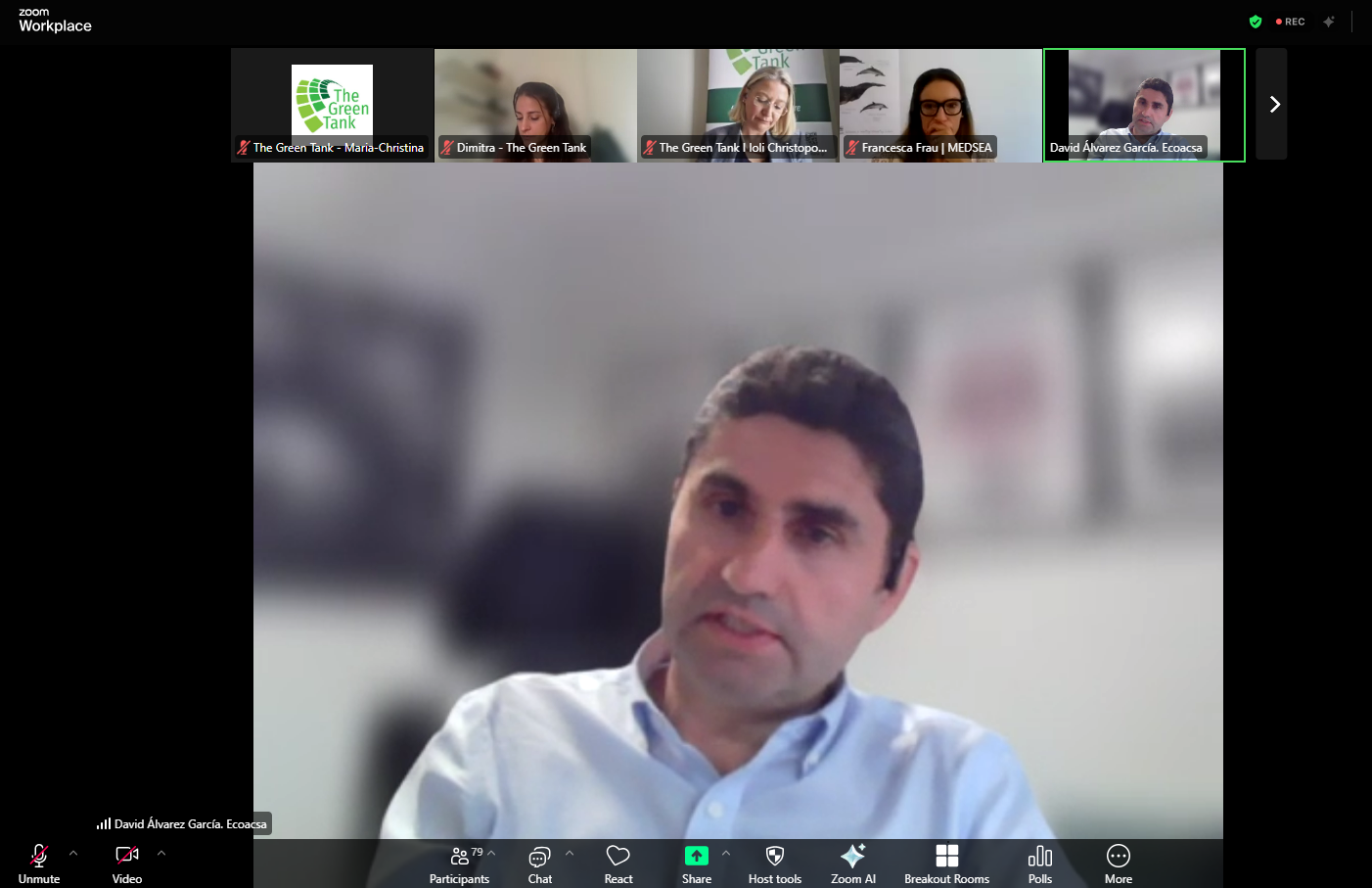
The round table offered the opportunity to present the main results of the ARTEMIS project, including its political recommendations on « Accelerating the restoration and financing of seagrasses » and its proposal for a Posidonia Nature Credit, while promoting an engaging exchange on governance and financing, allowing it to transform its restoration ambitions into actions.
Identify key governance and funding gaps
Based on the lessons learned from ARTEMIS pilot sites in Greece, Italy and Spain, the report identifies the main governance and funding gaps that hinder restoration efforts and proposes policy solutions.
Although restoration is becoming increasingly strategic, implementation remains fragmented, with inconsistent authorizations, technical standards and monitoring limiting large-scale deployment.
The report points out that restoring P. oceanica requires long-term investment. Although EU and national public funding is the main sources of support, current funding is often fragmented and poorly aligned with the long periods of ecological recovery. Even supplemented by donors and private sources, the available funding is well below the estimated needs.
The report presents 15 policy recommendations structured around four priority areas: strengthening governance and strategic planning; improving implementation capacity; ensuring long-term public funding; and developing credible private financing mechanisms for restoration.
Among its key recommendations, the report calls on Mediterranean countries to develop ambitious and scientifically sound national restoration plans under the European Nature Restoration Regulation, to establish dedicated restoration frameworks for Posidonia oceanica, to strengthen marine space planning and protected areas, and to integrate marine herb ecosystems into climate and blue carbon policies. It also highlights the importance of stakeholder participation, scientific evidence and institutional capacity to ensure the success of restoration.
The report also stresses that public funding must remain the basis for restoration, particularly in the context of ongoing negotiations on the EU Multiannual Financial Framework 2028-2034. At the same time, complementary funding mechanisms can mobilize additional resources, if they are supported by clear governance and strong guarantees.
The ARTEMIS project has developed and tested a Posidonia credit, illustrating how private financing could support restoration, provided that strict standards of surveillance, verification and environmental integrity are in place.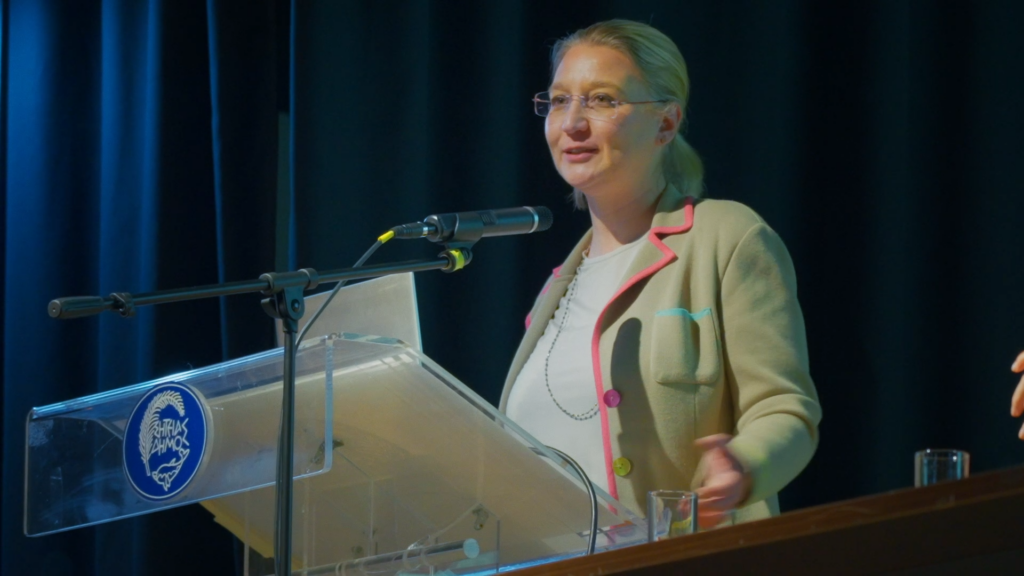
Ioli Christopoulou, political director and co-founder of The Green Tank
« Although restoration is now firmly on the political agenda, the governance and financing conditions necessary to achieve it on a large scale are still lacking. ARTEMIS’ recommendations provide concrete policy guidance to turn ambition into action at the EU, national, regional and local levels, » said Ioli Christopoulou, political director and co-founder of The Green Tank.
Arnaud Terisse, head of the biodiversity program at Plan Bleu
« The restoration of Posidonia oceanica can no longer be based on isolated projects. Intensifying actions across the Mediterranean will require stable funding, coordinated governance and strengthened regional cooperation to share expertise, harmonize approaches and ensure that restoration objectives are achieved on time, « said Arnaud Terisse, head of the biodiversity program at Plan Bleu.
What is in the report
The report « Accelerating the restoration and financing of seagrass groves: 15 political recommendations to turn ambition into action » is based on the lessons of the ARTEMIS pilot sites in Greece (Atzikiari, Bay, Siteia, Crete), Italy (Capo Testa Punta Falcone in Sardinia and Panzano Bay in Monfalcone) and Spain (Cala Banca in Menorca), as well as an in-depth analysis of existing cadres conducted by Plan Bleu and The Green Tank, with the contribution of all ARTEMIS partners. It identifies the main challenges that continue to slow down restoration efforts and proposes policy solutions. The full report also includes an annex with national chapters for each ARTEMIS pilot country, presenting site-specific conclusions and recommendations.
Download the executive summary:
Policy Directives Restoration of Seagrass | ARTEMIS Interreg Euro-MED
The publication is structured around four strategic priorities:
- Strengthening strategic planning and governance
- Improved implementation and institutional capabilities
- Secure long-term public funding
- Unlock innovative finance based on nature
Together, these recommendations aim to transform the restoration of marine herbariums, moving from isolated pilot projects, into coordinated and large-scale programs across the Mediterranean.
⬇ Download policy recommendations (PDF)
See the infographic:
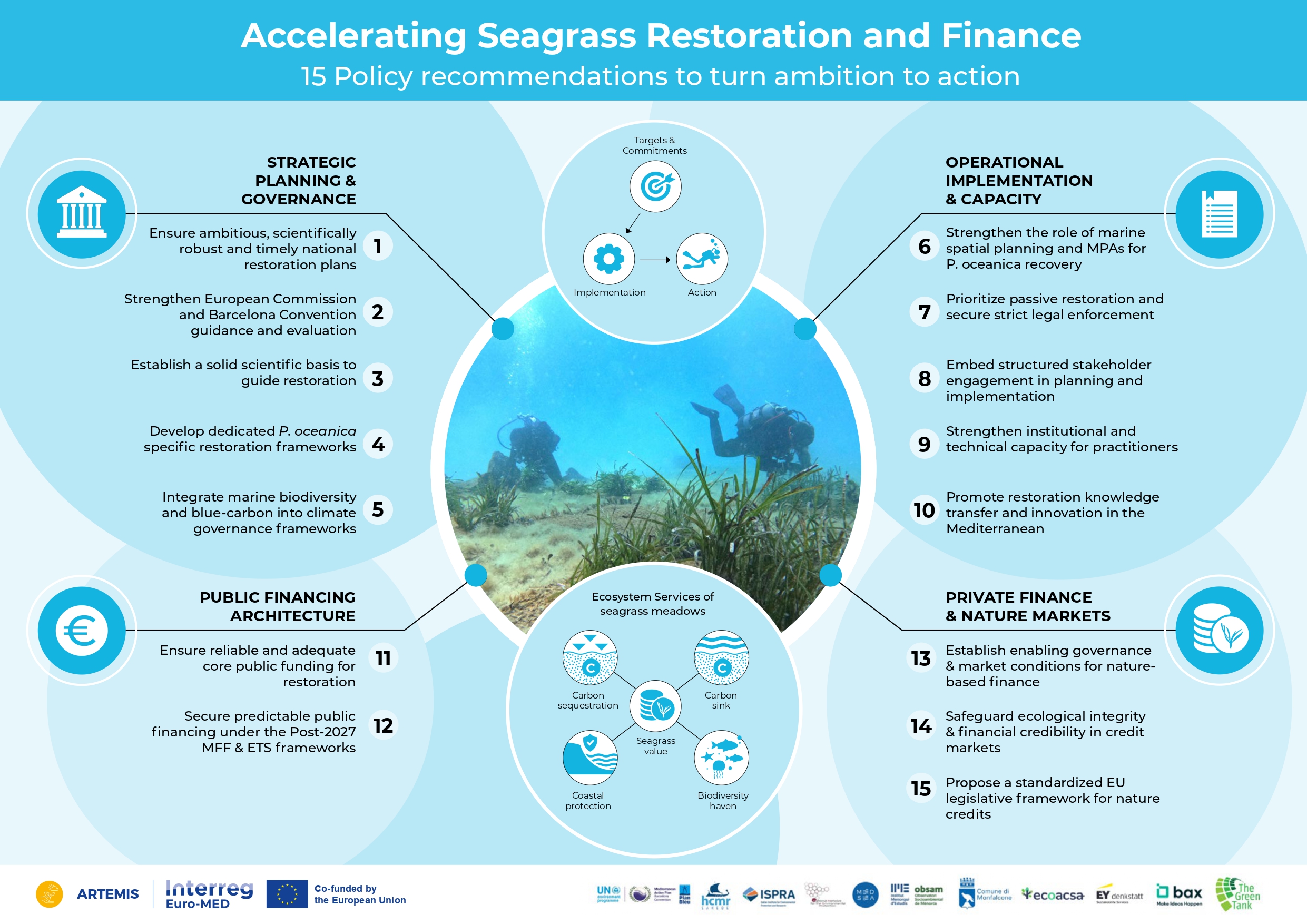
Policy Recommendations – Accelerate the Restoration of Mediterranean Seagrass Meadows with Innovative Ecosystem Services-Based Solutions
Prepared by The Green Tank and Plan Bleu, with contributions from all ARTEMIS partners.
Notes:
- The Interreg Euro-MED ARTEMIS (Accelerating the restoration of seagrass meadows in the Mediterranean region through innovative solutions based on ecosystem services) aims to improve the restoration techniques of the Posidonia oceanica meadows, to evaluate the ecosystem services they provide and to create innovative techniques to integrate them into both policy development and investment decisions. The project was implemented by ten partners in five European and Mediterranean countries, with Plan Bleu as project coordinator, from January 2024 to June 2026.
- The report « Accelerating the restoration and financing of seagrass beds 15 policy recommendations to turn ambition into action » (see Tiens) is based on lessons from ARTEMIS pilot sites in Greece (Atzikiari, Bay, in Siteia, Crete), Italy (Capo Testa Punta Falcone in Sardinia, and Panzano Bay in Monfalcone), and Spain (Cala Banca in Menorca), as well as an in-depth analysis of existing frameworks conducted by Plan Bleu and Le Résvoir Vert, with the contribution of all ARTEMIS partners. It identifies the main challenges that continue to slow down restoration efforts and proposes policy solutions. The full Report also includes an Annex (see Tiens) with national chapters for each ARTEMIS pilot country, presenting site-specific results and recommendations.
- The conclusions of the report were presented at the ARTEMIS Final Conference from 8 to 10 June in Menorca and at the ARTEMIS online political round table « From meadows to markets: advancing the restoration of sea herbs and sustainable financing », organized by MEP Dimitris Tsiodras and organized by the Green Tank as part of the Interreg Euro-MED ARTEMIS.
- A documentary on the Interreg Euro-MED Artemis was produced by MEDSEA in collaboration with ARTEMIS partners available Tiens
- The EU roadmap for nature credits was published on 7 July 2025. Its implementation by the European Commission is supported by a group of experts on nature credits, of which The Green Tank, partner of ARTEMIS, is a member. For more information: https://green-forum.ec.europa.eu/green-business/nature-credits_en