
France participates, as an observer, in a summit of island states on the ocean on Wednesday and Thursday. First concerned by climate change, representatives of the overseas territories are calling for a better representation of their realities.
« Sustainable action for resilient islands. » This is the objective that brings together at a summit on Wednesday 3 and Thursday 4 June in Tokyo, the Heads of State and representatives of the island states of the world, as well as their partners. The event should in particular (New window) « accelerate the implementation of measures to strengthen resilience to climate change ». The challenge is great, as the islands are vulnerable: rising waters, intensification of tropical cyclones, losses of coastal ecosystems, droughts…
« The acceleration of pressure underlines the urgency of transforming the way we plan, use and manage marine spaces in order to reconcile protection, production and long-term prosperity, » write the organizers of the summit (New window). France is not left behind, since overseas countries are among the first witnesses of climate change.
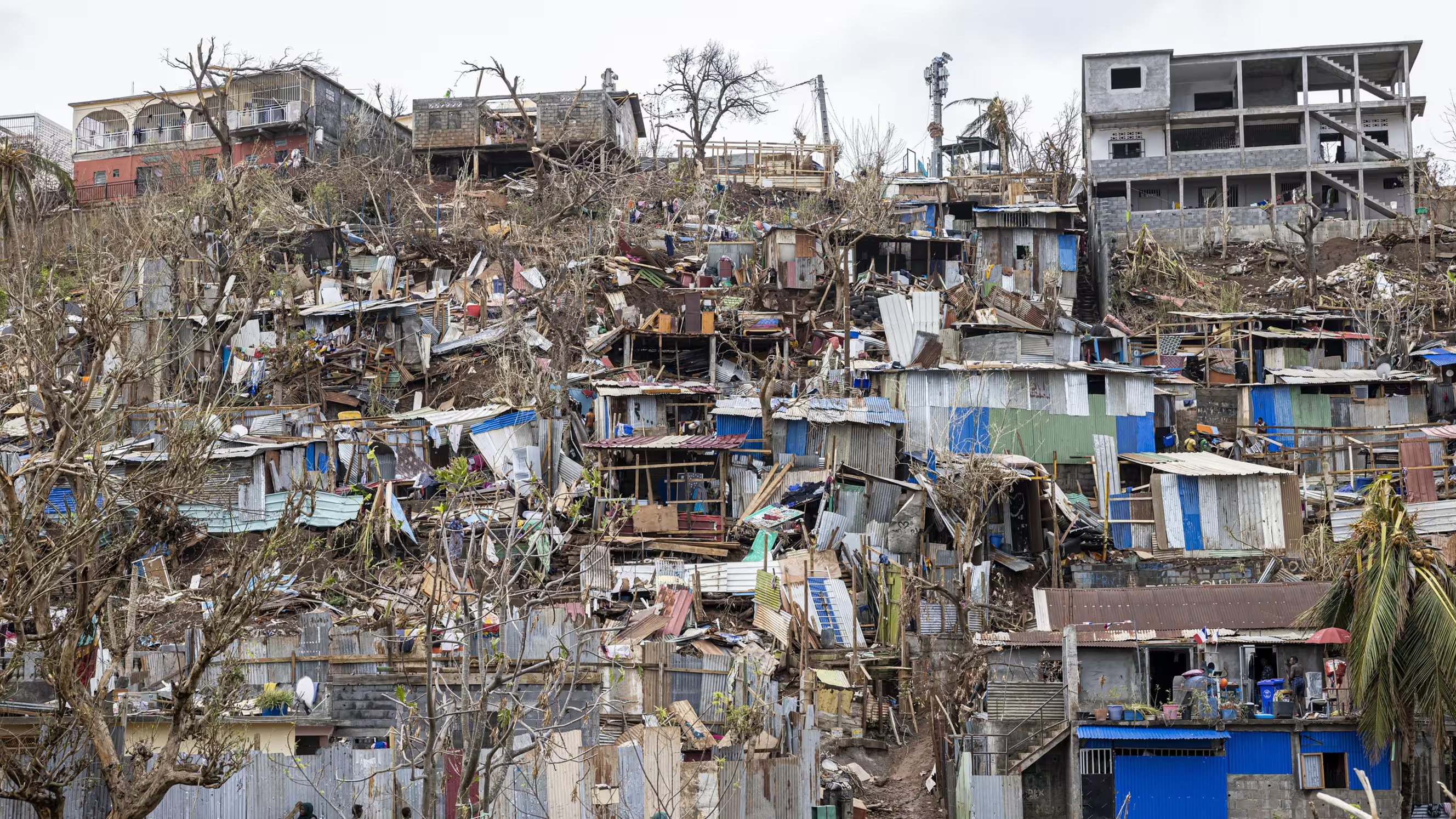
In a report (New window) published in June 2025, the Climate Action Network (RAC) warned of an increase in more severe cyclones – such as Chido, in Mayotte in 2024 -, the degradation of 70% of coral reefs in Guadeloupe, the increase in the risk of submersion and the retreat of the coastline. « Overseas territories are all different (…) Nevertheless, they share one thing in common: all are particularly vulnerable to the impacts of climate change, due to their natural exposure, but also and above all because of structural factors, » explained the NGO.
« Always the impression of being in an in-between difficult to manage »
« In Guyana, around 2100, there could be about 170 days at at least 35°C per year, compared to about twenty today, » adds Météo-France (New window). In Reunion « we expect 90 days where the maximum temperature will be greater than or equal to 31°C, compared to about ten today » and « 15% less rain during the dry season », while in Mayotte, « we could count 205 days at at least 32°C per year, compared to about 30 today, with 30% less rain in the dry season ».
« In many of our territories, there is little variation in temperatures. When we change the temperature by 1°C, it becomes unbearable. Ecosystems are not adapted to this, » says Clotilde Dubois, in charge of climate studies at Météo-France’s Interregional Indian Ocean Directorate.
Despite the violence of the impact they suffer, these territories consider themselves little represented when France talks about climate internationally. No overseas negotiator was included in the French delegation at COP30, in November 2025. « According to the latest news, the only COP with overseas representatives was COP21 in Paris. But since then, nothing, » lamented Marine Pouget, head of international climate governance at the RAC, to La 1ère(New window) in November.
On site, the feeling is shared by several associative leaders contacted by franceinfo. « We are little represented, but extremely affected, » regrets Léo Bargès, lawyer for Guyane Nature Environment. « There is not much consideration of our climatic realities on the part of France, » agrees Samira Ben Ali, Mahoraise member of the Youth Movement for Climate Justice. Present at COP30, she tries to make the overseas voice heard at major international summits. « But we always feel like we are in a difficult-to-manage in-between, » she regrets.
« There is a mismatch between our vulnerability and the adaptation measures put in place, when we should be the first to have enough resources to respond » to the challenges, continues Christophe Barbarini, member of the Regional Alliance for a Fair and Resilient Water Transition. This resident of Reunion Island would like to see a document similar to the national plan for adaptation to climate change for his territory. Bringing together the voices of the various overseas territories, the RAC called on the State « to strengthen its support for overseas territories ».
This desire echoes the work in progress on a potential change of status (New window) of overseas, with more autonomy. « It is under discussion, it would allow a division of skills, especially on the environment, » explains Tamatoa Bambridge, research director at the CNRS. The territories could make requests, in terms of adaptation policy, closer to local concerns, which sometimes escape national ministries, and not imposed vertically by Paris. » So far, « it’s quite centralized, » says the researcher based in Moorea, French Polynesia.
Overseas countries, « an integral part » of the French climate strategy
On the part of the Ministry of Foreign Affairs, it is guaranteed that overseas territories are « an integral part » of the French climate strategy. « You have a process when you participate in events such as COPs. The French delegation that participates in the negotiations previously consults all stakeholders: NGOs, companies, and also local authorities, including overseas, » replies Barbara Pompili, French Ambassador for the Environment, to franceinfo.
It also ensures that France sits in all regional negotiating forums where overseas countries are concerned, citing the Pacific Islands Forum, the Oceanian Regional Environment Program, the Association of Caribbean States, the Association of States of the Indian Ocean, the Cartagena Convention for the Development of the Marine Environment of the Caribbean region or the international initiative against Sargassum.
« It’s a chance for France, because it allows it to be present everywhere, which would not be the case if there were only France, » says Barbara Pompili. At the top of the island states of Tokyo, France will still be present through its embassy in Japan, but with observer status.
A necessary presence for local representatives, when the summit is intended to be « a unique platform to strengthen interregional cooperation on sustainable ocean management ». « France has the second largest maritime domain in the world. We are among the states most concerned by this kind of reflection, » recalls Léo Bargès.
For other activists, direct representatives of overseas should even have been in Tokyo. « It’s always the same thing: they are representatives quite far from the realities of the overseas territories who will be there, while our territories represent 70% of the French coast. We should have our place there, to benefit from feedback, to find solutions, » says Samira Ben Ali.
« We are trying to recognize our vulnerability »
Without claiming a separatist will, representatives of the overseas territories rather defend an overseas representation that would benefit the country more widely.« We are looking for our vulnerability to be recognized, in order to preserve our territories, to better adapt them. And to serve the future French, since if we adapt our territories, France will then be able to benefit from it, » draws Christophe Barbarini.
Progress is still to be welcomed. Three regional COPs have been launched in Guadeloupe, Martinique and Reunion Island with « a component dedicated to adaptation to climate change », reports the Ministry of Ecological Transition (New window). In Polynesia, « the State has made a lot of effort to build elevated anticyclonic shelters, » so that the inhabitants of the islands can cope with the submersive swells, reports researcher Tamatoa Bambridge.
A regional expert group on climate change has been set up in Reunion Island (New window), « allowing local actors to adapt to the impacts of climate change based on solid scientific knowledge ». The regional development schemes, which set « the fundamental medium-term guidelines for sustainable development, land development and environmental protection », recalls the Cerema study center (New window), now include these issues. « It was launched at the beginning of the year, with a component on climate change and adaptation, » notes Clotilde Dubois, a design engineer at Météo-France based in Reunion Island.
In addition, if France is clear about the warming trajectories to which it must be adapted, the overseas territories were sailing on sight until recently, says Sophie Martinoni-Lapierre, Director of Climatology and Climate Services at Météo-France.
« What has been missing for a long time is climate projection data for overseas countries. »Sophie Martinoni-Lapierre, Director of Climatology and Climate Services at Météo-France
For a year, each territory finally knows what to stick to: +1.9°C in the West Indies in 2050, +2.3°C in Guyana, +2°C in Reunion Island, Mayotte and New Caledonia, +1.6°C in French Polynesia… « The framework was missing, it is no longer the case. We can now hope that our contribution can serve concrete actions, » Sophie Martinoni-Lapierre wants to believe.
source : franceinfo