
Published in Biological Reviews (and accessible online), this work is based on a systematic review of more than 300 international scientific articles. Objective: to understand how « founding species », these species that promote life for other organisms, influence the biodiversity of coastal underwater landscapes, under growing anthropogenic pressure.
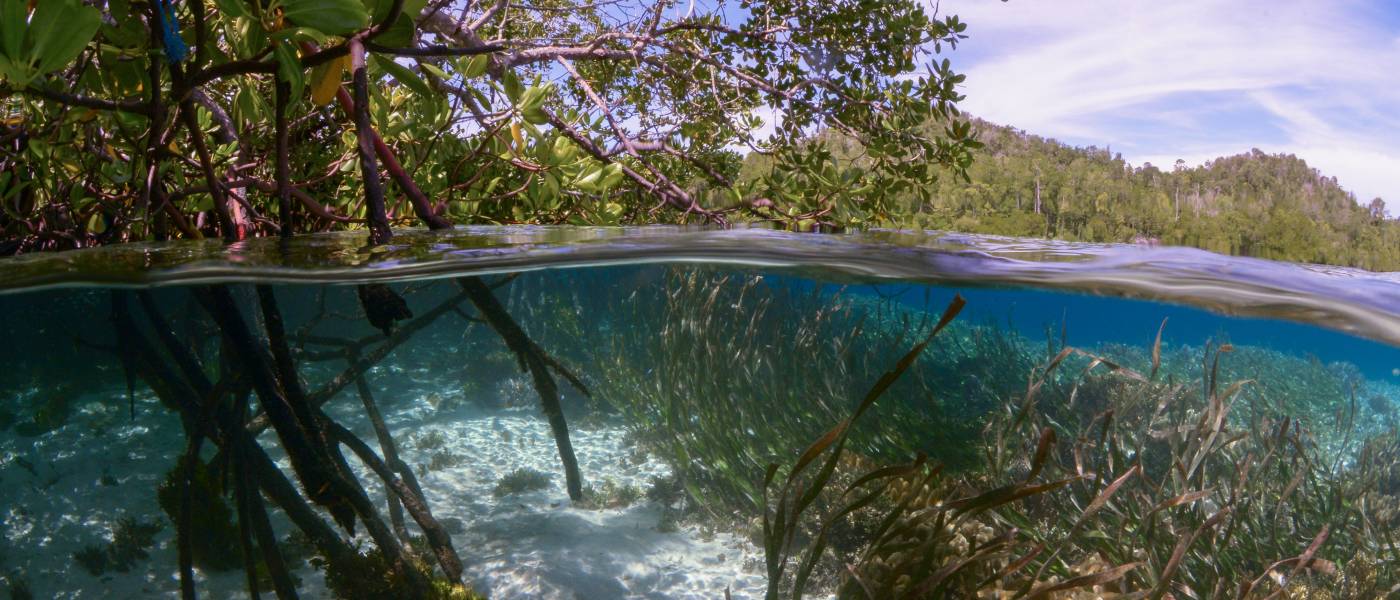
According to this study, these species globally increase the richness of biodiversity by 72%, compared to sandy or rocky bottoms. Corals, sea herbs, mangroves or laminars provide many ecosystem services, thanks to their three-dimensional structures: their volumes create habitats, shelters and settlement possibilities for a wide range of other species, to which they serve as refuge and pantry, while stabilizing their environment against variations in temperatures or wave energy.
Beyond the evaluation of the contributions of these founding species, the study created a catalog of characteristic traits on which coastal managers can rely to restore coastal ecosystems weakened by global change, by reintroducing local founding species. In the longer term, it will also be possible to identify upstream species capable of replacing those that will be forced to disappear, and which will be able to ensure similar ecological functions and will have a better adaptation to the new conditions.
source : mer et marine