
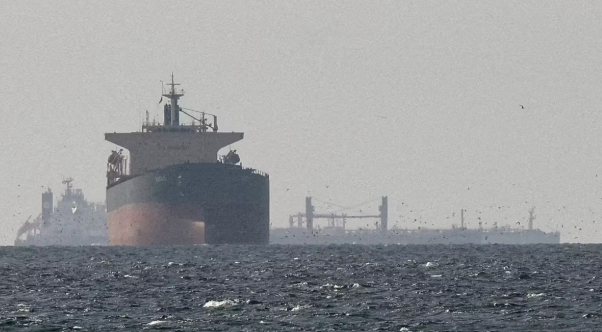
The Iranian regime’s grip on this small piece of sea proves a contrario the usefulness of international law, when it is respected by all, contrary to everything Donald Trump believes, recalls Julien Bouissou, journalist at the « World », in his column.
The face-to-face between Iran and the United States around the Strait of Hormuz reveals a more global trend: the seas cease to be open spaces to become territories like any other. States regain control of these spaces of freedom, through which 90% of trade in goods passes, and which have allowed economic globalization to unfold over the past three decades. The United Nations Convention on the Law of the Sea, signed in 1982 in Montego Bay (Jamaica), nevertheless guarantees free transit in the straits, and almost total freedom of navigation on the high seas. But it is mainly the United States that, in order to continue to benefit from globalization, has defended this freedom of navigation with its powerful naval fleet.
This American hegemony on the seas has crumbled, competed with China, especially since the United States no longer considers itself the beneficiaries of free trade-based globalization. Beijing claims almost all of the South China Sea and is concreting disputed islands to build infrastructure there while strengthening the presence of its coast guards. The Bab Al-Mandeb Strait, at the entrance to the Red Sea, which gives access to the Suez Canal, has been deserted by the containers since the Houthi rebel attacks in December 2023. But it is probably Iran’s control of the Hormuz Strait crisis that best symbolizes the decline of American hegemony.
source : Le monde