
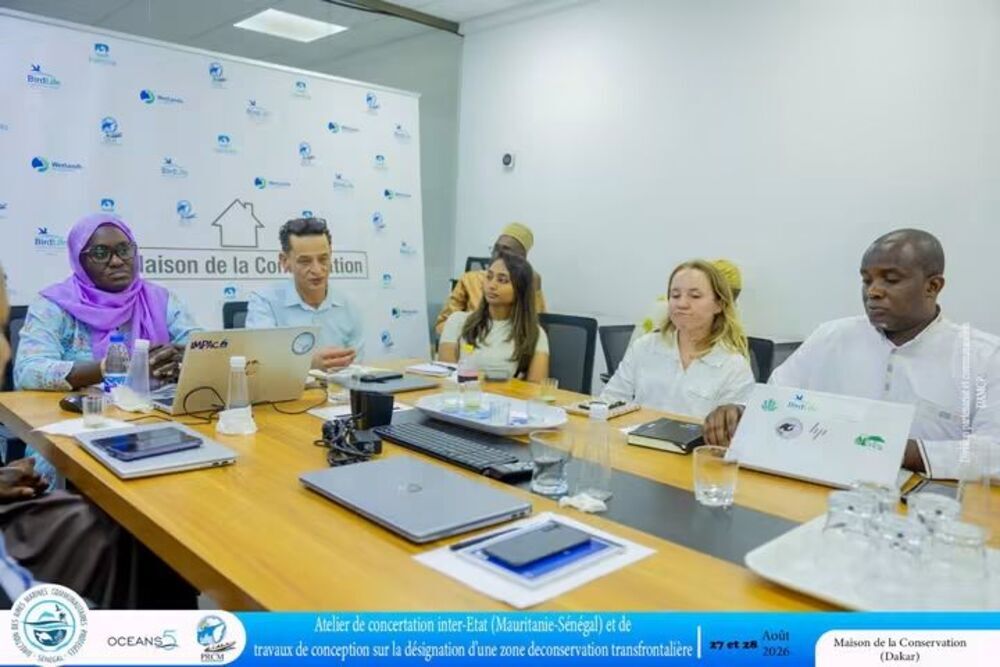
Mauritania and Senegal have taken a new step in their environmental cooperation with the holding, on 27 and 28 August in Dakar, of an inter-state workshop devoted to the design of a future Cross-border Marine Conservation Zone (MZC), aimed at strengthening the protection of ecosystems and the sustainable management of shared marine resources.
The meeting brought together technical and financial experts, research organizations and representatives of sub-regional and regional organizations. It is part of the desire of the two countries to establish a common framework for the conservation and governance of a maritime area characterized by exceptional biodiversity and significant fisheries resources.
The area concerned benefits in particular from upwelling, an oceanographic phenomenon that raises deep waters rich in nutrients to the surface. This mechanism helps make this part of the Atlantic one of the most productive ocean systems in the world, while making it particularly vulnerable to pressures on marine ecosystems.
Common criteria for concerted management
On the first day, participants took stock of the cross-border zone, presented existing cooperation mechanisms and examined available scientific data on ecosystems, natural resources and socio-economic issues.
Group work then identified the main criteria to guide the definition of conservation priorities, as well as the challenges related to the management, governance and mobilization of actors.
The second day was devoted to the finalization of these common criteria. In particular, the discussions led to the development of a budgeted roadmap over a period of one year, specifying the priority actions to be taken, as well as the roles and responsibilities of the various institutions concerned and potential technical and financial partners.
Towards a joint technical committee
The workshop is therefore an important step towards the establishment of a joint mechanism for the conservation and sustainable management of marine resources between Mauritania and Senegal.
The work should in particular allow the establishment of a joint technical committee, responsible for monitoring the mobilization of resources, the coordination of actions and communication between the various stakeholders in the two countries.
This approach comes in a context where the concerted management of marine areas appears increasingly necessary to preserve fish resources, protect essential habitats and strengthen the resilience of ecosystems to different environmental pressures.
Through this future cross-border marine conservation area, Dakar and Nouakchott intend to consolidate their cooperation around a common objective: to reconcile the preservation of marine biodiversity with the sustainable exploitation of resources for the benefit of communities dependent on the sea.