
Greenpeace’s expedition to the underwater mountains and hydrothermal springs of the Arctic depths ended today. Scientists believe they have discovered several new species, including at least three new varieties of sponges. A thorough review will be conducted in the coming months.
Photos and videos of the shipment
The « Deep Arctic » expedition made it possible to take researchers for four weeks to places that no one had ever been able to observe. An underwater robot provided more than 100 hours of video equipment by diving up to 3,000 meters deep. More than 450,000 people followed the livestreams of scientists on YouTube, TikTok and Instagram.
The scientists on board will study in detail over the next few months the data, samples and video material produced during the expedition. They expect the discovery of several new species to be confirmed by this in-depth analysis.
Greenpeace hopes that the results of the expedition will be an important element in encouraging the creation of marine protected areas in Arctic waters. The organization is campaigning globally for a moratorium on deep-water mining and the protection of at least 30% of the oceans by 2030.
« At present, the deep seabed is still protected from the destructive impacts of deep-water mining, » explains Sandra Schöttner, scientific manager of the « Deep Arctic » expedition. “We therefore have the opportunity to avoid the outbreak of a major environmental disaster. The data and results of the expedition will be used to highlight these ecosystems and encourage policy makers to create marine protected areas and support a moratorium on the extraction of mineral resources from the abysses.”
« Among more than 400 samples of sponges collected, we have identified at least three potentially new species, » adds Paco Cárdenas, an expert in sponges at Uppsala University. “Sponges have existed for more than 500 million years. They have developed specialized defense substances to repel predators and pathogens. The chemical compounds of the deep-sea species present here could be the key to curing certain diseases.”
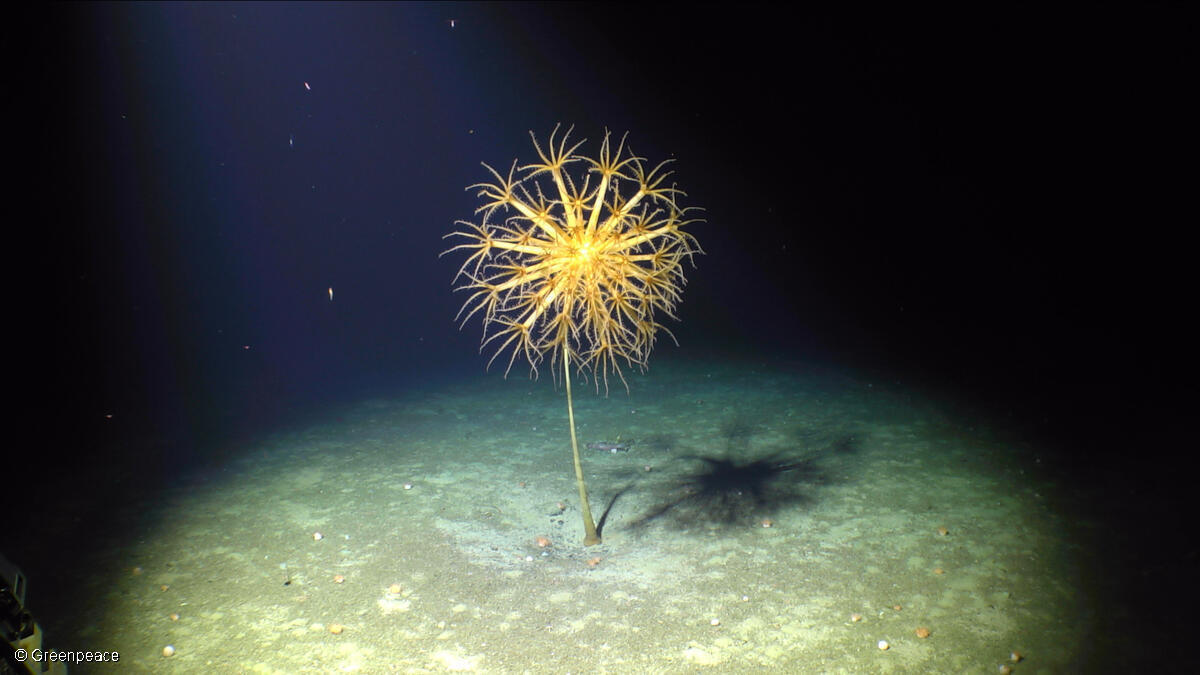
“We were able to film in high resolution for the first time many species and ecosystems, such as bamboo corals and sponge gardens,” says Anne-Nina Lörz, an expert in deep-sea amphipods with the Senckenberg Society for Nature Research. “The analysis of these images will allow us to understand the connections and distribution of these intriguing beings. In addition, we have most likely found four new species of amphipods that we will describe and name over the next few months.”
The “Deep Arctic” expedition was implemented by Greenpeace Nordic, Greenpeace Germany and Greenpeace International.
source : green peace