

While the blue economy generates 2.5 trillion dollars each year and makes more than 600 million people live, Valérie Hickey, director of the environment, natural resources and the blue economy at the World Bank, calls for a massive mobilization of private capital. On the occasion of her participation in the Blue Economy & Finance Forum 2026, she answered questions from Monaco Hebdo. By Clément Martinet
What is the true potential of the blue economy as a driver of sustainable development, especially for developing countries?
A healthy ocean is a job driver. It provides the livelihood, food security and economic opportunities for hundreds of millions of people — especially for the communities that are most dependent on its resources. Fishing and aquaculture alone support 62 million direct jobs. If we take into account the entire value chain, more than 600 million people — most of them women — depend on these sectors for their livelihoods. The growth potential is considerable. Let’s take an example: tourism supports between 270 and 360 million jobs worldwide. Adventure tourism based on ocean and coastal activities is one of its fastest growing segments. For low- and middle-income countries and small island developing states, investing in the ocean is both a development imperative and an economic imperative. There will never be a world without poverty in a world without a healthy ocean.
« For low- and middle-income countries and small island developing states, investing in the ocean is both a development imperative and an economic imperative. There will never be a world without poverty in a healthy world without a healthy ocean »
What are the main challenges associated with the large-scale mobilization of private capital for regenerating blue economy projects?
The main challenge is structural: while private capital flows easily into sectors such as industrial fishing and maritime transport, it remains largely limited in the activities that are most essential to the health of the oceans — pollution management, habitat restoration, marine protected area management and community conservation. These areas lack the legal frameworks, reliable data and proven revenue models that investors need.
How is the World Bank group working to make up for this funding gap?
The World Bank group is filling this deficit with several approaches. We help countries to establish institutional foundations, such as regulatory frameworks and national ocean strategies, which mobilise private capital. Problue, our ocean-friendly investment acceleration program, mobilizes funding and knowledge to make investments bankable. Through our private sector branch, IFC [International Financial Company, the World Bank’s Private Sector Financing Branch], we intervene directly in commercial markets by issuing blue bonds, granting loans and guarantees, and developing standards that reduce investment risk.
Did the « blue bonds » and other blue financial instruments keep their promises?
Blue bonds have demonstrated the validity of their concept. The cumulative amount of emissions now amounts to about $18 billion, compared to only $3 billion in 2022. The Seychelles’s $15 million sovereign blue bond — the world’s first issued in 2018 with the support of the World Bank group — has improved the management of 21 million hectares of marine protected areas and has become a model for this type of initiative. IFC’s guidelines for blue finance, developed jointly with the International Capital Markets Association, have become the standard in the global market.
« Blue bonds have demonstrated the validity of their concept. The cumulative amount of emissions now amounts to about $18 billion, compared to only $3 billion in 2022 »
What financial innovations could make them more attractive to investors?
The growth of blue bonds has been slower than that of green bonds, but emerging innovations are remedying this. For example, collateral and concessional financing reduces emission risks for new borrowers. Countries’ « preparation for investment » is essential in this regard, i.e. ensuring that they have the capacity to generate and absorb blue financing on a large scale. Plans for sustainable oceans and plans for the development of the blue economy play an important role in this regard.
How does the World Bank group help financial institutions integrate ocean sustainability criteria into their investment portfolios?
The World Bank Group intervenes at two levels. In terms of standards, our « Blue Finance Guidelines » define what constitutes a credible blue investment and set the framework for due diligence, impact reporting and third-party verification. These guidelines are increasingly used as a reference by commercial banks, sovereign wealth funds and rating agencies, and are integrated into national taxonomies and frameworks. At the level of transactions, the World Bank group works directly with financial institutions to develop portfolios classified as « blue », structure mixed financing vehicles and identify projects under development that meet the criteria of blue finance. In Mozambique, we supported the development of a strategy including a carefully selected portfolio of blue investment opportunities, designed to directly connect institutional investors with bankable projects.
What are the most successful or innovative blue economy projects?
In addition to the example of the Seychelles blue bonds, several projects stand out. In the Pacific island countries, the reforms supported by the World Bank group increased sevenfold in revenue from fishing licenses, to $495 million in 2021, and doubled employment, with 25,000 jobs. In West Africa, investments in coastal resilience in Benin and Togo have protected 165,000 people from erosion and flooding while creating 12,000 jobs. These examples show how investment in the ocean builds resilience, reduces poverty and boosts employment.
« There is hardly any real contradiction between economic growth and the preservation of the oceans: the data confirm it. The most important economic losses do not come from conservation, but from the lack of conservation »
Is the restoration of marine ecosystems currently a viable and attractive investment sector for the private sector?
Marine ecosystem restoration is moving from a conservation subsidy to an asset class likely to attract investment, but it is not quite there yet for most private investors. Activities such as mangrove replanting and coral reef rehabilitation generate a wide variety of benefits — coastal protection, carbon sequestration, fisheries productivity — which are difficult to monetize through traditional sources of income. That said, several factors improve the attractiveness of investment. Blue carbon markets are emerging as a mechanism to monetize the value of carbon sequestration from restored coastal ecosystems. One hectare of mangrove stores up to five times more carbon than a comparable continental forest, which is a significant asset in both voluntary and regulated carbon markets. The World Bank Group is accelerating investment readiness by developing standardized blue carbon credit methodologies, implementing a data infrastructure to verify results, and using mixed financing to absorb initial costs, allowing projects to attract business capital at maturity.
How to reconcile the objectives of economic growth and the preservation of marine ecosystems?
There is hardly any real contradiction between economic growth and ocean preservation: the data confirm this. The most important economic losses do not come from conservation, but from the lack of conservation. Overfishing and mismanagement cost the global economy $83 billion a year in lost profits. Conversely, the impact of sustainable ocean management is tangible. As mentioned above, in West Africa, investments in coastal protection have created 12,000 jobs while preventing floods. The key lies in integrated ocean governance: national blue economy strategies, marine spatial development plans and regulatory frameworks allowing economic activity and ecosystem management to move forward together. Investing in the oceans is not a conservation choice — it’s an economic choice.

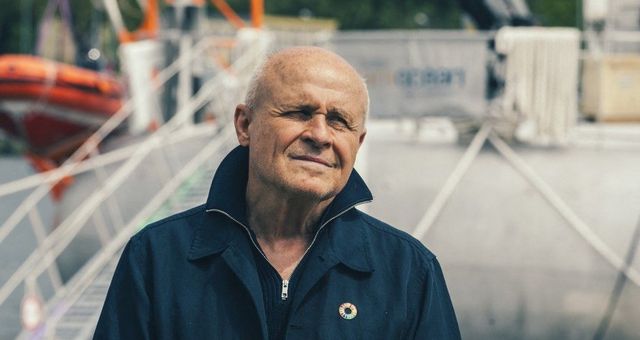
“Technologies in the aquaculture sector, including sea cage systems and algae cultivation, are very promising: an analysis by the World Bank group reveals that investments in aquaculture could generate 22 million new jobs by 2050. Valerie Hickey. Director of Environment, Natural Resources and Blue Economy at the World Bank © Photo Communication Department
Which technological innovations or new financial approaches are most promising in accelerating the transition to a sustainable blue economy?
« Blue » insurance products, covering fishing, coastal infrastructure and reef degradation, are a promising new area. The maturation of the blue carbon markets could mobilise significant private financing for catering, and mixed financing structures remain essential to combine different types of capital. Advances in ocean data and surveillance — satellite observation, acoustic detection, electronic catch monitoring — make it possible to verify ocean investment and reduce illegal, unreported and unregulated fishing, which imposes significant costs to the global economy. Technologies in the aquaculture sector, including marine cage systems and algae cultivation, are very promising: an analysis by the World Bank group reveals that investments in aquaculture could generate 22 million new jobs by 2050.
« The most important economic losses do not come from conservation, but from the lack of conservation. Overfishing and mismanagement cost the global economy $83 billion a year in lost profits »
How does the World Bank group measure the real impact of its investments in the blue economy?
The World Bank Group’s « Corporate Scorecard » performance grid helps us assess the extent to which we are fulfilling our mission of ending extreme poverty and promoting prosperity on a livable planet. Instead of limiting ourselves to measuring the means implemented, such as the number of projects or the amounts spent, we also measure the results, for example, the number of girls in school or the reduction in carbon emissions obtained through our investments. Thanks to this, we can see that more than 35 million hectares of marine areas are now better managed thanks to the investments of the World Bank group, which translates into concrete benefits in terms of food security, employment and income improvement.
Given the pressure on public budgets, how does the World Bank group perceive the evolution of the role of private and philanthropic actors in the financing of the blue economy?
Private capital is essential. Public finances must lead the way by reducing risks and setting standards, but the necessary scale can only be achieved by mobilizing in a coordinated manner all sources of funding: sovereign, multilateral, private and philanthropic. The annual financing deficit far exceeds what sovereign budgets and multilateral development banks alone can fill. Philanthropic organizations and foundations occupy a unique position in financing high-risk and pre-marketing activities — community surveillance, open access data — that create an investment environment. Private institutional investors, including pension funds and sovereign wealth funds, are increasingly recognizing the opportunities offered by this sector.
source : Monaco hebdo