
Even if the United States and Iran agreed to a ceasefire and reopen the Strait of Hormuz, ships trapped in the Gulf would not be able to leave without security guarantees, the CEO of V.Group, one of the world’s leaders in ship management, told Reuters.
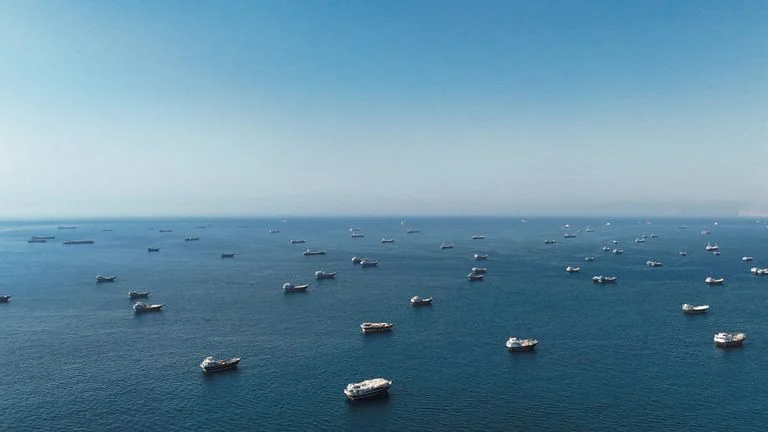
The resumption of hostilities in this three-month-old conflict is putting a fragile ceasefire to the test, while hundreds of ships and about 20,000 sailors remain blocked in the region, Ormuz being largely closed.
V.Group, which manages about 800 ships, has 13 units stranded in the Gulf, half of which are oil tankers, said Rene Kofod-Olsen, CEO of the group and a leading specialist in technical management and crews.
« We are in a situation where a ceasefire is supposed to be in effect, » he said at the Posidonia Maritime Week in Athens.
‘But kinetic activity persists,’ added Kofod-Olsen, referring to drone or missile strikes.
In order for traffic to return to its pre-war levels, when an average of 125 ships crossed Hormuz daily, shipowners will need solid guarantees of free passage, which would require the involvement of the international community, he stressed.
« I don’t think global shipping will engage significantly in the Strait of Hormuz until these conditions are actually guaranteed, » said Kofod-Olsen.
Sector leaders meeting in Athens said that although crews in the Gulf are being supplied and staff rotations can be carried out in the region, tension related to the conflict is increasing.
« Shipowners must operate in irregular frameworks, which is proving to be complex for the industry as well as for insurers, » Alex Gregg-Smith, president of the marine and offshore division of Bureau Veritas, leader in naval safety certification, told Reuters.
‘This puts pressure on the operations of the owners.’
Dwain Hutchinson, Director General of the Bahamas Maritime Registry, told Reuters that 14 Bahamian-flagged ships, with more than 900 sailors on board, were in the Gulf, including smaller offshore units usually operating in the area.
Although their safety and well-being are the top priority, the registry did not prohibit ships from sailing in the area.
« We believe that this is a decision of the shipowner and we hope that they will assess the risks to make a balanced decision regarding their operations in the area, » he said.
Evangelos Marinakis, founder and president of Capital Maritime & Trading Corp, one of the world’s leading oil operators, said his group had been ‘lucky’ not to have ships in the Gulf when the conflict broke out on February 28.
« If an incident were to occur, a disaster, we would not be able to take such a risk, » he said at the TradeWinds shipowners forum in Athens.
source : zone bourse