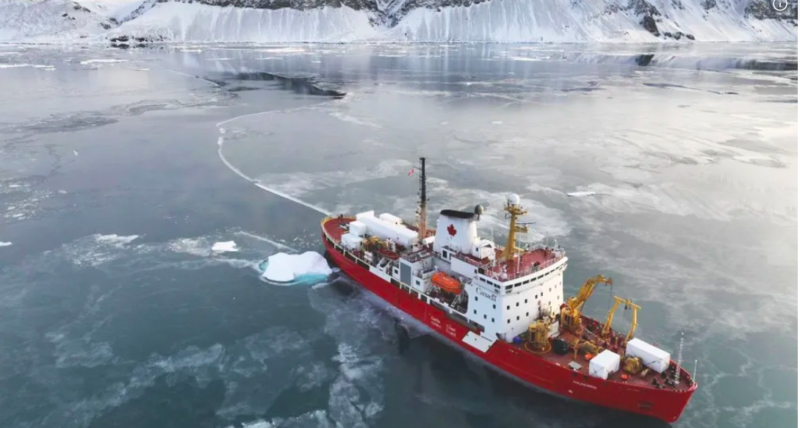

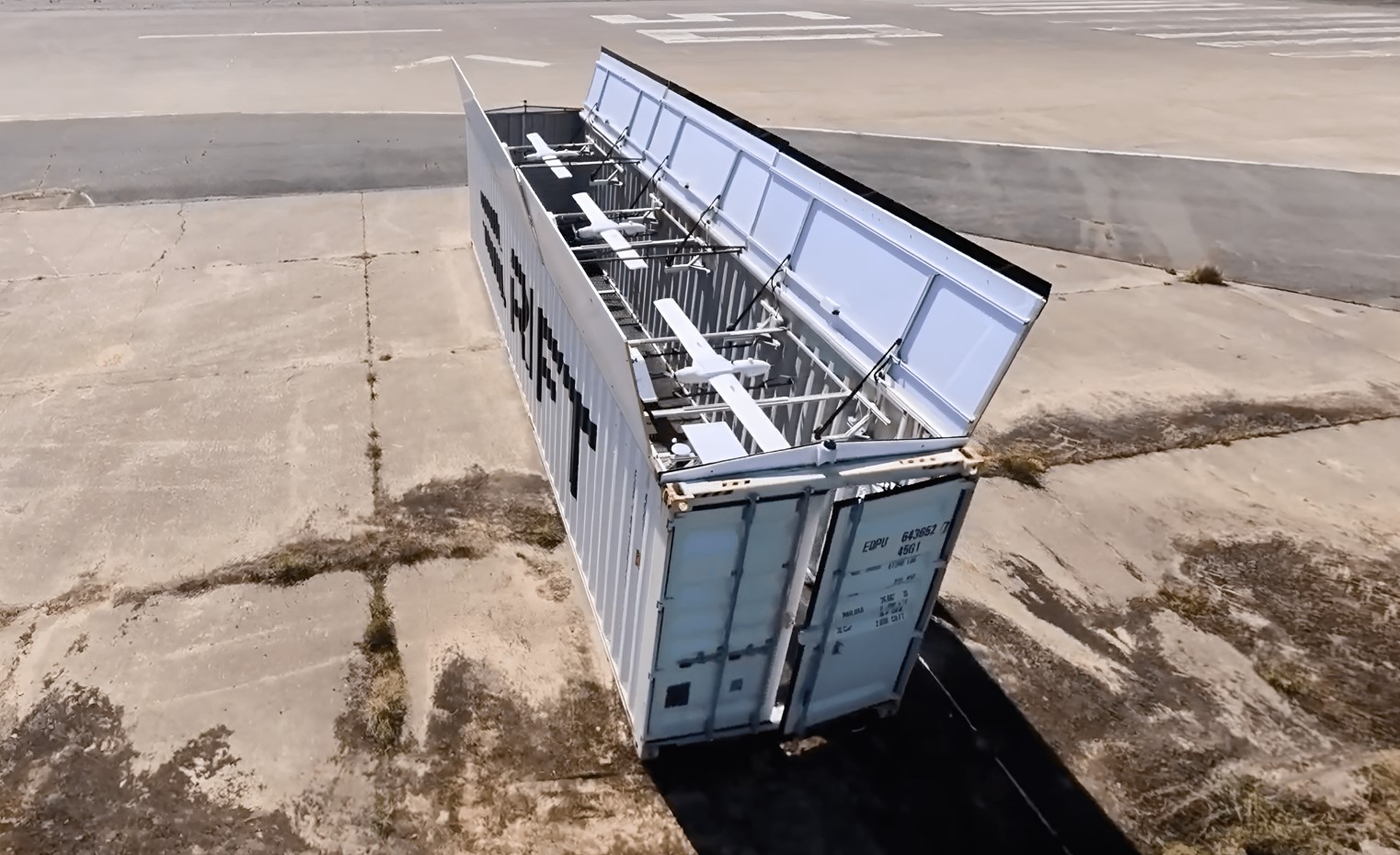
Presented on November 5, at the Euronaval show, the French deeptech Rift announces the deployment on the French coast of its autonomous drone infrastructure, intended to carry out sea trials in real conditions.
The French deeptech Rift is taking a new step in the development of its autonomous aerial systems. With the support of France 2030, an investment program of the French State that grants it 1.3 million euros, the company deploys on the French coast a drone infrastructure intended to carry out sea trials in real conditions, with the ambition to offer an on-demand aerial observation capacity, capable of taking off on alert and transmitting images in real time, without requiring on-site personnel.
Founded in 2023, Rift is more specifically developing a solution that combines vertical take-off and landing (VTOL) drones, autonomous stations and remote control software. The device is based on one principle: to automate the entire operational chain, from the triggering of the mission to the transmission of data to the control centers.
From radar detection to real-time observation
The innovation is based on the complementarity between existing sensors and drones. If coastal radars can detect the presence of a boat, they do not always give enough information to identify its nature or understand its activity. In the event of an alert, a drone parked nearby can therefore automatically take off, reach the area concerned and transmit images to the operators.
The system is designed to work day and night, 24 hours a day and 7 days a week. Each station can accommodate several drones to ensure the continuity of missions: when one aircraft must return, a second one can take over and maintain observation. All operations are controlled remotely from a single center thanks to RiftOS, the company’s software.
This architecture should make it possible to provide an intermediate response between traditional means of surveillance and long-endarance devices. It could be mobilized for the fight against illegal trafficking, the surveillance of fishing activities, the detection of pollution, maritime safety or search and rescue operations.
An infrastructure designed to be replicated
The company also relies on an economic model based on the provision of services. Thus, rather than acquiring and maintaining a fleet of drones, customers have access to an air observation capability to use, with directly usable data. An approach that limits the constraints of maintenance, recruitment and training of operators.
The company favors a service delivery model, allowing its customers to benefit from air observation capacity for use, without having to acquire or maintain their own fleet of drones or mobilize operators on site. A large potential market, while France has the world’s second largest maritime area, with more than 10 million km² of exclusive economic zone.