
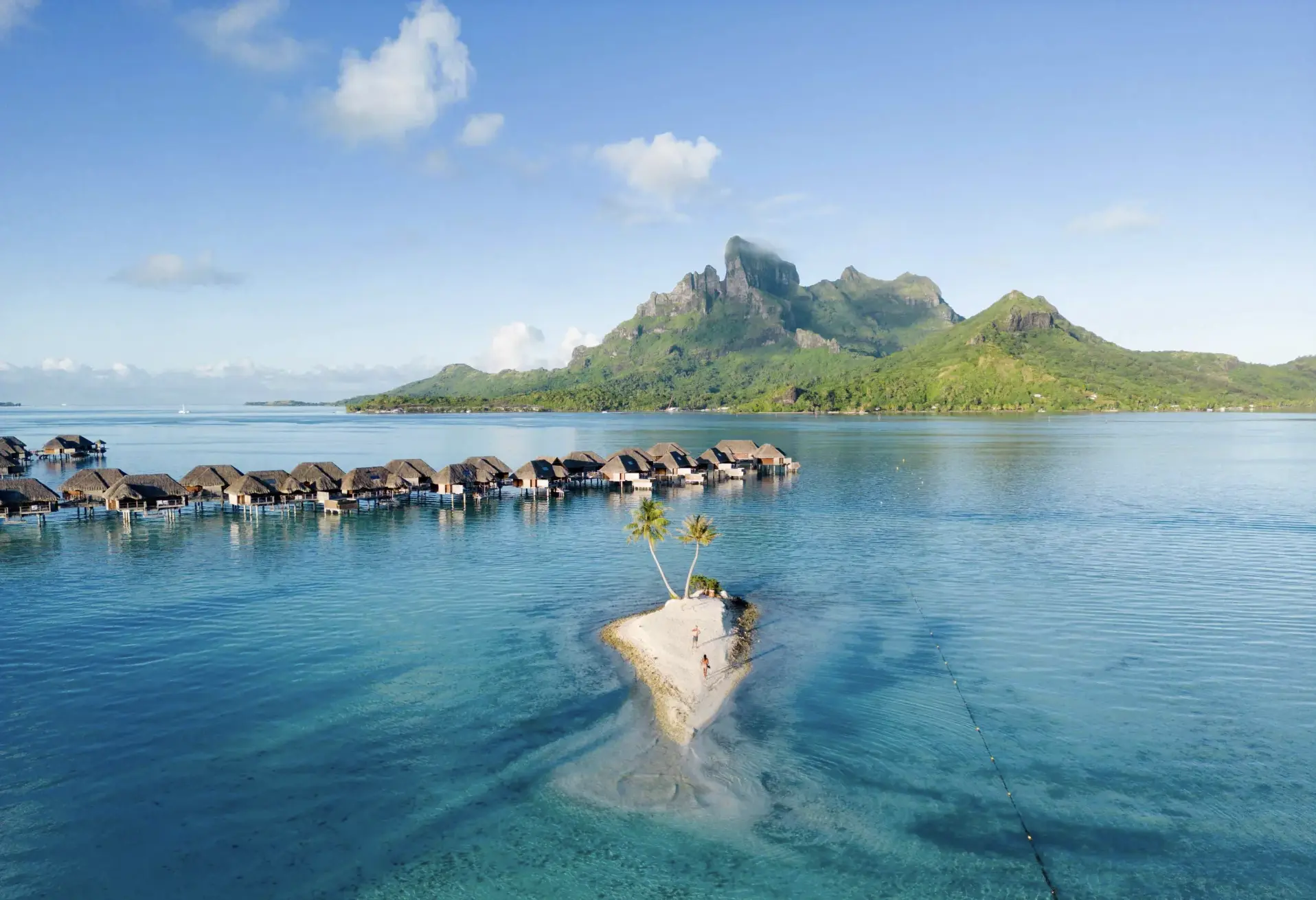
The island of Bora Bora in French Polynesia could soon produce some of its electricity thanks to the ocean. « The Pearl of the Pacific » is indeed carrying a sea thermal power plant project. This will be at the heart of the 12th international OTEC symposium which will bring together scientists and specialists from all over the world from December 1 to 4. Mayor Gaston Tong Sang wants the project to be completed in the next 3 years. A topic from our partner TNTV.
In Polynesia, deep water is already used to air-condition two hotels and the territorial Hospital Center, located in Tahiti. But Bora bora wants to go further: produce some of the electricity it needs thanks to the thermal energy of the seas.
A principle similar to SWAC. On the surface, the water is hot. In depth, it is much colder. Hot water allows a fluid to be vaporized. Under pressure, this steam drives a turbine connected to an alternator which produces electricity. The water from the depths then cools the fluid to bring it back to the liquid state. And the cycle starts again continuously.
« In between these two sources, there is a heat flow. This heat flow is converted into mechanical work. Mechanical work drives an alternator that produces electricity like a car engine that works with a hot source which is fuel, and the cold source which is the radiator, » explains Franck Lucas, university professor at UPF.
For this specialist, who works in particular on the energy performance of the SWAC, Polynesia has particularly favorable conditions to develop this technology.
But between ambition and achievement, the challenge remains considerable. The cost of the project is estimated at about ten billion Pacific francs. Public and private funding will be needed. And investors want guarantees as to the profitability of the operation.
“All investors need to be reassured about the economic viability of technologies. This economic viability will be certified if we are able to have scientific data, both on the design, but also on the operation of the facilities over time, « says Franck Lucas. « It is necessary to compensate for the investment cost, which will be very high, by operating costs that will be recurring over the entire life of the installation, which can last up to 30 or 50 years, » he adds.
Bora Bora is positioned as a pilot site. The municipality wants to reduce its dependence on hydrocarbons. Today, 70% of its electricity comes from thermal. The project includes both solar energy and sea energy
« We have passed the feasibility stage, we are starting the project stage now, » says the mayor of the island, Gaston Tong Sang, « we need to do a little more precise bathymetry studies to better assess the costs of the work and launch the call for tenders« . The mayor « gives himself 3 years to carry out the project« .