

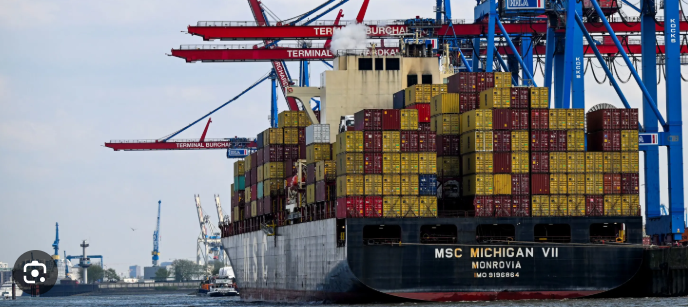
The Council today approved conclusions on the EU Maritime Industrial Strategy, underlining the strategic importance of the European maritime manufacturing sector and the European maritime transport sector for the competitiveness, resilience, economic security, defence readiness, prosperity and decarbonisation objectives of the European Union.
In these conclusions, the Member States recognize that the maritime sector is a cornerstone of the industrial base and underline its essential role in safeguarding supply chains, supporting the clean energy transition, and strengthening the EU’s technological leadership. They are also aware of the diversity of national, regional, and local characteristics of the maritime manufacturing and shipping sectors across the Union, as well as the different priorities of the Member States.
The conclusions on the maritime industrial strategy represent a significant step forward in recognizing the strategic importance and global excellence of the European maritime industry. They reflect our shared vision and commitment to maintaining a strong, innovative, and sustainable maritime sector that drives economic growth, ensures vital connectivity, strengthens our collective security, and plays a key role in our decarbonization efforts.
The maritime industrial strategy consists of a structured action plan which aims to strengthen Europe’s maritime supremacy by developing high-tech shipbuilding and state-of-the-art port facilities.
The Council notes that the European maritime manufacturing and shipping sectors are facing increasing challenges, including escalating global competition, geopolitical tensions, strategic dependence on third-country production, the need to accelerate decarbonization, and ongoing labour and skills shortages. The conclusions adopted today set out key priorities for addressing these challenges.
Industrial sovereignty and competitiveness
The Council highlights Europe’s strengths in shipbuilding and design, ship repair, conversion, maintenance, modernization and recycling, maritime equipment and ocean engineering. These capabilities are considered essential for prosperity, technological leadership, strategic autonomy and long-term resilience.
Member States, however, expressed concern about market distortions and unfair subsidy practices by third countries that undermine fair competition. The Council therefore called for an assessment of measures to strengthen the sector’s competitiveness, including through the effective use of existing trade defence instruments in accordance with international obligations. It further encouraged investments aimed at reducing strategic dependencies and strengthening critical industrial capacities.
Investments and innovation
The conclusions underline the importance of mobilizing strategic investments across the entire maritime ecosystem, particularly for small and medium-sized enterprises. Member States support measures that accelerate the deployment of digital, clean, and circular technologies, including artificial intelligence, advanced sensing technologies, automation, robotics, and smart maintenance solutions.
To strengthen Europe’s capabilities in advanced, low- or zero-emission ships, the Council calls for increased investment in innovative shipbuilding technologies, clean propulsion systems, and research and innovation. It also supports initiatives such as the « Shipyards of the Future » and the creation of an EU alliance for industrial maritime value chains to help direct investment towards strategic priorities.
Decarbonization and sustainability
The Council reaffirms the central role of the maritime sector in achieving EU climate objectives and stresses that decarbonization requires coordinated action throughout the water transport value chain, including fuel producers and suppliers.
Member States call for the coordinated and timely deployment of sustainable marine fuels and innovative low-emission technologies. They stress that the availability of safe, sustainable, and competitively priced alternative fuels will be essential to accelerating their adoption.
The conclusions also reiterate the importance of using revenues from the EU Emissions Trading System (EU ETS) for climate-related purposes. At the same time, they emphasize the need to assess potential adjustments to the FuelEU Maritime Regulation, the EU MRV Regulation, and the maritime ETS framework to avoid cost overlaps and unnecessary administrative burdens, should global measures to reduce greenhouse gas emissions from maritime transport be adopted.
Security and resilience
The Council warns of growing maritime security challenges, including risks related to ghost fleet activities and increasing geopolitical instability.
Member States emphasize the need to strengthen the EU’s resilience, preparedness, and defence capabilities, including the protection of critical maritime infrastructure and the resilience of maritime supply chains. The conclusions also support a coordinated approach to developing dual-use infrastructure capable of serving both civilian and military purposes.
Skills and workforce
The Council notes that the maritime sector faces significant labour shortages, an aging workforce and increasingly demanding working conditions, a set of factors that undermine its long-term resilience and competitiveness, which was also a key objective of the Nicosia Declaration, adopted and signed by all Member States at the informal session of the TTE Council for Maritime Affairs held in Cyprus in April.
Member States therefore call for a strengthening of maritime education and training, including professional development and retraining initiatives. The conclusions encourage measures to attract more young people to maritime professions and support the development of a coordinated European initiative on maritime skills.
Context
On March 4, 2026, the European Commission presented its communication on the EU Maritime Industrial Strategy, which sets out a vision and action plan to strengthen the European maritime manufacturing sector and the European maritime transport sector, stimulate innovation and preserve global competitiveness.
The maritime manufacturing and shipping sectors are essential to the EU economy and connectivity. European maritime manufacturing is a leading global player in complex, high-value shipbuilding, advanced maritime technologies, and sustainable inland waterway transport solutions. It is a key driver of innovation, regional industrial development, and the blue economy. For example, 97% of the world’s cruise ship fleet is built in Europe.
The European maritime transport sector is also one of the world’s leading providers of maritime transport services. It plays a vital role in ensuring the supply of essential goods, facilitating international trade, and supporting Europe’s energy security. Along with other waterway transport sectors, it drives demand for manufactured goods and services in the maritime field, while also shaping the technological development of the broader maritime ecosystem.
Source : consilium