
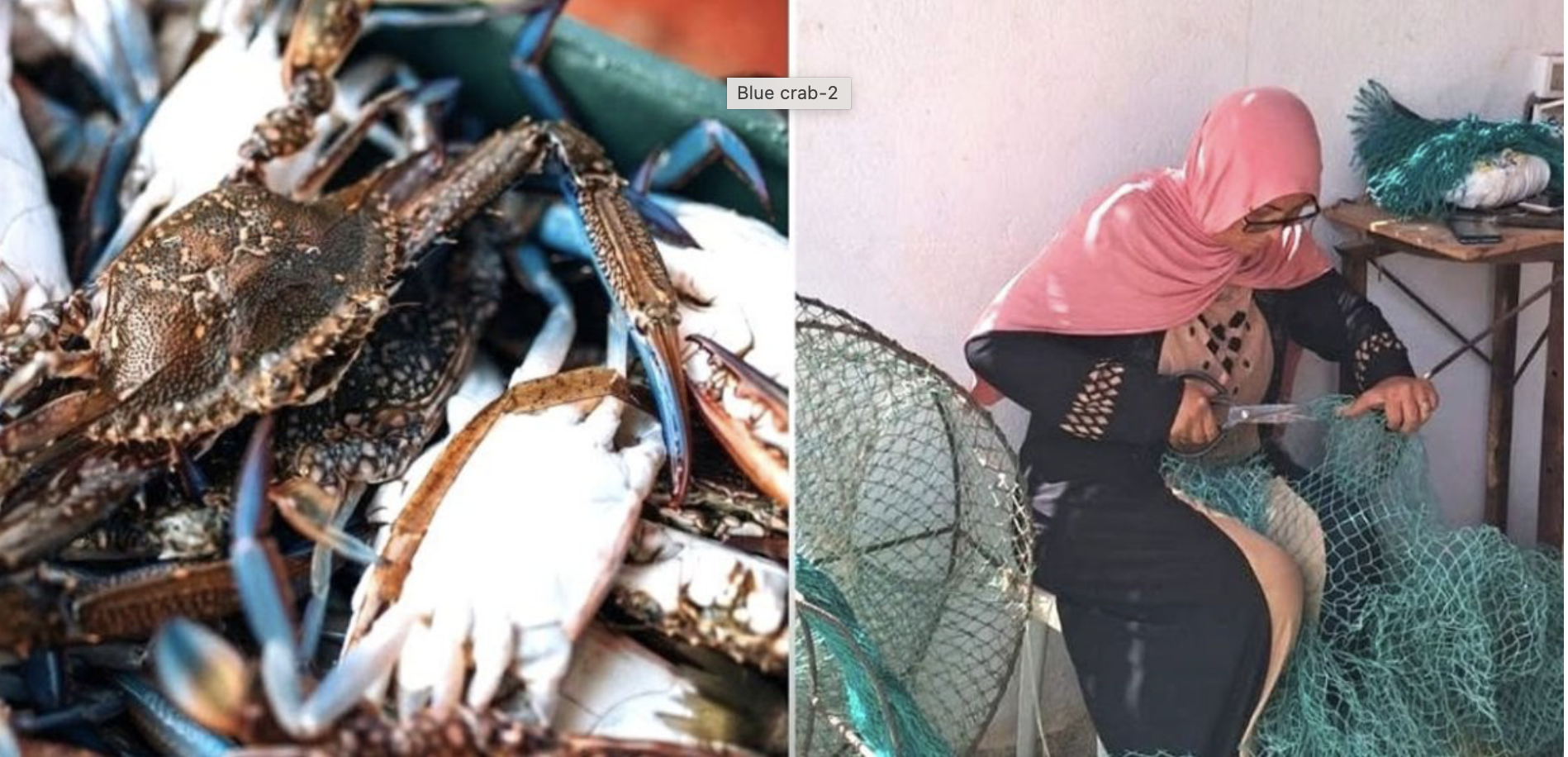
Tunisia intends to consolidate its role in the Mediterranean in promoting blue crab, an invasive species that, in recent years, has gone from an environmental problem to a resources economic. for coastal communities.
The Blue Step project, entitled « Strengthening and adequacy of social protection in the fisheries sector », was officially launched in Djerba. This initiative aims to strengthen social protection and improve working conditions in the blue crab fishing and processing sector.
Announced at the Bluecoop Forum, held from June 16 to 19, 2026 on the island, this project is carried out with the participation of the Fao and the Groupement interprofessionnel des produits de la pêche. Its objective is to extend social inclusion to all actors in the sector, from fishermen to processors, through workers involved in the preparation, processing and promotion of the product.
Blue Step is part of a sector that has become strategic, especially in southeastern Tunisia, where blue crab, initially perceived as a threat to nets, fishing gear and marine biodiversity, has gradually been integrated into an export-oriented value chain.
The challenge, according to the organizers, is now to move from a purely commercial operation to a more sustainable and inclusive model, capable of guaranteeing decent work, better economic security and wider access to social protection.
Particular attention is paid to women, an essential link in the supply chain, especially in processing and packaging activities. The project aims to strengthen their economic role, reduce their social vulnerability and promote better working conditions in a sector still marked by informality, seasonality and unequal access to protection mechanisms.
The Bluecoop Forum brings together in Djerba Tunisian institutions, professionals in the sector, researchers, international partners and representatives of countries with recognized experience in the fishing, processing and marketing of blue crab, including the United States, the Philippines and France.
This initiative is intended to be a space for dialogue and cooperation for the sharing of best practices in terms of traceability, certification, quality, market access and sustainable resource management.
For Tunisia, this project represents a new stage in its blue economy strategy, in a context where the pressures exerted on marine ecosystems, competition for resources and the impact of invasive alien species require integrated policies that take into account fisheries, the environment, employment and local development.
The transformation of blue crab, from an invasive species to a source of income, is considered by international organizations as a convincing example of adaptation, provided that it is accompanied by regulations, training and social protection.
According to the FAO, the Blue Step project will help build the resilience of the entire supply chain, from fishing to processing, and consolidate international competitiveness without neglecting communities that depend directly on the sea. It also aims to foster trade partnerships and technical exchanges with other countries, including the Philippines, where there is valuable experience in the governance of fishing communities and social protection mechanisms.
source : kapitalis