
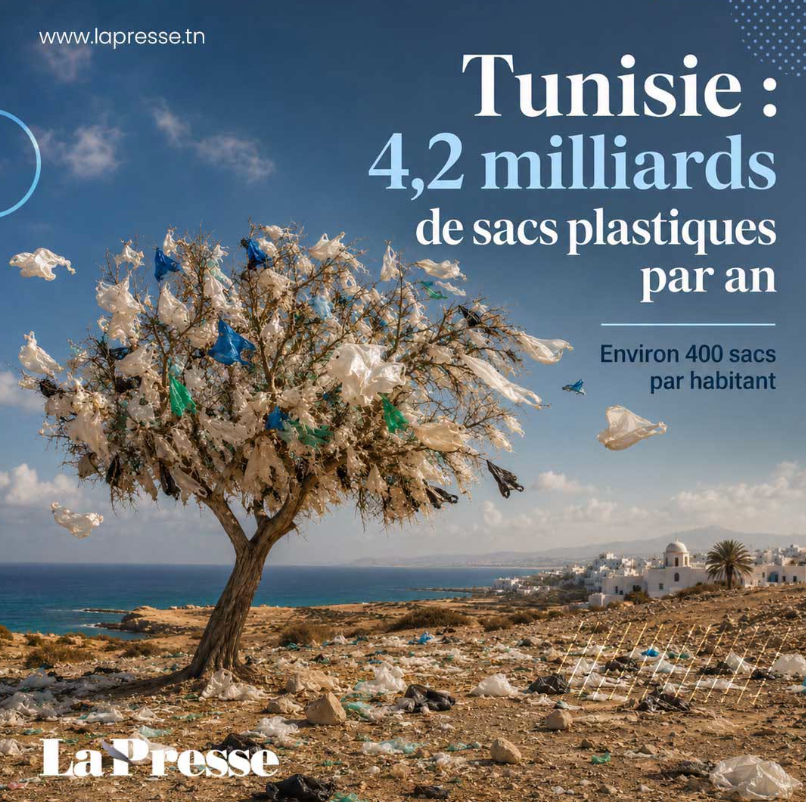
Almost 4.2 billion plastic bags are consumed each year in Tunisia, or about 400 bags per inhabitant, a level considered high compared to European averages. Faced with this observation, a bill submitted to the ARP proposes to limit the use of single-use plastic bags and to regulate the use of sustainable alternatives.
This legislative initiative is part of a strategy to combat plastic pollution, promote the green economy and reduce the environmental impact of plastic waste, whose volumes are constantly increasing in the country.
According to the data presented in the project, Tunisia generates about 188,000 tons of plastic waste each year, out of a total of more than 2.5 million tons of household waste. Nearly 60% of this waste is not treated properly, while recycling rates remain low.
The text also recalls that plastic pollution is one of the main environmental challenges on a global scale. Global plastic production now exceeds 400 million tons per year, much of which ends up in the form of difficult-to-degradable waste, with harmful consequences for terrestrial and marine ecosystems as well as public health.
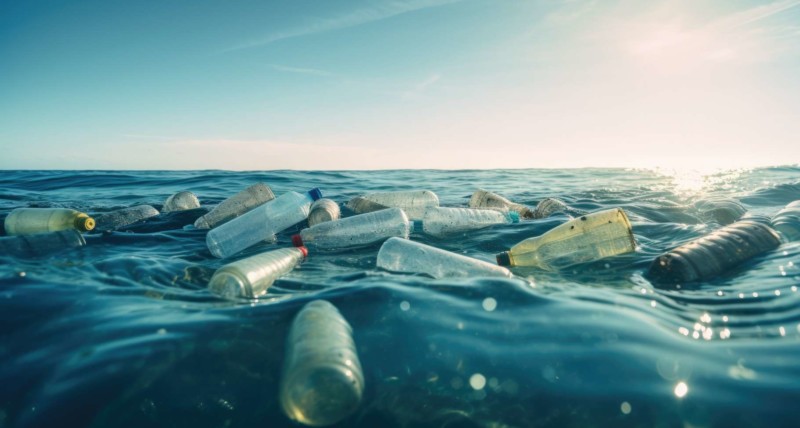
In the Mediterranean basin, more than 84% of the waste at sea is plastic, according to the data cited by the project. This pollution threatens coastal and marine ecosystems and penalizes economic sectors such as tourism and fishing. In Tunisia, its cost-economic is estimated at more than $20 million per year.
The bill, tabled by several MPs, provides for a gradual reduction in single-use plastic bags in favor of reusable or biodegradable solutions. It also proposes the introduction of technical standards to ensure the quality and effectiveness of these sustainable alternatives.