

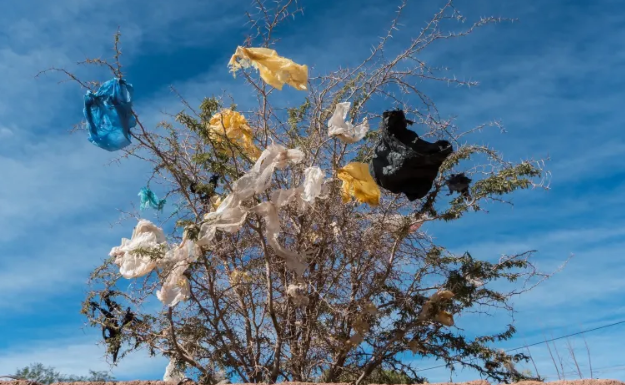
Black, blue, white… They’re everywhere. They fly away on the wind, swirling and interrupting their hideous dance by clinging to anything in their path—trees, fences, posts—landing on the ground where they form mounds. They float on the surface of waterways and end their journey in the sea where they suffocate turtles, fish… They are the plastic bags that, no
not only do they disfigure the landscape, but they constitute an ecological disaster and a real time bomb for the terrestrial and marine ecosystem and for all natural resources, especially when you know that it takes them ten years or more to decompose while the microparticles they release remain buried permanently in the soil, contaminating natural resources and the food chain.
According to the latest estimates, Tunisia is among the countries that consume the most plastic bags, at a rate of 400 bags per capita per year. Today, the staggering number of plastic bags littering the ground raises questions about the effectiveness of the initiatives adopted so far to reduce pollution by limiting plastic use. It is worth recalling that the main measure concerns the adoption and entry into force of Government Decree No. 32 of 2020, which prohibits the production, import, distribution, and use of single-use plastic bags in commercial spaces, pharmacies, and other retail outlets. However, more than five years after its publication in the Official Gazette of the Tunisian Republic (JORT), this regulation is neither respected nor enforced, and single-use plastic bags remain ubiquitous in shops, markets, commercial spaces, stalls, and other retail outlets.
Given the disastrous impact of plastic pollution on the environment and the marine ecosystem, a bill, supported by 23 members of parliament and similar to government decree no. 32 of 2020, was recently submitted to the Assembly of the Representatives of the People (ARP). It also aims to ban the production, import, distribution, marketing, and use of single-use plastic bags, providing for heavy financial penalties for producing and importing industries that violate the law and operate illegally. If this bill is adopted, will it succeed where the 2020 decree failed?
Hope remains, but it is tempered by the reality observed on the ground. Certainly, public authorities are multiplying initiatives to curb plastic pollution, but these efforts cannot yield conclusive results without a genuine awareness emanating from the grassroots, in this case from the average citizen who must not only opt for responsible and environmentally friendly actions by limiting their personal use of plastic bags, but also by transmitting, at the same time, a true culture of respect for the environment to future generations.

