
It took more than 15 years, a formal Cabinet approval, the passage of new domestic fisheries legislation, and the loss of a key U.S. funding partner. On April 14, 2026, Ghana officially became home to its first marine protected area.
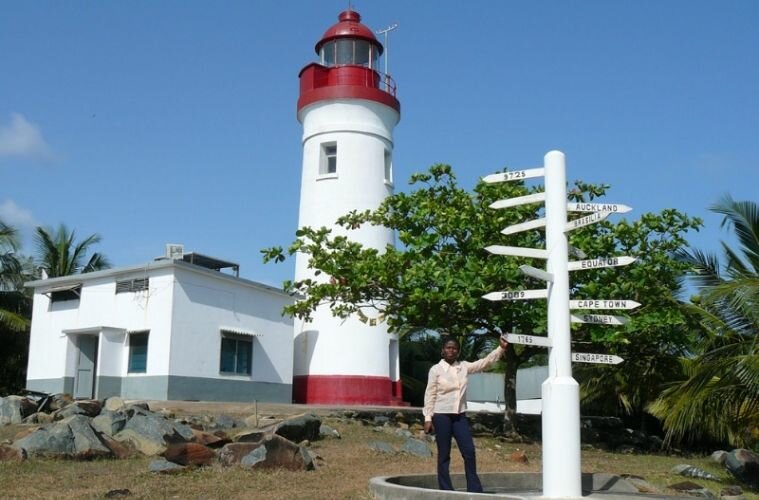
Vice President Naana Jane Opoku-Agyemang declared the Greater Cape Three Points Marine Protected Area in the Western Region, marking a milestone that Ghana’s Fisheries Commission chairman Benjamin Campion called a « historic moment. » The protected zone spans 271 square miles around the southernmost tip of the country, an area long identified as one of the most ecologically significant stretches of Ghana’s coastline.
Why This Area, and Why Now
Cape Three Points isn’t an arbitrary choice. The area is a recognized biodiversity hotspot, home to critical spawning and nursery grounds for small pelagic fish species, as well as marine mammals and endangered sea turtles, These fish — sardines, anchovies, and mackerel — are not peripheral to Ghana’s food supply. They form the backbone of local diets, and Ghana now imports over 79,000 metric tonnes of fish annually to fill the gap left by depleted domestic stocks.
Over the past decade, Ghana’s total fish catch has declined by more than 17%, with both artisanal and industrial sectors recording sharp drops. The fisheries sector employs around 100,000 fishermen directly and supports a value chain workforce of three million people. The stakes of continued inaction were becoming impossible to ignore.
How the MPA Is Structured
The protected area is designed for coexistence rather than exclusion. It includes a core zone where fishing is prohibited and multiple-use zones where fishing and other activities remain permitted but strictly regulated. The government has engaged 21 communities within the Greater Cape Three Points area that will directly benefit from the program, with a co-management model built to protect livelihoods alongside ecosystems.
Stephen Kankam of Ghanaian NGO Hen Mpoano, one of the organizations central to the MPA’s design, noted that local knowledge was built directly into the zoning framework. Communities contributed to identifying fishing grounds and breeding areas, a feature conservation experts consistently point to as critical for making protections hold over time.
A Setback Absorbed, Then Overcome
The path was not clean. USAID had been providing approximately $750,000 in technical assistance to support the MPA’s creation, and the effective dismantling of the agency’s global programming in early 2025 forced Ghana to continue without that backing. The designation moved forward anyway, underpinned by Ghana’s new Fisheries and Aquaculture Act, 2025, and by Ghana’s formal membership in RAMPAO, the regional body promoting sustainable marine conservation across West Africa.
The declaration also advances Ghana’s commitment to the global 30×30 biodiversity target, an international effort to protect 30% of the world’s land and oceans by 2030. Marine protection designation alone does not guarantee outcomes. Pollution, enforcement gaps, and inadequate funding regularly undermine even well-intentioned protected zones.
What Comes Next
Zoning finalization, monitoring infrastructure, and enforcement mechanisms are the immediate priorities. Technical Advisory Committee chairman Evans Arizi described the MPA as a first step, with lessons from its implementation expected to inform additional protected areas down the coastline.
For a country where fish is central to diet, economy, and culture, this is not simply a conservation story. It is a food security and economic resilience story, and its success will depend on what happens long after the announcement.
source : environmentenergyleader