

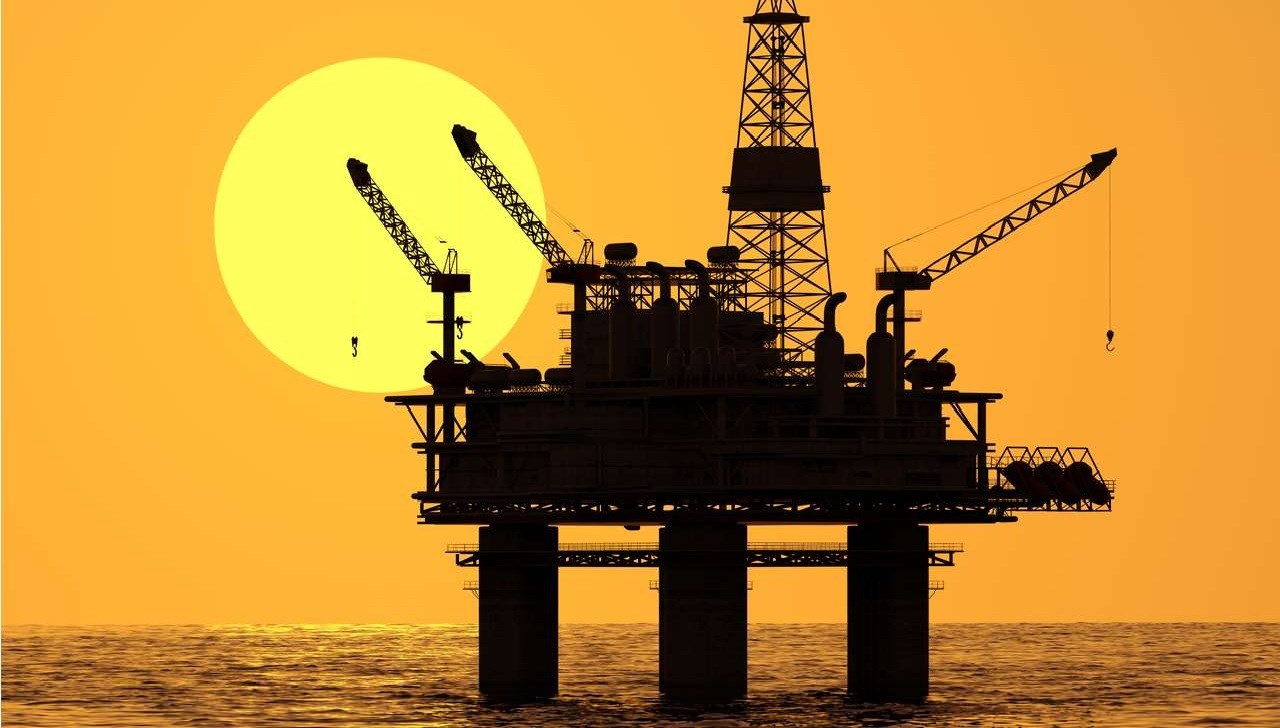
Nearly 40 years after its discovery, the Abiod oil reservoir, off the Gulf of Hammamet, is the subject of a new drilling operation. The project, carried out by Tende Energy, aims for a gross production potential of more than 6,000 barrels of oil equivalent per day.
The drilling company Ocean Oilfield has won a contract with Tende Energy to mobilize its Ocean MVM self-lifting platform off the coast of Tunisia. The operation concerns the drilling of the Abiod well, in the Maâmoura permit, located in the Gulf of Hammamet.
According to technical estimates by Anglo Tunisian Oil & Gas (ATOG), this well could achieve a gross production of more than 6,000 barrels of oil equivalent per day.
Announced on November 6, 2026 by Ocean Oilfield, this contract marks a new step in the development of the Maâmoura permit. The drilling program targets a fractured carbonate reservoir called Abiod, identified for several decades, but which has not yet been the subject of commercial development.
The operation provides for a deviated drilling from the existing Maâmoura E2 well. This technique consists of extending the initial drilling according to a new trajectory in order to reach a previously unexploited area of the reservoir. The objective is to mobilize the resources contained in this geological training without having to build a new production platform.
A tank identified since 1987
The potential of the Abiod reservoir is not new. Discovered in 1987 through the MMR1 well, then evaluated the following year by the MMRE-1 borehole, it had already shown encouraging signs during the first tests. They had recorded flows of about 3,500 barrels of oil per day and 20 million cubic feet of gas per day.
The new estimates of ATOG relate to a gross production that could exceed 6,000 barrels of oil equivalent daily, after drilling and evaluation of the technical results. This is therefore a forecast objective and not an already acquired volume of production. Its realization will depend in particular on the conditions encountered during drilling and the behavior of the tank.
The infrastructure necessary for the transport and treatment of hydrocarbons is already present in the area. Potential production could be routed through existing pipelines to the Tazarka land-based processing facility. This configuration would make it possible to enhance the equipment in place and limit the use of new offshore infrastructures.
A project in a context of declining production
The development of the Abiod reservoir comes as the concessions of Maâmoura and Baraka face a decrease in their production. According to data from the National Energy and Mining Observatory, the gas production of the two combined concessions stood at 8,000 tons of oil equivalent in 2025, compared to 19,000 tons in 2024, a decrease of 56%.
The revival of activity on Maâmoura is thus of particular interest to operators, who seek to better exploit the resources available on assets already exploited. Beyond the potential of the Abiod reservoir, the use of existing facilities is an important element of the economic equation of the project.
The Maâmoura permit is held 51% by the Tunisian Oil Activities Company (ETAP) and 49% by Tende Energy. This last participation corresponds to the rights previously held by Eni Tunisia, the transfer of which to Tende Energy was authorized by the Tunisian authorities in May 2026.
The results of the operations will determine to what extent this reservoir can contribute to strengthening the national supply of hydrocarbons.