
From « marine heatwave simulators » to coral training, scientists and environmentalists are experimenting with various methods to try to save the coral reefs of Okinawa in Japan, devastated by massive bleaching linked to global warming two years ago.
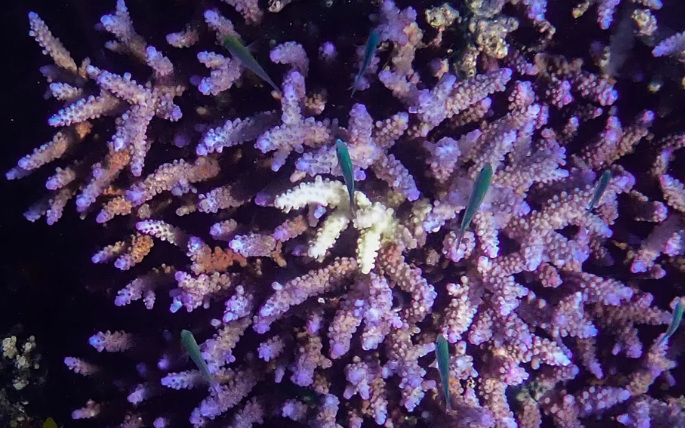
Okinawa, Japan. This subtropical archipelago in the south of the country is home to some of the richest coral reefs in the world. But a marine heat wave in 2024 has transformed vast expanses into real « cemeteries » of corals, pale or brownish.
2026, destructive year?
While the oceans recorded record temperatures in June and a major El Niño episode, a natural climate variation that leads to changes on a global scale, is expected this year, experts fear that 2026 will be even more destructive for these polyp colonies and the many marine species that depend on them.
On earth, Japan is also experiencing an intense heat wave, with thousands of people hospitalized in a few days. In recent weeks, however, typhoons have helped cool the waters around Okinawa by raising deep water. But Timothy Ravasi, a professor at the Okinawa Institute of Science and Technology, warns against any overconfidence. Otherwise, « it is almost certain that in Okinawa, as elsewhere in the world, we will soon experience a new episode of massive bleaching, » he told AFP. « It will explode like a bomb. «

« A marine heat wave simulator »
In his laboratory, the race against time continues thanks to a « marine heatwave simulator », one of only two systems of this type in the world according to him.
Ponds filled with seawater welcome corals, giant molluscs or clownfish in conditions that faithfully reproduce their natural environment. By changing temperature and acidity, researchers recreate the marine heat waves of the future to observe how organisms adapt.
« If we do not understand the effects of climate change, warming and ocean acidification on coral ecosystems, we risk losing them, » warns Timothy Ravasi.
The economy of Okinawa, a popular destination for vacationers, depends more than 80% on tourism. But the construction of hotels, overfishing and pollution aggravate the threats already weighing on corals.

Reduce tourism and urbanization?
For Timothy Ravasi, the main challenge is to convince politicians and authorities that climate change is real and that we need to act quickly. He believes that a reduction in tourism or urbanization may be necessary, even if it raises delicate political questions.
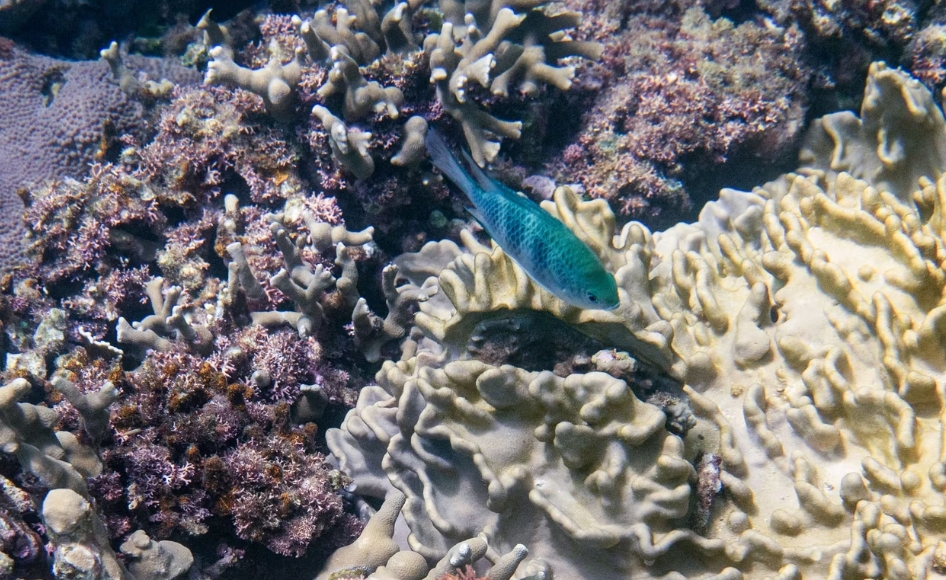
Although they cover only 0.1% of the planet’s surface, coral reefs are home to about a quarter of marine fish species.
Since 1999, the coastal village of Onna has been conducting a coral reproduction and transplant program. Initially criticized as a nature attack, this technique was finally considered unperturbing for the environment after DNA analysis.

« Starden » corals
Koji Kinjo also had to face skepticism when he created an « artificial sea » in the village of Yomitan in 2009. He raises corals, tropical fish and sea cucumbers indoors, and has developed a « miracle coral », more resistant to warm waters.
After several failures, he stopped protecting his corals excessively and chose to expose them to intense UV rays and other stressors in order to select the most robust individuals. These corals would have passed through the 2024 bleaching without damage. « I can say with absolute certainty that, to raise organisms capable of surviving the harshness of nature, they must be hardened as soon as they grow up, » says Koji Kinjo, 56.
« Sooner or later, the corals will disappear »
His approach remains challenged by those who still believe in the ability of the ocean to regenerate on its own. But, according to him, his detractors « have no idea of the seriousness of the crisis » that affects Okinawa’s corals.
Koji Kinjo says that the reefs bordering his farm are now composed exclusively of corals that he has grown, wild corals are no longer able to cope with the degradation of the ocean by human activities. « Sooner or later, corals will disappear without intervention, » he believes. « It is impossible to return the sea to its former state. My goal is therefore to create a diverse ecosystem capable of adapting » to the future.