
The European Academy of Sciences (EurASc) and the Chinese Academy of Sciences (CAS) will hold their 4th Frontier Forum on Marine Science and Technology, « Climate Change, Ocean and Sustainable Society » (CCOSS), on November 3 and 4, 2026 at the École normale supérieure (ENS) in Paris. The conference, organized under the aegis of the United Nations Decade for Oceanic Sciences in the Service of Sustainable Development (2021-2030), brings together about twenty ocean and climate scientists among the most recognized in Europe and China, for two days of presentations and discussions, in person and online.
A critical moment for the ocean and the climate
The ocean regulates the Earth’s climate, absorbs most of the excess heat and a significant part of the carbon dioxide produced by human activities, and keeps societies around the world alive. However, it changes rapidly: the polar ice is melting, the sea level is rising, the marine heat waves are intensing, and the observation systems that follow these changes are increasingly fragile. The CCOSS Forum draws up a state of knowledge and questions what science, technology and international cooperation can contribute to a sustainable future.
The program is structured around four themes:
- Sciences and technologies of ocean observation, chaired by Sabrina Speich (ENS, Paris) and Shi Jian Hu (Hohai University, Nanjing), on the state and future of the global ocean observation system, from satellites and autonomous vehicles to oceanic microbiome and carbon flows.
- Climate change and polar systems, chaired by Michael Meredith (British Antarctic Survey) and Rui Bo Lei (Polar Research Institute of China), on the rapid changes in the Arctic and Southern Oceans, the interactions between ice sheets and the ocean, and polar ecosystems.
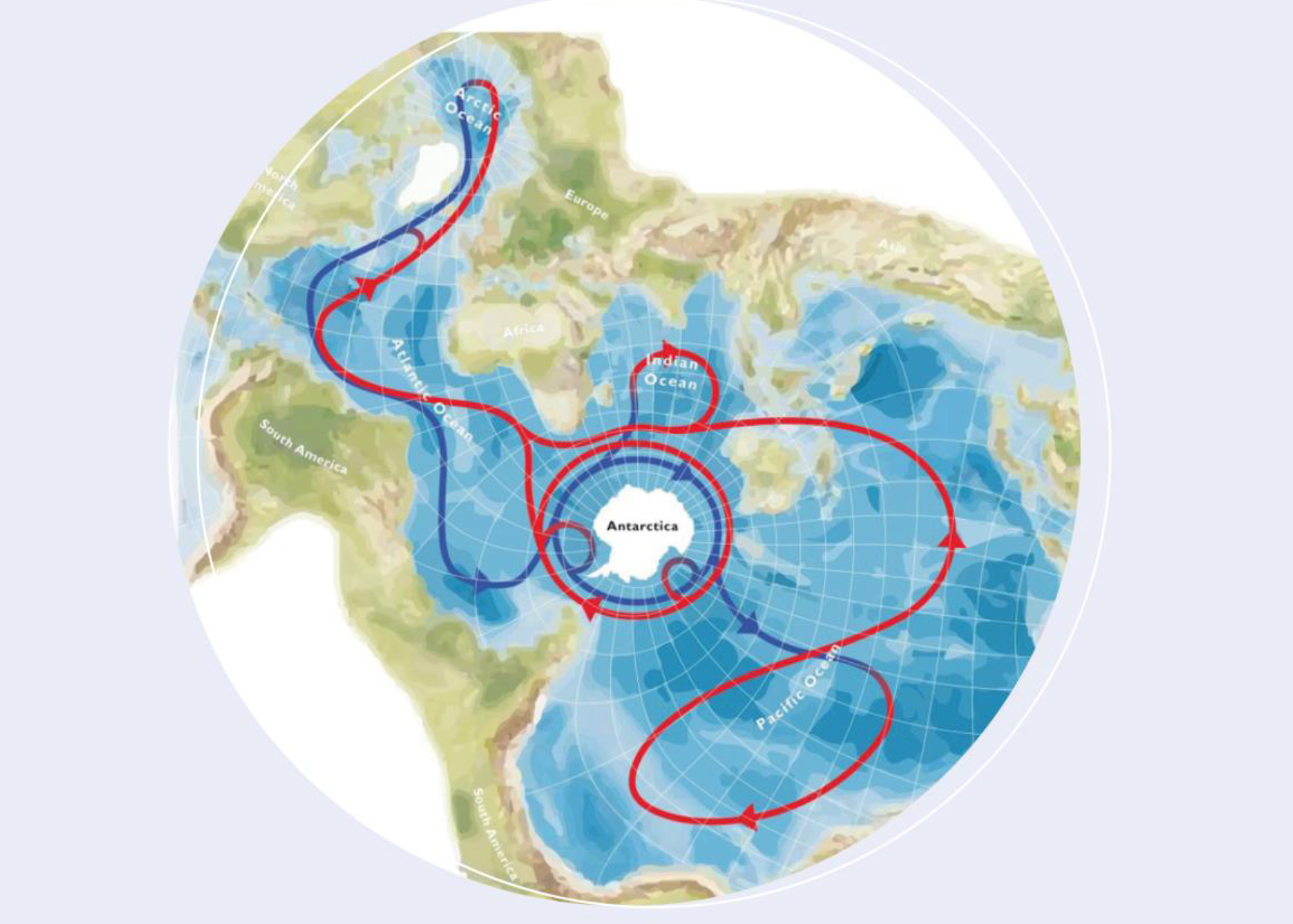
- Climate change and ocean circulation, chaired by Stefan Rahmstorf (PIK, Potsdam) and Xian Yao Chen (Ocean University of China), including the risk of tipping points in the Atlantic turning circulation and the North Atlantic subpolar gyre.
- Climate change and coastal areas, chaired by Anny Cazenave (CNES, Toulouse) and Shan Jiang (East China Normal University), on rising sea levels, coastal floods, eutrophication, Mediterranean ecosystems and coral reefs.
Among the highlights, Sabrina Speich (ENS) will present the priorities of the Global Climate Observation System (GCOS) and advocate for recognition of ocean observation as a critical infrastructure and global public good. Stefan Rahmstorf (PIK) will wonder if the Atlantic turning meridian circulation is approaching a tipping point. Michael Meredith (BAS) will take a look at the changes underway in the polar oceans, and Robert Nicholls (Tyndall Centre) will discuss solutions to rising sea levels in coastal systems.
The forum is sponsored by the European Academy of Sciences and the Chinese Academy of Sciences, and hosted and organized by the École normale supérieure, Paris. The organizing committee includes, for EurASc, Anny Cazenave, Jean-Pierre Gattuso, Sabrina Speich and Paul Tréguer, and, for the CAS, Shi Jian Hu, Rui Bo Lei, Xian Yao Chen, Shan Jiang, Yi Xu, Fang Zuo, Li Tan, Wei Zheng and Jing Zhang.
About the organizers
The European Academy of Sciences (EurASc) is an independent non-profit organization of prominent scientists, committed to promoting scientific and technological excellence in Europe. Its Earth Sciences division brings together leading researchers in Earth, Ocean and Climate Sciences.
The Chinese Academy of Sciences (CAS) is China’s leading academic institution and a major center for global research in natural sciences.
The École normale supérieure (ENS-PSL), a founding member of PSL University, is one of the first French research and higher education institutions, and hosts cutting-edge research in geosciences and climate.