Advances in the management of deep-sea fisheries and the long-term sustainability of deep-sea fish stocks will be at the heart of an international workshop to be held in New York (July 13 to 14).
The Food and Agriculture Organization of the United Nations (FAO) and its High Seas Fishing Project, which is part of the Common Oceans Programme, will participate in this multi-stakeholder workshop, organized by the United Nations Oceanic Affairs and Sea Law Division (DOALOS).
The workshop is organized in accordance with United Nations General Assembly resolutions to review and discuss measures taken by States and Regional Fisheries Management Agencies (OORF) to address the impacts of deep-sea fishing on vulnerable marine ecosystems (MVs), such as deep-sea corals and sponges, as well as long-term management and sustainability of deep-sea fish stocks.
Eszter Hidas, head of the deep-sea fishing project, says: « Found-sea fisheries are important for food supply and livelihood support. We must recognize and continue to build on the good progress made to prevent and limit their impacts on vulnerable marine ecosystems and continue to improve their long-term management. «
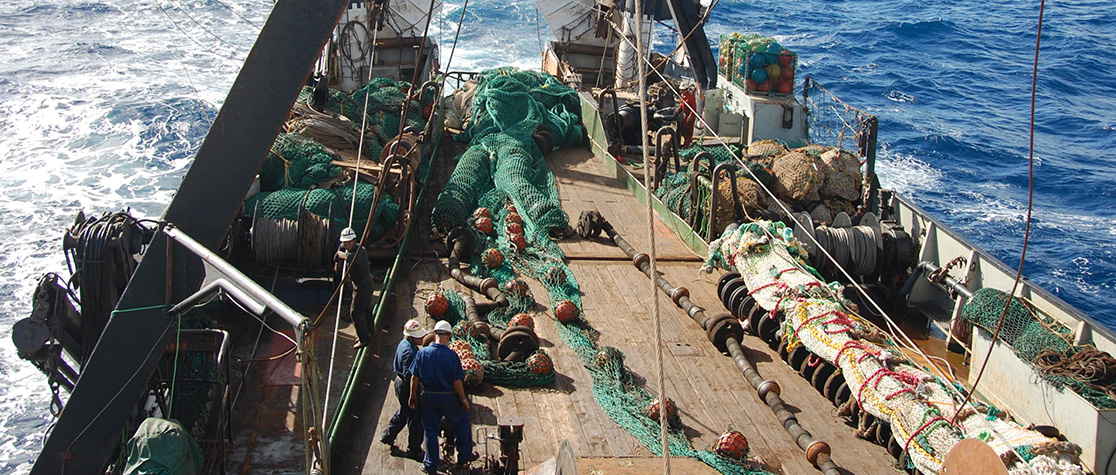
A recent review conducted by the FAO revealed that the RFMOs have significantly reshaped their management of deep-country fisheries in areas outside national jurisdiction (ABNJ) through the designation of fishing zones, the closure of zones and protocols for vessels encountering a VME zone.
Since the early 2000s, the number of RFS managing fisheries on the high seas has doubled, resulting in a threefold increase in regulated areas in the ABNJ. In addition, 192 VMEs were created, representing an area of 147 million hectares. FAO is following this progress via its VME database.
“Effective governance, science-based measures and technological innovation can significantly reduce the impacts of bottom fishing while maintaining contributions to food production and livelihoods,” says Manuel Barange, Deputy Director General of FAO and Director of the Fisheries and Aquaculture Division.
However, challenges remain in the long-term sustainable management of many offshore fish stocks. According to the FAO State of Stock (SoSi) 2025 index, which monitors the biological sustainability of marine fisheries, we only know the sustainability status of 64% of the offshore stocks in the ABNJ, and of these, only 56% are sustainably fished. These figures highlight the need for increased investment in scientific knowledge, stock assessment and monitoring in order to better understand the state of fisheries on the high seas and to assess the effectiveness of management measures.
Promote partnerships to strengthen effective management
The FAO-funded Global Ocean Oceans Deep Sea Fishing Project, funded by the Global Environment Fund, partners with the RFMOs and their contracting parties to continue to progress towards precautionary and ecosystem approaches in the management of ocean-sea fisheries in the ABNJ.
« We have developed an e-learning course and a knowledge-sharing platform, organized various symposiums, workshops and training, engaged a wide range of actors, including the private sector, and we are developing several guidance documents as well as other tools to support progress, » explains Hidas.
The high-sea fisheries project reinforced the recognition of the importance of collaboration between scientists and managers and between sectors, a longer-term vision for the management of priority stocks, as well as the integration of the impacts of climate change and interactions between species in management and decision-making, in order to strengthen effective management.